
When it comes to housing, one of the most significant and heavily debated questions is whether it is better to rent or to buy. For generations, owning a home has been considered a key milestone of adulthood and the ultimate symbol of financial success. The phrase “renting is throwing money away” has been repeated so often across cultures that many people accept it as an undeniable fact. However, in recent times, rising home prices, expensive mortgages, and the undeniable flexibility of renting have caused a growing number of people to rethink whether homeownership is really the golden ticket it is made out to be.
The truth is that both renting and owning come with unique advantages, drawbacks, and financial trade-offs. The right choice depends entirely on your specific lifestyle, current financial situation, and long-term goals. To make sense of this complex decision, we must look beyond the emotional appeal of both options and analyze the hard numbers. By exploring the most important factors that impact the rent versus buy decision, you can gain the clarity needed to make a choice that aligns perfectly with your financial vision.
Understanding the True Cost of Renting
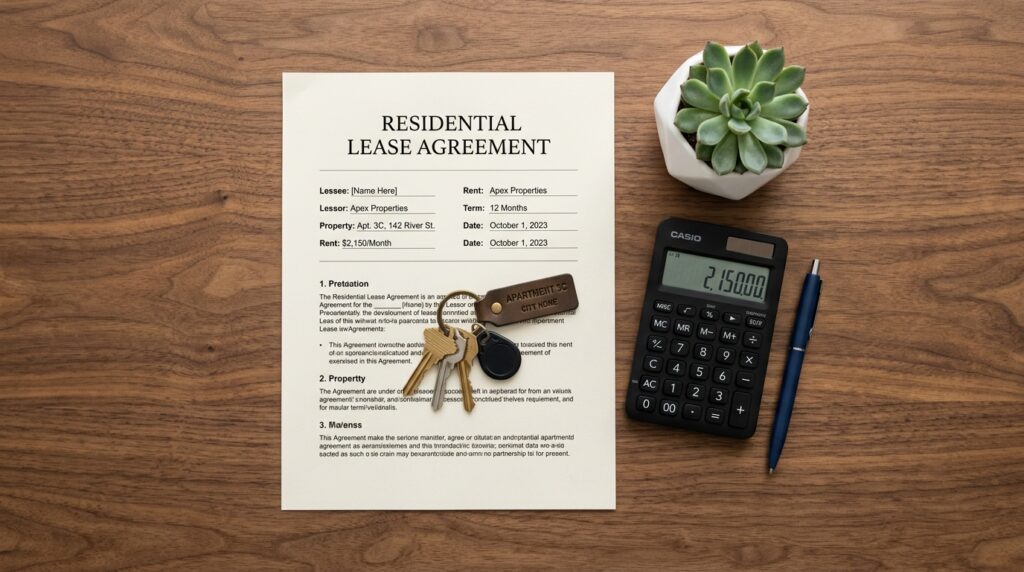
Renting is remarkably simple at first glance. You pay a fixed monthly amount to live in a property, and in exchange, your landlord takes care of the vast majority of maintenance, repairs, and property management. For many people, this predictability is incredibly appealing. When you rent, you do not have to worry about fluctuating property taxes, massive surprise repair bills like fixing a collapsed roof, or the stress of dealing with neighborhood zoning issues.
The biggest downside to renting, and the core of the “throwing money away” argument, is that your rent payments do not build equity. Once you pay your rent for the month, that money is gone forever; it does not contribute to an asset that you own. However, viewing rent purely as a lost expense is a flawed financial perspective. Rent is simply the cost of purchasing a service: a place to live.
Furthermore, for people who need flexibility, renting can actually be much more financially reasonable in the short term. This is especially true in major metropolitan cities where the median home price is several times higher than the annual cost of renting a comparable unit. In these high-cost areas, the monthly premium required to buy a home can be so exorbitant that renting and investing the difference yields a significantly higher net worth over time.
The Real Financial Picture of Homeownership
Owning a home feels like the ultimate investment because every mortgage payment theoretically builds equity—your ownership stake in the property. Over time, as you pay down your principal balance and as the home potentially increases in value, you build wealth through appreciation. However, ownership comes with hidden, ongoing costs that many first-time buyers severely underestimate.
When evaluating the cost of owning, you must look beyond the principal and interest of your mortgage. You must calculate PITI: Principal, Interest, Taxes, and Insurance. Additionally, you must factor in Private Mortgage Insurance (PMI) if your down payment is less than 20 percent. All of these add significantly to your monthly bill.
Consider this realistic scenario: A $1,500 monthly mortgage payment might sound highly manageable within your budget. But once you factor in $400 for property taxes, $200 for homeowners insurance, and $150 set aside for immediate repairs, your real monthly housing cost jumps to $2,250. That is a 50 percent increase over the base mortgage payment. This is why homeownership is not just about affording the mortgage; it is about affording the full, unvarnished picture of holding a physical asset. Failing to budget for these ancillary costs is a primary reason why new homeowners experience financial strain shortly after closing.

Flexibility Versus Stability in Your Living Situation
One of the most overlooked aspects of the rent versus buy debate is lifestyle flexibility. Renters can move with relative ease. When your lease is up, you simply pack your belongings, give your notice, and leave. This makes renting ideal for people who value freedom, love to travel, or anticipate job opportunities in different cities.
Owning a home, conversely, ties you down both financially and geographically. Selling a home is a lengthy process that can take months. It also involves high transaction costs, including real estate agent commissions, closing costs, and transfer taxes, which can easily eat up six to ten percent of your home’s sale price. If you need to relocate quickly for a job, you might be forced to sell at a loss or become a long-distance landlord.
On the other hand, homeownership offers unparalleled stability. If you lock in a fixed-rate mortgage, your principal and interest payment will remain exactly the same for 15 to 30 years. Meanwhile, rent can—and usually does—increase every single year. Homeownership is generally considered ideal for people who are ready to settle in one specific place for at least five to seven years, allowing them enough time to build enough equity to cover the closing costs of buying and selling.

Building Wealth: Home Equity Versus Market Investments
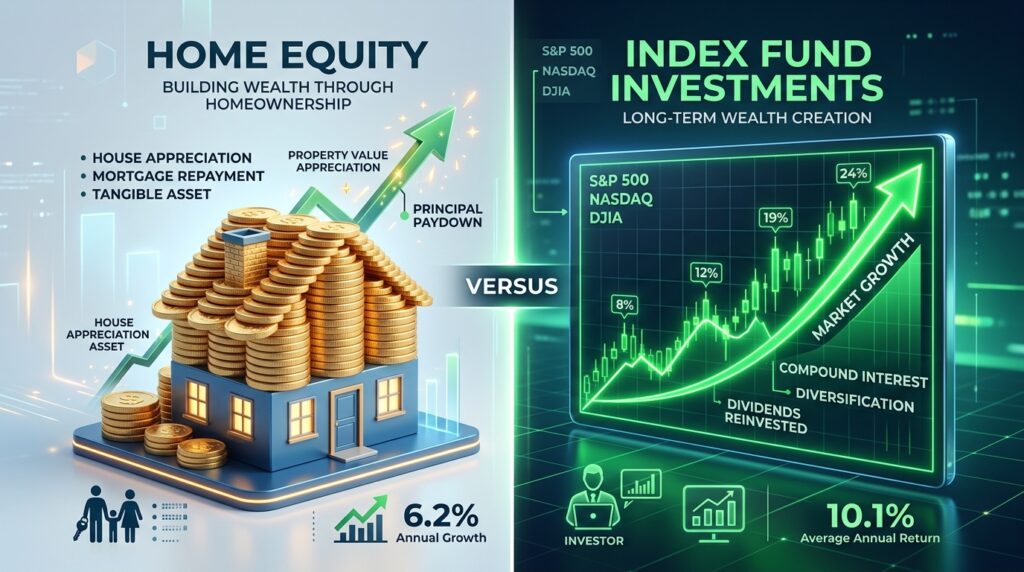
The biggest financial argument for owning a home is equity building. Every time you make a mortgage payment, a portion of that money goes toward reducing your loan balance, slowly increasing the percentage of the home you truly own. If your property appreciates in value, your equity grows even faster, acting as a forced savings account.
Renting does not offer this specific type of equity, but renters have a massive opportunity to invest the money they save. This is known as the “rent and invest” strategy. For example, if renting a luxury apartment is $1,000 cheaper per month than the total cost of owning a comparable home in your area, a renter could take that $1,000 and invest it consistently into a diversified portfolio of stocks or broad-market index funds.
Historically, the stock market has outperformed real estate in terms of pure percentage returns, while also offering much higher liquidity. The real question you must ask yourself is behavioral: Will you actually invest that $1,000 difference every single month, or will you simply spend it on lifestyle upgrades? If you have the financial discipline to invest the difference, renting can absolutely build more wealth than homeownership. If you lack that discipline, the forced savings mechanism of a mortgage might be the better wealth-building tool for you.
Uncovering the Hidden Costs and Maintenance of Owning
Owning a home comes with inevitable surprises that can catch new buyers completely off guard. When a pipe bursts, the roof leaks, or the furnace dies in the middle of winter, the buck stops with you. These major repairs can cost thousands of dollars in an instant. Furthermore, ongoing expenses like landscaping, lawn care, snow removal, pest control, and Homeowners Association (HOA) fees all add up quickly.
Renters do not have to worry about these unexpected bills; the landlord handles them. This is precisely why financial experts strongly recommend budgeting one to three percent of your home’s total purchase value every single year strictly for maintenance and repairs. On a $300,000 home, that means setting aside $3,000 to $9,000 annually just for basic upkeep. On a $600,000 home, that number doubles.
If you are not financially prepared for these inevitable capital expenditures, renting is the safer, more predictable option. Buying a home without an adequately funded emergency maintenance fund is a fast track to high-interest credit card debt.

Lifestyle Considerations Beyond the Balance Sheet
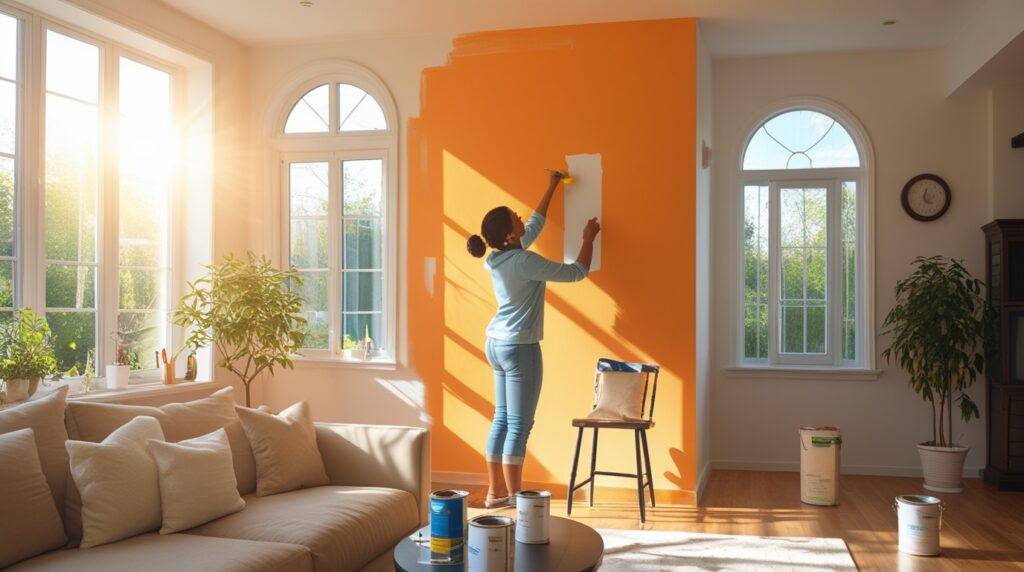
Lifestyle plays a massive role in the housing decision, often tipping the scales just as much as the math does. Owning a home gives you the ultimate freedom to customize your space. You can paint the walls any color you want, knock down walls to remodel the kitchen, build a custom deck, or plant a sprawling garden without ever asking for permission. Homeownership often brings a profound sense of pride, privacy, and deep-rooted stability that many people crave.
Renting, however, offers a completely different set of lifestyle benefits, primarily centered around fewer responsibilities. You do not have to spend your weekends mowing the lawn, replacing the water heater, or stressing over local property market values. For busy professionals, frequent travelers, or those who simply value a low-maintenance lifestyle, renting is a highly strategic choice. It buys back your time and mental energy. While ownership is better for those who want to create a long-term, highly personalized sanctuary, renting is the superior choice for those who want to optimize their time and minimize household chores.
Tax Benefits, Market Conditions, and the Emotional Trap
Homeownership comes with specific tax benefits that renters do not receive. Mortgage interest and property taxes are often deductible, which can reduce your overall tax bill if you choose to itemize your deductions. Some first-time buyers may also qualify for specific tax credits or government-backed programs that make owning more affordable.
However, as a financial advisor, I must point out a crucial caveat: these tax benefits only matter if your total itemized deductions exceed the standard deduction. For many average homeowners, especially after recent changes to tax laws, the standard deduction is higher than their mortgage interest and property tax combined. Therefore, the much-touted “mortgage interest tax deduction” does not create a significant financial difference for the majority of buyers.
Furthermore, the rent versus buy decision depends heavily on local market conditions. In some areas, it is vastly cheaper to own because mortgage payments are lower than rent. In others, home prices are so inflated that renting is far more affordable. Mortgage interest rates also play a massive role; low rates make buying appealing, while high rates can severely limit your purchasing power. Timing matters immensely. If you buy at the absolute peak of a housing bubble, your property value may stagnate or decline, wiping out your equity.
Finally, we must address the emotional trap. For many, owning a home is deeply emotional. It feels like an accomplishment and a source of immense pride. Renting is often unfairly stigmatized as temporary or a financial failure. But making a half-million-dollar housing decision based solely on emotion is dangerous. A mortgage that stretches your budget too thin will cause chronic stress and limit your ability to save for retirement or travel. The key is to separate emotion from practicality and decide what truly fits your life, rather than succumbing to societal pressure.

Conclusion
At the end of the day, there is no universal “better” choice in the rent versus buy debate. Renting is not always throwing money away, and owning is not always a guaranteed golden ticket to wealth. If your priority is flexibility, geographic mobility, and avoiding unexpected expenses, renting may be the significantly smarter option. If your goal is long-term stability, forced savings through equity, and putting down deep roots in a community, owning may be the better path.
The truth is, the best choice depends entirely on your financial readiness, your lifestyle preferences, and your long-term vision for your life. Both renting and owning can be incredibly smart, wealth-building decisions if they align with your personal goals. The key is not to blindly follow outdated advice, but to carefully analyze your income, your expenses, your local housing market, and your future plans. When you understand the true costs and benefits of both paths, you gain the clarity to make a choice that actually works for you.
Frequently Asked Questions (FAQ)
1. Is renting really just throwing money away?
No, this is a common myth. Rent is simply the cost of purchasing a service: a place to live. While it is true that rent payments do not build equity in a physical property, renting provides you with a predictable housing cost, frees you from massive maintenance liabilities, and offers the flexibility to move. If you take the money you save by renting and invest it in the stock market, you can build substantial wealth without ever buying a home.
2. How long should I plan to stay in a home before buying?
As a general financial rule, you should only buy a home if you plan to live in it for at least five to seven years. This timeframe is necessary to allow your home to appreciate in value enough to build sufficient equity. This equity is required to cover the high transaction costs—such as real estate agent commissions and closing fees—when you eventually sell the property. If you plan to move in less than five years, renting is almost always the more financially sound choice.
3. What are the hidden costs of homeownership I should budget for?
Beyond your monthly mortgage principal and interest, you must budget for property taxes, homeowners insurance, and potentially Private Mortgage Insurance (PMI). Additionally, you must save for ongoing maintenance and unexpected repairs. Financial experts recommend setting aside one to three percent of your home’s total purchase price annually for upkeep. You should also factor in costs like landscaping, snow removal, HOA fees, and higher utility bills for a larger space.
4. Can I build wealth if I choose to rent instead of buy?
Absolutely. While homeowners build wealth through property appreciation and mortgage paydown, renters can build wealth by investing the difference. If the total cost of renting is significantly lower than the total cost of owning in your area, you can take that monthly savings and invest it in diversified index funds or retirement accounts. Historically, the stock market has provided higher liquidity and often higher returns than real estate, provided you have the discipline to invest consistently.
5. How do I know if I am financially ready to buy a house?
You are financially ready to buy a home when you meet several key criteria: you have a stable and reliable income, a good credit score to secure a favorable mortgage rate, and a down payment saved (ideally 20 percent to avoid PMI). Crucially, you must also have a fully funded emergency fund that can cover three to six months of living expenses, plus a separate cash reserve specifically for home repairs. Finally, you should be planning to stay in the home for at least five to seven years.