
Relying on a single paycheck is one of the most significant financial risks you can take in today’s unpredictable economic landscape. When your entire livelihood is tethered to one employer or one client, a sudden job loss, industry downturn, or unexpected health issue can cause your cash flow to vanish overnight. This vulnerability is precisely why creating multiple income streams is a fundamental strategy for achieving lasting financial security and independence.
Diversifying how you earn money does more than just boost your monthly cash flow; it fundamentally shifts your relationship with money. By stacking various income sources—ranging from active side hustles and freelancing to passive investments and digital assets—you build a resilient financial fortress. This comprehensive guide will break down simple, practical, and highly effective ways to build a diversified portfolio of income streams, even if you are starting with minimal capital. Whether you are looking to escape the paycheck-to-paycheck cycle, accelerate your debt payoff, or retire early, mastering the art of income diversification is your ultimate roadmap to financial freedom.
1. The Strategic Importance of Diversifying Your Earnings
In traditional personal finance, diversification is a concept almost exclusively applied to investment portfolios. Financial advisors constantly warn against putting all your eggs in one basket when buying stocks or bonds. However, this exact same logic must be applied to your earning potential. Relying on a single source of income puts you at severe financial risk. If you lose your primary job, your entire financial ecosystem collapses.
Multiple income streams provide a robust safety net. They offer psychological stability, reduce financial stress, and grant you the freedom to pursue new opportunities without the paralyzing fear of losing everything. When you have money flowing in from various channels, a disruption in one area is easily cushioned by the others. Furthermore, diversifying your income allows you to build wealth at an accelerated pace. By stacking different types of income—some that require your daily active participation and others that generate revenue passively—you ensure that money keeps flowing into your bank accounts even when you are sleeping, traveling, or spending time with your family.
The ultimate goal is not to work endlessly until burnout sets in. Instead, the objective is to strategically set up complementary income channels that provide consistent, overlapping financial support. This paradigm shift transforms you from a vulnerable, paycheck-dependent worker into a resilient individual with genuine financial sovereignty.

2. Conducting a Personal Audit: Identifying Skills and Opportunities
Before you rush into launching side businesses or buying dividend stocks, you must take a comprehensive inventory of your unique skills, resources, and interests. A thorough self-assessment ensures that the income streams you choose are not only profitable but also sustainable for your specific lifestyle.
Start by evaluating your professional and personal skill sets. Are you an exceptional writer? You might explore freelance copywriting, ghostwriting, or starting a niche blog. Do you possess strong technical or coding skills? You could take on software development projects, build applications, or offer IT consulting. Look beyond your hard skills and consider your soft skills, such as leadership, public speaking, or organization, which can be monetized through coaching or virtual assistance.
Next, assess your tangible assets. Do you have a spare bedroom that could be listed on short-term rental platforms? Do you own a reliable vehicle suitable for ride-sharing or delivery services? Do you have a modest amount of savings that could be deployed into high-yield investments?
The sweet spot for your new income streams lies at the intersection of what you are naturally good at, what you enjoy doing, and what the market is willing to pay for. Opportunities generally fall into two categories: active (requiring your direct time and effort) and passive (generating money with minimal ongoing involvement after an initial setup phase). By aligning your new ventures with your inherent strengths, you drastically reduce the learning curve and minimize the risk of early burnout.

3. Establishing Active Income Streams for Immediate Cash Flow
Active income streams are the foundation of your financial diversification journey. These ventures require your direct time, energy, and effort, but they are typically the fastest to launch because they demand little to no upfront financial investment. You are essentially trading your specialized time for money, but doing so outside the confines of your primary employment.
Highly accessible active income streams include freelancing, part-time consulting, online tutoring, and participating in the gig economy through ride-sharing, delivery services, or task-based platforms. If you have specialized knowledge, you can offer paid workshops, resume writing services, or bookkeeping for small businesses.
The primary advantage of active income is the immediate cash flow it generates. You have direct control over your earnings; if you need more money this month, you simply take on more clients or work more hours. While active income is inherently limited by the number of hours in a day and is not infinitely scalable, it is the most effective way to bootstrap your financial journey.
As a professional financial strategy, you should use the surplus cash generated from your active income streams to fund your passive income ventures. Active income provides the capital required to buy dividend stocks, purchase real estate, or invest in the software needed to build a digital product. Think of active income as the engine that jump-starts your entire wealth-building machine.

4. Cultivating Passive Income for Long-Term Wealth Generation
If active income is the engine, passive income is the autopilot. Passive income is defined as money earned with minimal ongoing effort after a significant initial investment of time, money, or both. This is the holy grail of personal finance and the true gateway to financial freedom.
Common passive income streams include dividend-paying stocks, real estate rental properties, royalties from books or music, and digital assets like online courses, e-books, and stock photography. For example, creating a comprehensive online course requires dozens of hours of upfront effort to outline, record, and edit. However, once the course is published on a learning platform, it can be sold to thousands of students globally with zero additional production costs.
The key to successfully building passive income is to start small and scale gradually. Do not attempt to launch five passive streams at once. Pick one that aligns with your capital and expertise, build it, and let it mature. Reinvest the earnings from your active income into these passive vehicles. Over time, the compounding effect takes over. Eventually, your passive income will surpass your living expenses, granting you the ultimate luxury: the ability to choose whether or not you want to work on any given day. The earlier you begin laying the groundwork for passive income, the more time your assets have to compound into significant wealth generators.
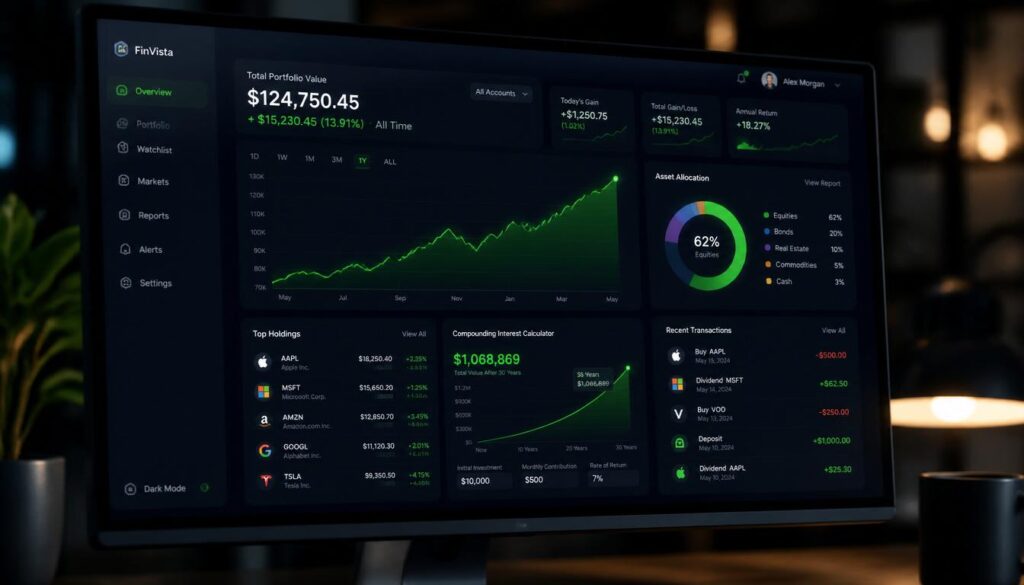
5. Strategic Investing: Letting Compound Interest Work for You
Investing in the financial markets is arguably the most reliable, hands-off way to create a robust additional income stream. Whether you are looking at equities, fixed-income bonds, index funds, or real estate investment trusts (REITs), strategic investing provides both long-term capital appreciation and regular cash payouts through dividends and interest.
For beginners and those who prefer a hands-off approach, broad-market index funds and Exchange Traded Funds (ETFs) are exceptional choices. They offer instant diversification, low expense ratios, and historically consistent growth that outpaces inflation over the long term. If you are willing to dedicate time to financial education and portfolio management, individual dividend aristocrat stocks or direct real estate ownership can offer higher, more targeted yields.
The secret to successful investing is unwavering consistency. Implement a strategy like Dollar-Cost Averaging (DCA), where you automatically contribute a fixed portion of your earnings into your investment accounts every single month, regardless of whether the market is up or down. Over decades, the mathematical miracle of compound growth turns modest, regular contributions into substantial, life-changing wealth. Furthermore, investments act as a vital hedge against inflation, preserving your purchasing power when the cost of living rises. Combining market investment income with your active and digital streams creates an impenetrable financial foundation.
6. Leveraging Digital Platforms for Borderless Scalability
The internet has completely democratized entrepreneurship, opening endless opportunities to build highly scalable income streams without the need for massive startup capital or physical storefronts. Digital platforms allow you to monetize your skills, products, or content for a global audience, operating 24/7 independent of your physical location or time zone.
Platforms like Shopify and Etsy enable you to sell physical or digital products to consumers worldwide. YouTube, Substack, and podcasting networks allow you to build an audience and monetize through ad revenue, premium subscriptions, and brand sponsorships. Upwork and Fiverr connect freelancers with high-paying international clients. Additionally, affiliate marketing—promoting other companies’ products and earning a commission on sales—can be highly lucrative when paired with a niche blog or social media following.
The primary advantage of digital income streams is their infinite scalability. Once a piece of software, a digital template, or a video is created, the marginal cost of selling it to one more person is virtually zero. The main challenge, however, is cutting through the noise in a crowded digital marketplace. To succeed, you must focus relentlessly on delivering unique, high-quality value and building deep trust with your audience. By mastering digital platforms, you unlock income streams that can grow exponentially without requiring a proportional increase in your working hours.

7. Automating and Scaling Your Financial Ecosystem
Once you have successfully launched several income streams, you will quickly realize that managing them all can become a full-time job in itself. To prevent burnout and protect your primary source of income, you must shift your focus toward automation and scaling.
Automation involves implementing tools, software, and systems to reduce your daily operational workload. This could mean using social media scheduling tools to manage your content calendar, employing email marketing automation to nurture leads for your digital products, or utilizing property management software to handle tenant communications and rent collection for your real estate. Outsourcing is another critical component of automation; hiring virtual assistants for administrative tasks or freelance editors for your content frees up your most valuable resource: your time.
Scaling means expanding your income sources to increase earnings without multiplying your effort. This could involve adding complementary products to your e-commerce store, raising your consulting rates as your authority grows, or reinvesting your profits into higher-yield dividend investments. This stage is crucial because it transitions you from being an “operator” who works in the business to an “owner” who works on the business. Without automation, your earnings remain strictly capped by your available hours. With it, you build a portfolio of income sources that operate smoothly in the background.

8. Monitoring, Adjusting, and Sustaining Your Portfolio
Creating multiple income streams is not a “set it and forget it” endeavor. The economic landscape, consumer preferences, and digital algorithms are constantly evolving. Therefore, you must regularly review the performance of each income stream to identify what is thriving and what requires adjustment.
Treat your income streams like a financial portfolio. Set clear Key Performance Indicators (KPIs) for each venture, such as monthly net profit, customer acquisition cost, or return on investment. Track these results meticulously. Be prepared to pivot, abandon unprofitable or overly time-consuming streams, and double down your resources on the high performers.
Furthermore, maintain strict diversification. Do not allow one single side hustle or investment to become your new “single point of failure.” Even if a specific digital product or dividend stock is currently your biggest earner, market shifts or technological disruptions can impact it unexpectedly. Maintaining a healthy mix of active, passive, online, and traditional investment-based income ensures maximum stability. This ongoing process of auditing, adjusting, and optimizing keeps your financial ecosystem resilient, healthy, and fully prepared to adapt to whatever the future economy brings.
Conclusion
Transitioning from a single-paycheck mindset to a diversified income portfolio is one of the most empowering financial decisions you can make. It requires an initial investment of self-reflection, dedicated effort, and strategic planning, but the rewards far outweigh the sacrifices. By understanding the critical importance of diversification, leveraging your unique skills, and systematically building both active and passive income streams, you insulate yourself against economic volatility.
Remember that wealth building is a marathon, not a sprint. Start small, use your active income to fund your investments and digital assets, and relentlessly pursue automation and scalability. As your various income streams begin to compound and intersect, you will find that true financial freedom is no longer just a distant dream, but a tangible, everyday reality. Take control of your financial destiny today, and build the resilient, multi-streamed ecosystem that will support you for a lifetime.
Frequently Asked Questions (FAQ)
1. How many income streams should I realistically aim to have?
While there is no magic number, most financial experts recommend aiming for at least three to five distinct income streams. This provides a solid safety net without spreading your focus too thin. A common mix includes your primary career, a side hustle or freelance gig, a digital asset or content platform, and a dividend-paying investment portfolio. Quality and sustainability are far more important than sheer quantity.
2. Can I start building multiple income streams if I have absolutely no money to invest?
Yes, absolutely. The best way to start with zero capital is by leveraging your existing skills to create active income streams. Freelancing, consulting, tutoring, and gig-economy jobs require only your time and effort, not upfront cash. Once you generate surplus income from these active ventures, you can funnel those profits into passive income streams, digital products, and market investments that require capital to scale.
3. What is the exact difference between active and passive income?
Active income requires your continuous, direct involvement and time to generate revenue; if you stop working, the money stops flowing (e.g., hourly consulting, a traditional job, or freelance writing). Passive income, on the other hand, requires a significant upfront investment of time or money but generates revenue with minimal ongoing maintenance (e.g., dividend stocks, rental properties, royalties, or automated digital courses).
4. How long does it typically take for passive income to replace a full-time salary?
The timeline varies wildly based on your starting capital, the vehicles you choose, and your consistency. For investment-based passive income (like dividends), it can take a decade or more of consistent investing to replace a full-time salary. For digital products or online businesses, it might take one to three years of intense upfront work to build an audience and create assets that generate equivalent passive revenue. Patience and consistency are mandatory.
5. Do I need to pay taxes on my multiple income streams?
Yes, all income generated from side hustles, freelance work, digital products, and investments is generally subject to taxation. In many jurisdictions, you are required to pay estimated quarterly taxes on self-employment and investment income. It is highly recommended to consult with a certified tax professional or CPA to understand your specific obligations, maximize your legal deductions, and structure your income streams in the most tax-efficient manner possible.