
In the modern era of global mobility, high-net-worth individuals, digital entrepreneurs, and remote professionals are increasingly leveraging jurisdictional arbitrage to protect and grow their wealth. Among the myriad of international destinations, one city consistently stands out as a premier hub for financial optimization and lifestyle enhancement: Dubai. By offering a robust zero personal income tax policy, world-class infrastructure, and a highly strategic geographic location, the emirate has transformed into a magnet for those seeking to maximize their retained earnings and accelerate their journey toward financial independence.
Relocating to a new jurisdiction is a profound financial decision that extends far beyond simply packing your bags. It requires a meticulous understanding of international tax laws, residency requirements, corporate structuring, and long-term wealth management strategies. While the headline benefit of zero income tax is undeniably attractive, the true financial advantage lies in how you integrate this benefit into a holistic wealth-building plan. This comprehensive guide explores the multifaceted financial landscape of Dubai, providing actionable insights on how to legally optimize your tax position, establish a thriving business, manage your cost of living, and secure your long-term financial legacy in one of the world’s most dynamic economic zones.
1. The Power of Zero Income Tax: Maximizing Retained Wealth
The cornerstone of the emirate’s appeal to global talent and investors is its zero personal income tax policy. In many Western nations, high-income earners routinely surrender thirty to fifty percent of their gross earnings to federal, state, and local tax authorities. This systemic wealth extraction significantly hampers the ability to save, invest, and compound capital over time. By establishing tax residency in Dubai, individuals legally shield their earned salary, freelance income, and investment dividends from personal income taxation, allowing them to retain one hundred percent of their hard-earned capital.
The mathematical impact of this policy on long-term wealth accumulation is staggering. Consider a professional earning $150,000 annually. In a high-tax jurisdiction with a 40% effective tax rate, $60,000 is lost to the government each year. In Dubai, that entire $60,000 remains in the individual’s pocket. If that retained capital is consistently invested in a diversified portfolio yielding an average annual return of 7%, the power of compound interest transforms those tax savings into millions of dollars in additional net worth over a twenty-year horizon.
However, it is crucial to understand that zero income tax applies strictly to personal earnings. To legally benefit from this structure, individuals must ensure they meet all legal residency requirements and formally break tax ties with their home countries where applicable. Proper planning ensures absolute compliance while maximizing financial gains, turning a geographical relocation into a powerful catalyst for generational wealth creation.
2. Navigating Residency and Visa Options
To legitimately claim the benefits of a zero-tax environment and establish a new tax domicile, securing a valid residency visa is an absolute prerequisite. The government has streamlined its immigration framework to attract global talent, offering a variety of visa pathways tailored to entrepreneurs, freelancers, remote workers, and real estate investors. Understanding these options is the first critical step in your relocation strategy.

The most prestigious and sought-after option is the Golden Visa, a long-term residency permit typically valid for ten years. This visa is available to significant real estate investors, exceptional talents, specialized professionals, and outstanding students. The Golden Visa offers unparalleled stability, allowing holders to live, work, and study without the need for a local employer sponsor, and it provides the flexibility to remain outside the country for extended periods without invalidating the visa.
For digital nomads, consultants, and independent contractors, freelance permits and remote work visas provide a highly accessible entry point. These visas allow individuals to legally reside in the emirate while servicing international clients. Each visa category carries specific application processes, associated costs, and annual renewal requirements. Furthermore, maintaining residency often necessitates securing a local residential address and establishing a local bank account. Because immigration regulations can evolve, staying informed and working with reputable legal counsel ensures your residency status remains secure, safeguarding your tax-free privileges.
3. Establishing a Business in Free Zones
For entrepreneurs and business owners, simply earning a tax-free salary is only half the equation; structuring your corporate entity efficiently is equally vital. The emirate boasts numerous specialized “Free Zones”—designated economic areas designed to foster international trade and foreign direct investment. Establishing a business within one of these zones offers profound financial and operational advantages.

The primary allure of a Free Zone company is the allowance of one hundred percent foreign ownership. Historically, mainland companies required a local majority sponsor, but Free Zone regulations bypass this requirement, granting international entrepreneurs complete control over their enterprises. Additionally, Free Zone entities benefit from zero percent corporate tax on “qualifying income,” full repatriation of capital and profits, and exemption from import and export duties. Each Free Zone is meticulously curated around specific industries—such as the Dubai Multi Commodities Centre (DMCC) for trading, or the Dubai International Financial Centre (DIFC) for financial services—providing targeted infrastructure, networking, and regulatory support.
Owning a Free Zone company can also serve as a vehicle for securing your own residency visa and sponsoring your family, eliminating the need for traditional employment. This corporate structure allows you to invoice global clients seamlessly while maintaining a highly efficient tax profile. Nevertheless, navigating the nuances of corporate structuring, licensing fees, and economic substance regulations requires professional legal and accounting guidance to ensure full compliance with both local and international laws.
4. Balancing the Cost of Living and Budgeting
While the absence of income tax provides a massive boost to your bottom line, it is imperative to contextualize this benefit against the local cost of living. The emirate is a luxury destination, and without disciplined financial planning, the savings generated by a zero-tax environment can be rapidly eroded by lifestyle inflation and high consumer costs.
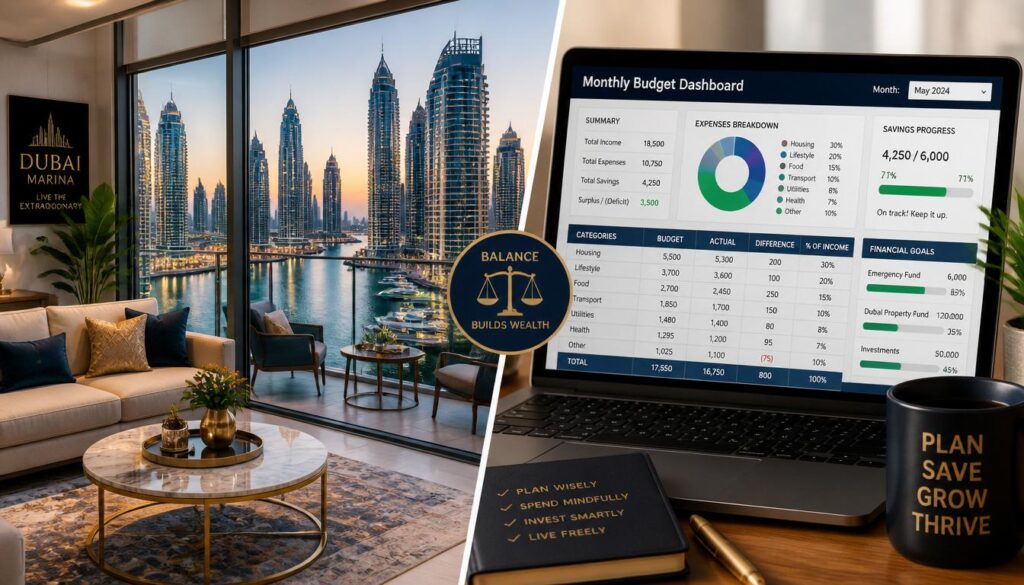
Housing represents the most significant expense for most expatriates. Premium areas like the Palm Jumeirah, Downtown, and the Marina command exorbitant rental and purchase prices. However, strategic neighborhood selection can drastically reduce overhead without sacrificing quality of life. Communities such as Jumeirah Village Circle (JVC), Dubai Silicon Oasis, or the suburban developments of Arabian Ranches offer exceptional amenities, modern housing, and family-friendly environments at a fraction of the cost of luxury waterfront zones.
Furthermore, everyday expenses such as dining out, entertainment, and private schooling can accumulate quickly. The key to true wealth building in this environment is to treat your tax savings as investment capital rather than an excuse for unchecked consumption. Many successful expats adopt a strategy of “geo-arbitrage,” maintaining a moderate, comfortable lifestyle while aggressively directing the surplus capital—previously earmarked for taxes in their home countries—into global investment portfolios, real estate, or business expansion. By rigorously comparing your retained income against your localized expenses, you can ensure that your relocation yields a substantial, positive net financial gain.
5. Banking, Financial Services, and Currency Management
A sophisticated wealth management strategy requires a robust banking infrastructure, and the local financial sector is highly developed, stable, and tailored to the needs of an international populace. Opening and managing local bank accounts is a fundamental step in establishing your financial footprint and facilitating seamless global transactions.
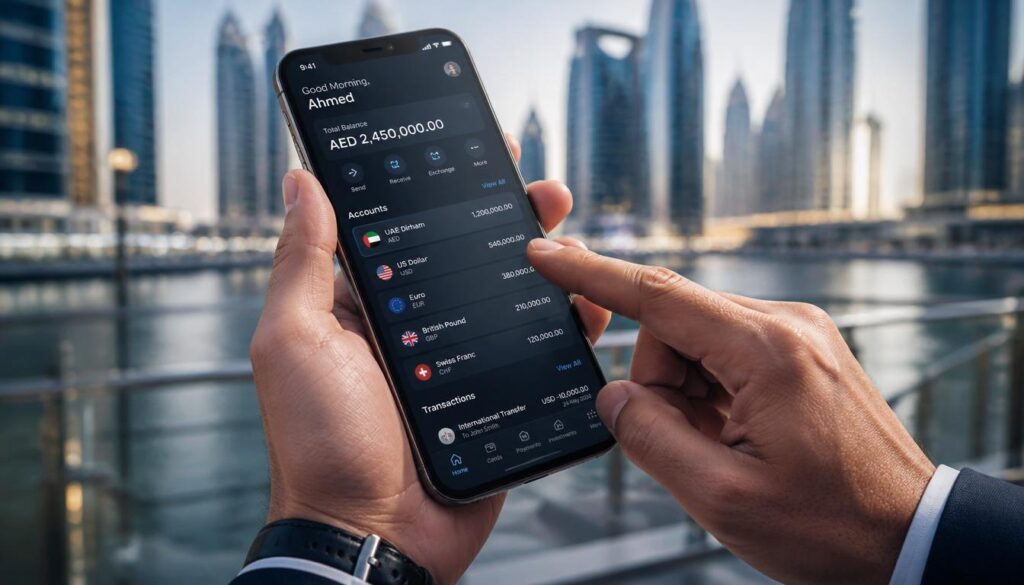
Modern retail and commercial banks in the region offer advanced multi-currency accounts, which are indispensable for global entrepreneurs who earn in US Dollars or Euros but spend in local Dirhams. These accounts allow you to hedge against currency fluctuations and minimize foreign exchange fees. Furthermore, the rise of digital-first banks and modern fintech platforms has revolutionized the onboarding process, offering intuitive online banking tools that simplify the management of both local and foreign income flows.
It is important to note that traditional banks often require proof of residency, a valid Emirates ID, and a minimum salary transfer or balance to waive monthly maintenance fees. Building a strong relationship with a reputable local bank not only provides convenience for daily transactions but also adds a layer of credibility when applying for local credit facilities, mortgages, or business loans. A well-structured banking setup is the bedrock upon which your tax-free wealth is managed, protected, and deployed.
6. Networking and Global Business Opportunities
Beyond the immediate financial metrics, the intangible return on investment provided by the local professional ecosystem is immense. The city has firmly established itself as a premier global business hub, strategically positioned at the crossroads of Europe, Asia, and Africa. This geographic advantage, combined with a highly expatriate-driven population, creates an unparalleled environment for networking, deal flow, and business expansion.

Throughout the year, the city hosts massive international trade shows, industry-specific summits, and high-level mastermind groups. Events like GITEX for technology, or the various fintech and real estate expos held at the World Trade Centre, attract innovators, venture capitalists, and corporate leaders from across the globe. For an entrepreneur or investor, simply being in the room where these global conversations happen can lead to joint ventures, partnerships, and client acquisitions that would be impossible to secure from a more isolated geography.
The business-friendly regulatory environment actively encourages creative ventures and cross-border trade. Building a robust local network often opens unexpected doors, providing access to off-market real estate deals, private equity opportunities, and specialized talent pools. In a city where over eighty-five percent of the population are expatriates, you are constantly exposed to diverse cultural perspectives and international market insights, giving your business a distinct competitive edge on the global stage.
7. Cultural, Lifestyle, and Infrastructure Benefits
Financial optimization is only one side of the relocation equation; the quality of life you experience daily is equally vital. The emirate offers a modern, hyper-connected lifestyle supported by world-class infrastructure, exceptional safety standards, and a diverse, welcoming community. For many high-net-worth individuals and digital nomads, the lifestyle benefits act as a “dividend” that justifies the move, independent of the tax advantages.

Safety is a paramount concern for global citizens, and the city consistently ranks among the safest in the world, boasting incredibly low crime rates. This security, combined with immaculate public spaces and state-of-the-art amenities, makes it highly appealing for both single professionals and families. The healthcare system is top-tier, featuring internationally accredited hospitals and clinics staffed by global medical talent. Similarly, the education sector offers a vast array of international curricula, including British, American, and IB programs, ensuring a seamless transition for expatriate children.
The year-round sunshine, pristine beaches, and unique desert landscapes provide a vibrant backdrop for leisure and outdoor activities. From high-end shopping and Michelin-starred dining to cultural heritage sites and thrilling desert safaris, the lifestyle seamlessly blends traditional Arabian hospitality with ultra-modern luxury. This high standard of living ensures that the pursuit of financial freedom does not come at the expense of personal well-being and family happiness.
8. Legal Compliance and International Tax Treaties
While the local tax environment is highly favorable, international tax compliance remains a complex and critical area that demands meticulous attention. Relocating to a zero-tax jurisdiction does not automatically absolve you of tax liabilities in your home country. Many nations, most notably the United States, employ a citizenship-based taxation model, meaning their citizens are taxed on global income regardless of where they reside.

For citizens of countries that utilize a residency-based tax system, the goal is to legally break tax residency in the home country and establish it in the UAE. This process involves more than just moving your physical body; it requires shifting your “center of vital interests.” You must navigate the 183-day rule, sever ties with local property and social clubs, and ensure you are recognized as a tax resident of the UAE. The UAE has an extensive network of Double Taxation Avoidance Agreements (DTAAs) with over a hundred countries, which can be leveraged to prevent being taxed twice on the same income.
Furthermore, under the Common Reporting Standard (CRS), financial institutions globally share account holder data with tax authorities. Maintaining transparent, accurate records of your residency status, income sources, and corporate structures is non-negotiable. Consulting with a cross-border tax specialist is essential to design a compliant relocation plan. Failing to properly execute the exit from your home country’s tax net can result in severe penalties, back taxes, and legal complications, entirely negating the benefits of your move.
9. Accelerating Long-Term Wealth and Investment Strategies
The ultimate objective of preserving your income through zero taxation is to deploy that capital into assets that generate passive income and long-term appreciation. Without the annual drag of income taxes, your capacity to fund investment vehicles is exponentially increased. A disciplined approach to investing the “tax dividend” is what separates those who merely enjoy a high-cash-flow lifestyle from those who achieve enduring, generational wealth.
Many expatriates utilize their enhanced cash flow to invest in global equities, exchange-traded funds (ETFs), and international bonds through offshore brokerage accounts. Because there is no local capital gains tax, the profits generated from these global investments compound entirely tax-free. Additionally, the local real estate market presents a highly attractive avenue for wealth preservation and yield generation. The property market offers strong rental yields, transparent freehold ownership laws for foreigners in designated areas, and the potential for significant capital appreciation.
Some investors use their corporate structures to hold diversified asset classes, further insulating their wealth from geopolitical risks in other parts of the world. The key psychological shift required is to resist the urge to upgrade your lifestyle in direct proportion to your increased net income. By consciously directing your tax savings into hard assets and income-producing investments, you harness the full power of jurisdictional arbitrage, effectively buying back your time and securing lasting financial freedom.
10. Designing a Strategic Exit Plan
While the current environment is highly conducive to wealth creation, life is dynamic, and your personal or professional circumstances may eventually require you to relocate to another jurisdiction. A sophisticated financial strategy always includes a well-conceived exit plan. Leaving a tax haven without proper preparation can trigger unexpected tax liabilities, known as “exit taxes,” or complicate your financial standing in your next country of residence.
Different visa categories and corporate structures have specific wind-down procedures. For instance, liquidating a Free Zone company, closing local bank accounts, and transferring assets across borders must be executed in a specific sequence to avoid triggering withholding taxes or violating anti-money laundering (AML) protocols. Furthermore, you must thoroughly analyze the tax code of the country you intend to move to next. Some high-tax nations impose heavy levies on the unrealized gains of assets acquired while you were a non-resident.
Maintaining impeccable digital and physical records of all your financial transactions, corporate filings, and residency stamps is crucial for a smooth transition. A prepared exit strategy ensures that the wealth you have accumulated remains protected and easily transferable, allowing you to pivot to your next life chapter without sacrificing your hard-earned financial standing. Smart exits are just as important as smart entries in the game of global wealth management.
Conclusion
Relocating to Dubai represents a profound paradigm shift in how you manage, protect, and grow your wealth. By leveraging a zero personal income tax policy, establishing efficient corporate structures in specialized Free Zones, and integrating into a vibrant global business hub, individuals can dramatically accelerate their path to financial independence. However, the true power of this jurisdiction is unlocked not merely by earning more, but by strategically deploying those retained earnings into diversified global assets and local real estate.
Success in this environment requires a holistic approach that balances the undeniable lifestyle benefits with rigorous financial discipline and strict adherence to international legal compliance. By understanding the nuances of residency visas, managing the local cost of living, and planning for both long-term compounding and eventual exit strategies, you can transform a geographical move into a masterstroke of personal finance. For the globally minded entrepreneur or investor, the emirate offers not just a place to live, but a powerful platform for enduring wealth creation.
Frequently Asked Questions (FAQ)
1. Do I really pay absolutely zero taxes on my income in Dubai?
For personal income, the answer is yes. The UAE does not levy any personal income tax on salaries, freelance earnings, or dividends, meaning you retain 100% of your gross personal income. However, it is important to note that the government does generate revenue through other means, such as a 5% Value Added Tax (VAT) on most goods and services, municipal housing fees, and a 9% federal corporate tax that applies to mainland businesses and certain types of non-qualifying corporate income. Furthermore, you must ensure you are legally recognized as a tax resident to claim these benefits and avoid taxation in your home country.
2. How do I prove my tax residency to my home country to avoid double taxation?
To legally break tax residency in your home country and establish it in the UAE, you must obtain a Tax Residency Certificate (TRC) issued by the UAE Federal Tax Authority. To qualify for a TRC, you generally need to hold a valid residency visa, maintain a physical residential address (such as a leased apartment or owned property), and spend a minimum amount of time within the country, often adhering to the 183-day rule or proving your “center of vital interests” has shifted. You will also need to provide local bank statements and utility bills. Presenting this TRC to your home country’s tax authorities, alongside leveraging relevant Double Taxation Avoidance Agreements (DTAAs), is the legal mechanism used to prevent double taxation.
3. Is the cost of living in Dubai too high to actually save and invest money?
The cost of living can be exceptionally high if you succumb to lifestyle inflation, particularly regarding luxury waterfront real estate, high-end dining, and premium private schooling. However, it is entirely possible to live comfortably and save aggressively if you budget strategically. By choosing more affordable, family-friendly suburban communities, utilizing the extensive and affordable public transport network, and being mindful of entertainment expenses, your overhead can be kept very reasonable. When you factor in the 30% to 50% of your income that you are not paying in income taxes, your net disposable income and capacity for savings are usually vastly superior to what they would be in high-tax Western nations, even with a slightly higher baseline cost of living.
4. Can I open a business in a Free Zone if I am not a resident?
Yes, you can incorporate a Free Zone company as a non-resident foreign investor. The UAE allows 100% foreign ownership of Free Zone entities, and the initial incorporation process can often be handled remotely through legal representatives or corporate service providers. However, while you can own the company as a non-resident, you will not be able to open a local corporate bank account, secure local office space, or obtain a residency visa for yourself and your family without eventually completing the residency process and obtaining an Emirates ID. Therefore, while the legal structure can be set up from abroad, operationalizing the business locally requires establishing residency.
5. What happens to my investments and assets if I decide to leave Dubai?
When you decide to exit, your locally held assets (like real estate or local bank accounts) can generally be liquidated or maintained, provided you have a legal structure or proxy in place to manage them. Because there is no local capital gains tax, you will not pay the UAE government any tax on the profit made from selling your Dubai real estate or liquidating local investments. However, the critical financial consideration is your next destination. If you move to a high-tax country, that new jurisdiction may tax the future gains of those assets or even impose an “exit tax” on your UAE corporate structures. Therefore, asset transfer and corporate restructuring must be carefully planned with an international tax advisor before you officially establish residency in your next country.