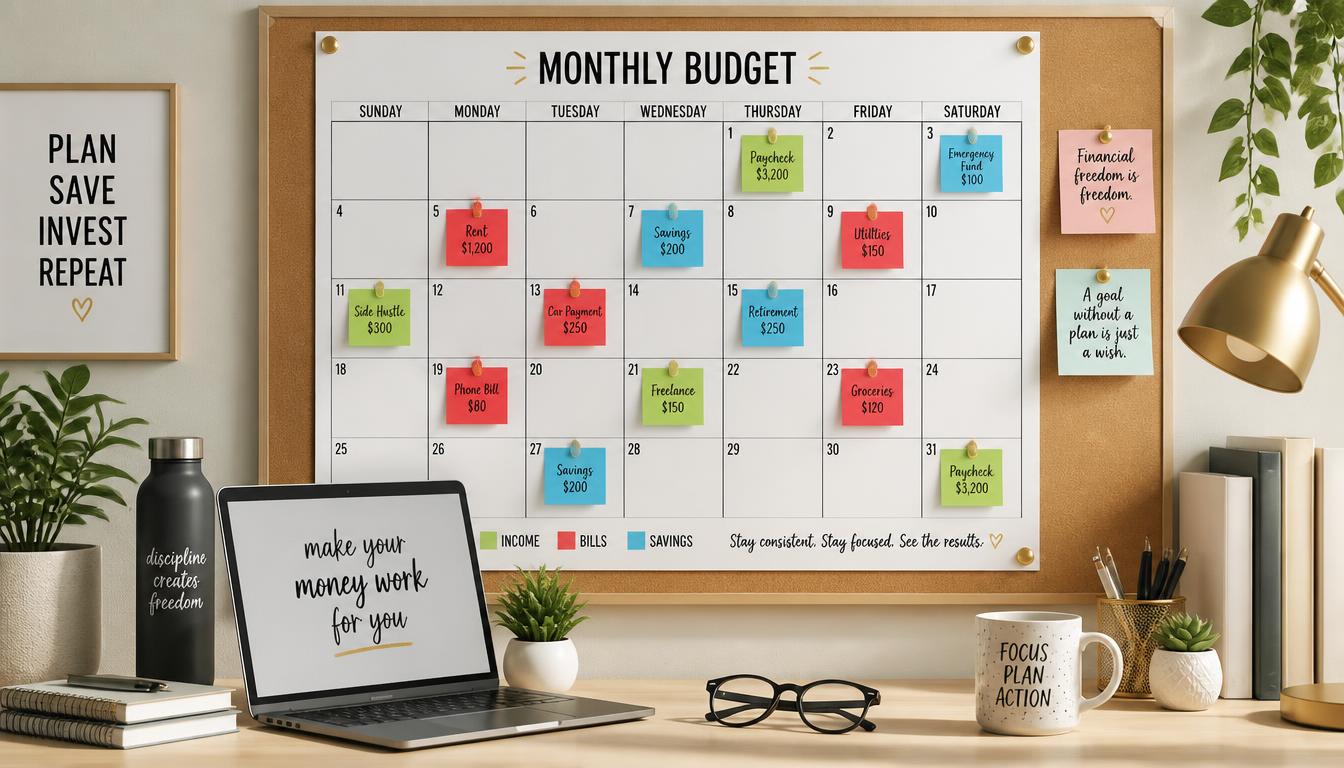
Managing money does not have to feel like an overwhelming burden. For many, the word “budget” conjures images of strict restrictions, missed opportunities, and endless spreadsheets. It is no surprise that so many people avoid creating a monthly budget altogether, or abandon their plans after just a few weeks when the rigid structure fails to reflect their actual lifestyle.
However, a budget that truly works is not about depriving yourself. It is about building a realistic, flexible system that adapts to your income, your daily habits, and your long-term financial goals. When done correctly, budgeting is one of the most powerful financial tools at your disposal. It brings clarity to your financial life, prepares you for the unexpected, and ultimately creates the freedom to spend money on what truly matters without guilt.
If you are ready to take control of your finances and build smarter money habits, this comprehensive guide will break down exactly how to create a monthly budget that you can actually stick with. We will cover essential categories, tracking strategies, technological tools, and the psychological adjustments needed to keep you motivated for the long haul.
Step 1: Understand the “Why” and Track Your Reality
Before diving into numbers and spreadsheets, you must understand why budgeting matters. At its core, budgeting gives you control. It brings absolute clarity to your financial life, showing you exactly where your money is going every single month. It prepares you for the unexpected by ensuring you always have something set aside for emergencies. Most importantly, it helps you achieve your dreams—whether that means becoming debt-free, buying a home, or retiring early. A budget is simply a financial map that guides you toward stability and success.
Once you understand the “why,” you must face the “what.” A realistic budget starts with knowing exactly how much money you have and where it currently goes. Begin by calculating your net income—the money you actually take home after taxes and deductions. Do not use your gross salary. Add up all sources of income, including your primary job, side hustles, freelance work, or rental income.
Next, you must track your expenses honestly. For at least one month, track every single penny you spend. You can do this by writing it down in a notebook, using a spreadsheet, or letting a financial app do the heavy lifting. The goal is brutal honesty. Many people are genuinely shocked when they see how much money disappears into small, daily habits like daily coffee shop visits, unused subscriptions, or impulsive online purchases. Without this foundational knowledge, any budget you create will be based on guesswork and will quickly collapse under the weight of reality.

Step 2: Choose a Budgeting Method That Fits Your Personality
Not every budgeting style works for everyone. The biggest mistake beginners make is adopting a complex system that clashes with their natural personality. The best budget is simply the one you can actually stick with month after month. Here are the most effective methods to consider:
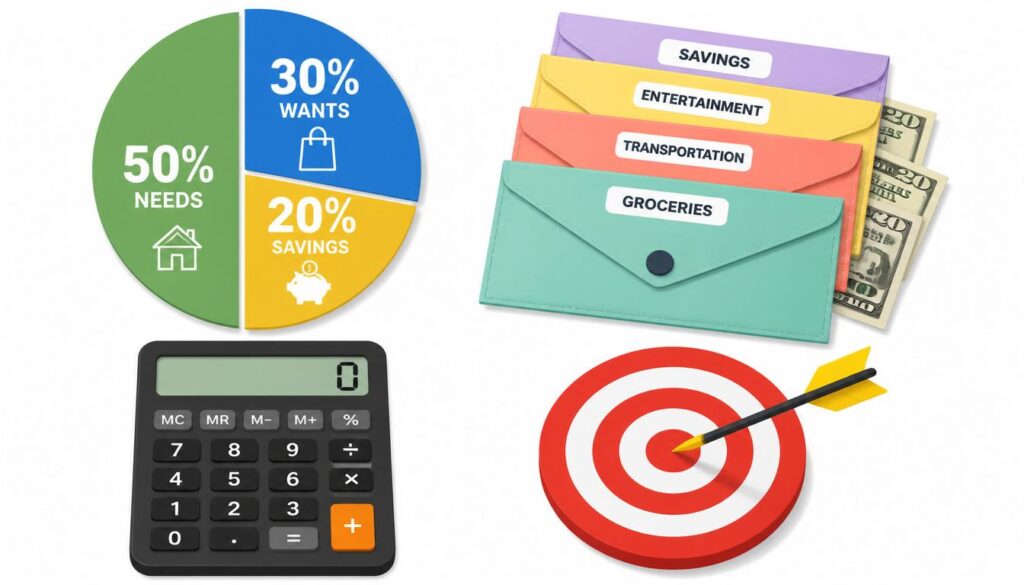
The 50/30/20 Rule: This is a simple, highly effective framework for people who prefer general guidelines over micromanaging. You allocate 50% of your net income to needs (housing, groceries, utilities), 30% to wants (entertainment, dining out, hobbies), and 20% to savings and debt repayment. It is easy to understand and provides a balanced approach to money management.
Zero-Based Budgeting: This method is more detailed and gives you complete control. The premise is simple: Income minus Expenses must equal zero. Every single dollar is assigned a specific task before the month begins. If you have money left over after covering your bills and savings goals, you assign it to extra debt payoff or investments. This is ideal for highly organized individuals who want to maximize every dollar.
The Envelope System: Perfect for visual learners and those who struggle with credit card overspending. You divide your variable spending categories (like groceries, dining out, and entertainment) into physical cash envelopes. Once an envelope is empty, you stop spending in that category until the next month. Digital equivalents of this system are also available through various banking apps.
Priority-Based Budgeting: This approach is ideal for those who want to direct their money first toward their most important life goals. You list your financial priorities (e.g., paying off student loans, saving for a wedding) and fund them immediately upon receiving your paycheck. The remaining money is then used for standard living expenses.
Step 3: Break Down Your Categories and Align with Goals
A strong budget requires clear categories that mirror your real life. Think of these categories as the skeleton of your budget; they give structure to your spending and ensure nothing is overlooked.
Your primary fixed expenses usually include housing (rent or mortgage), utilities, insurance, and minimum debt payments. These are the non-negotiables that keep your life running. Next, account for variable necessities like groceries, transportation (gas, maintenance, public transit), and healthcare.
However, a common pitfall is forgetting the lifestyle categories. Food can easily take more of your income than expected if you frequently eat out or order delivery. You must also include categories for personal spending, entertainment, and gifts. Finally, always include a “Miscellaneous” or “Buffer” category. This ensures that small, unpredictable surprises do not completely throw off your carefully laid plan. Debt repayment and savings should not be an afterthought; they must be treated as priority categories alongside your rent and utilities.
Once your categories are set, you must align your budget with your actual financial goals. A budget is only truly useful if it reflects what matters most to you. Without clear goals, your budget is just a depressing list of restrictions. Take time to define your priorities. Do you want to pay off high-interest credit card debt? Save for a down payment on a house? Build a robust six-month emergency fund? Or invest aggressively for early retirement?
Once you know your goals, design your budget around them. For example, if debt freedom is your top priority, your plan should channel extra funds toward aggressive debt repayment, even if it means temporarily cutting back on dining out or entertainment. When your budget aligns with your deepest goals, it stops feeling like a restriction and becomes an empowering tool for achieving your dreams.

Step 4: Build Flexibility and Use Technology to Your Advantage
Budgets that are too rigid almost always fail. Life is inherently unpredictable, and a financial plan that cannot adjust to unexpected expenses or spontaneous opportunities quickly becomes frustrating. To create a budget that works long-term, you must build flexibility into the system.
First, include a small “fun money” or “guilt-free spending” category for yourself. This allows you to enjoy a small treat without feeling like you have broken your budget. Second, utilize “sinking funds” for irregular, predictable expenses. Instead of being caught off guard by annual car registration fees, holiday gifts, or a yearly vacation, set aside a small amount each month specifically for these costs. Finally, maintain a buffer category for truly unexpected spending, like a sudden medical copay or a broken appliance. A flexible budget is sustainable because it adapts to reality instead of fighting against it.
Furthermore, budgeting is much easier today than it was in the past because technology can do the heavy lifting. You do not need to manually categorize every receipt. Utilize budgeting apps like YNAB (You Need A Budget), EveryDollar, or Monarch Money to automatically track your spending, sync with your bank accounts, and provide real-time insights into your habits.
Take advantage of technology to automate your financial life. Set up automatic transfers into your savings and investment accounts on payday. Automate your minimum debt payments so you never miss a due date. When you automate your savings, you treat it like a non-negotiable bill that always gets paid, removing the need for daily willpower. Additionally, set up bank alerts that warn you via text or email when you are approaching your spending limits in specific categories. These tools not only save time but drastically reduce the mental stress of managing your money.

Step 5: Adjust, Stay Consistent, and Learn from Mistakes
One of the most important things to remember is that your first budget will never be perfect. In fact, your first few months of budgeting are essentially data-gathering missions. Many people severely underestimate what they truly spend in categories like groceries, personal care, or transportation.
The key to long-term success is to review your budget at the end of each month and compare your actual spending with your planned numbers. If you consistently overspend in one area, do not beat yourself up; simply increase that category’s limit and reduce another to balance it out. If you consistently spend less than allocated, redirect that extra money toward your savings or debt repayment goals. Adjustments are not failures; they are necessary refinements. Your budget is a living document that must evolve alongside your life.
Consistency is what transforms budgeting from a temporary, stressful experiment into a relaxed, long-term lifestyle. Schedule a weekly “money date” with yourself. Reviewing your budget for just 10 minutes once a week helps you stay on track, catch any unauthorized charges, and ensure you are not drifting off course.
To stay motivated, celebrate your small wins. Did you successfully stick to your grocery budget this week? Did you pay off a specific credit card? Did you manage to save an extra fifty dollars? Acknowledge these victories. Most importantly, remember your “why.” When the process feels tedious, remind yourself whether you are budgeting for peace of mind, financial independence, or to provide security for your family. Keeping that motivation front and center will remind you why the process matters.
Finally, learn from common mistakes and keep moving forward. One of the main reasons people abandon their budget is that they make a mistake early on and treat it as a catastrophic failure. Overspending one month, forgetting to track an expense, or setting unrealistic limits can make budgeting feel impossible. In reality, these mistakes are a normal part of the learning process. When slip-ups happen, view them as valuable information that can help you adjust your plan, not as signs that you should quit. No one follows a budget perfectly. What makes the difference is your commitment to simply try again the next month.

Conclusion
Creating a monthly budget is not about restricting your life; it is about granting yourself the ultimate financial freedom. When you know exactly where your money is going, you no longer have to lie awake at night worrying about unexpected bills or whether you can afford a simple dinner out. You transition from a state of financial anxiety to a state of financial empowerment.
By understanding your “why,” tracking your reality, choosing a method that fits your personality, and building a flexible system supported by technology, you create a financial plan that actually works. Remember to align your spending with your deepest goals, adjust your plan as you learn, and forgive yourself when mistakes happen. Budgeting is a lifelong journey of refinement. Once you master this skill, you will not just be managing your money; you will be designing the life you truly want to live.

Frequently Asked Questions (FAQ)
1. How much of my income should go to needs, wants, and savings?
A highly recommended starting point is the 50/30/20 rule. This suggests allocating 50% of your net income to needs (housing, utilities, groceries), 30% to wants (entertainment, dining out, hobbies), and 20% to savings and debt repayment. However, these percentages can and should be adjusted based on your specific financial goals, cost of living, and current debt levels. If you live in a high-cost area, your “needs” might take up 60%, requiring you to adjust the other categories accordingly.
2. What should I do if I consistently overspend in one budget category?
First, do not panic or abandon your budget. Overspending provides valuable data. If you consistently overspend in a specific category, such as groceries or dining out, you have two choices. You can either adjust your budget to reflect reality by increasing the limit for that category (and decreasing another to balance it out), or you can actively change your behavior to bring your spending down to the original planned limit. A budget should reflect your actual life, so adjust the numbers to be realistic.
3. How often should I review my budget to stay on track?
While you should do a comprehensive review at the end of every month to compare planned versus actual spending, it is highly recommended to check in on your budget weekly. A weekly “money date” taking just 10 to 15 minutes allows you to track your progress, categorize recent transactions, and ensure you have enough money left in your variable categories for the remainder of the week. This prevents end-of-month surprises.
4. What is the best budgeting method for someone who hates math and spreadsheets?
If you dislike detailed tracking and spreadsheets, the 50/30/20 rule or the automated “reverse budgeting” method is ideal. With reverse budgeting, you set up automatic transfers on payday: your savings and investment contributions are moved first, your fixed bills are paid automatically, and the remaining money is left in your checking account to spend freely on wants and variable needs. This requires zero daily math or tracking while ensuring your financial goals are met.
5. How do I create a monthly budget if I have a variable or irregular income?
Budgeting on a variable income requires a slightly different approach. Start by calculating your baseline “bare bones” monthly expenses—the absolute minimum you need to survive. Base your core budget on your lowest-earning month from the past year. During high-earning months, allocate the surplus income into a “holding” or “buffer” account. During low-earning months, draw from this buffer to cover your baseline expenses. This smooths out your income fluctuations and provides year-round stability.