If you have ever felt like your money slips through your fingers faster than you can track it, you are not alone. Financial stress often stems not from a lack of income, but from a lack of clarity. When you do not know exactly when money is coming in and when it is going out, every day feels like a financial guessing game. While complex spreadsheets and hyper-tracking apps work for some, they often lead to burnout, causing many to abandon their financial goals entirely.
There is a simpler, highly effective alternative that bridges the gap between chaotic spending and rigid budgeting: the budgeting calendar.
As a financial advisor, I frequently recommend this tool to clients who feel overwhelmed by traditional budgeting methods. A budgeting calendar transforms abstract numbers into a concrete, visual timeline. It aligns your financial obligations with the actual flow of your life. In this comprehensive guide, we will explore exactly what a budgeting calendar is, the psychology behind why it works, and a step-by-step masterclass on how to build one that keeps your finances permanently on track.
What is a Budgeting Calendar and Why Does It Work?
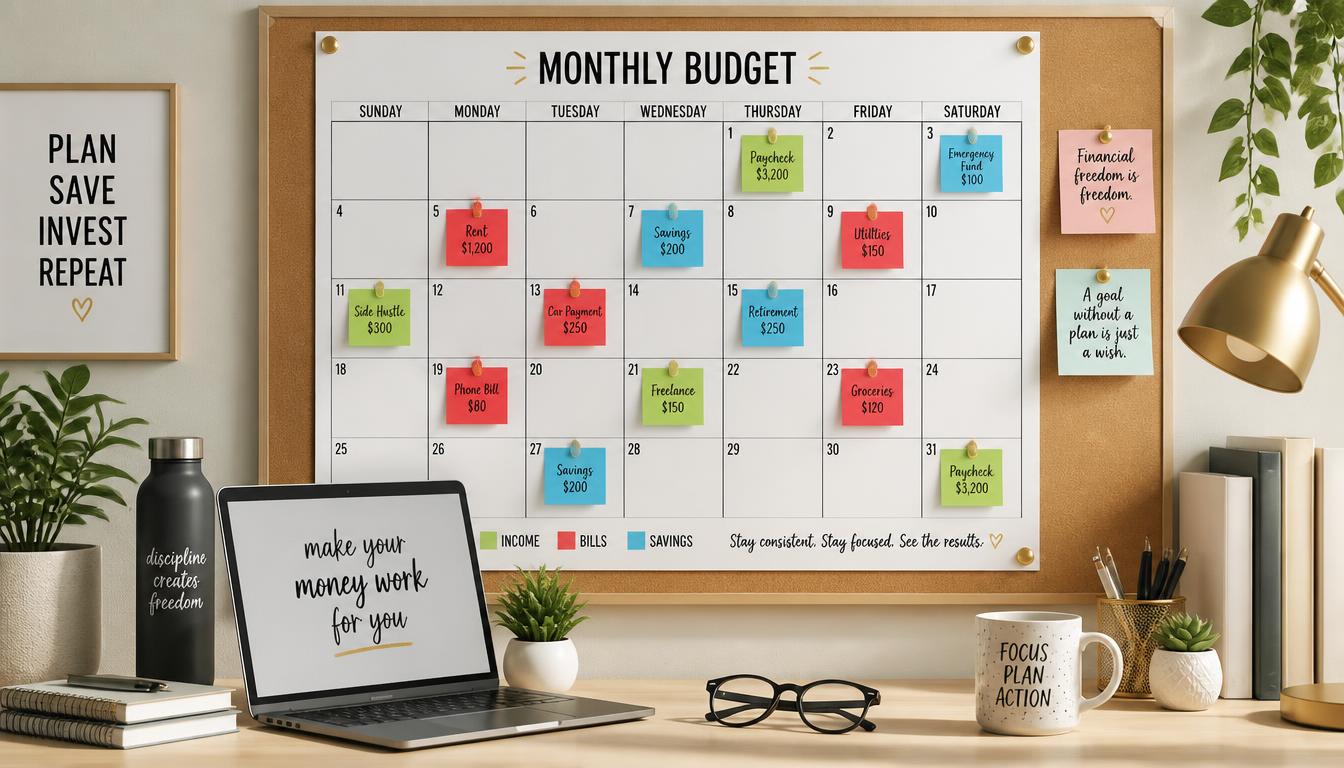
A budgeting calendar is a visual financial map that plots your income, bills, savings goals, and variable expenses against specific dates on a monthly layout. Instead of looking at a static list of expenses and a total income figure, you are looking at a dynamic timeline of your cash flow.
The power of this tool lies in behavioral psychology. Numbers on a spreadsheet feel abstract and disconnected from reality. However, when those numbers are tied to actual dates, they become real. For example, vaguely remembering that your credit card bill is due “sometime next week” induces low-grade anxiety. But seeing it explicitly marked on the 15th, directly following your paycheck on the 1st, replaces anxiety with a clear action plan.
This visual alignment reduces cognitive load. You no longer have to use mental energy trying to remember due dates or calculate if you will have enough funds in your checking account on a specific Tuesday. The calendar does the heavy lifting for you. It shifts your mindset from reactive financial management—scrambling to cover unexpected bills—to proactive financial management, where you anticipate and prepare for every expense.
The Core Benefits of Using a Budgeting Calendar
Adopting a calendar-based budgeting system offers profound benefits that extend far beyond simple organization.
1. Ultimate Peace of Mind The most immediate benefit is the drastic reduction in financial anxiety. When you can see your entire month laid out, the fear of the unknown disappears. You know exactly what is coming, when it is due, and how you will pay for it. This prevents the dreaded “surprise” expenses that usually result in late fees or high-interest credit card debt.
2. Built-in Accountability We are far more likely to honor a commitment when it is scheduled. You would not miss a crucial doctor’s appointment if it were clearly marked on your calendar; the same psychological principle applies to your finances. When a savings transfer or a debt payoff is scheduled as an “event,” you are significantly less likely to skip it.
3. Enhanced Cash Flow Visibility A traditional budget tells you if you have enough money for the month overall. A budgeting calendar tells you if you have enough money on a specific day. This is crucial for avoiding overdraft fees. You might have enough money for the month, but if your rent is due on the 1st and your paycheck doesn’t arrive until the 5th, you have a cash flow problem. The calendar highlights these timing mismatches so you can fix them.
4. Empowered Decision Making When your financial life is visible, you stop guessing and start making informed choices. If you see that you have a “surplus” week between bills, you can consciously decide to allocate that extra cash toward an investment or a debt snowball, rather than letting it disappear into mindless daily spending.
What to Include in Your Financial Map
To be truly effective, your budgeting calendar must be a comprehensive reflection of your financial life. A partial calendar leads to partial success. Ensure you include the following elements:
- Income Streams: Every payday, freelance payout, side hustle deposit, or child support payment.
- Fixed Expenses: Non-negotiable monthly bills like rent/mortgage, utilities, insurance premiums, car payments, and minimum debt payments.
- Savings and Investments: Contributions to your emergency fund, retirement accounts, brokerage accounts, or specific sinking funds.
- Variable Spending Allocations: Scheduled transfers or cash withdrawals for groceries, gas, dining out, and entertainment.
- Irregular and Annual Costs: Birthdays, holidays, annual subscription renewals, vehicle registration, and property taxes.
Step-by-Step Guide: How to Create Your Budgeting Calendar
Building your budgeting calendar is a straightforward process. Follow these seven steps to create a system that works seamlessly with your lifestyle.
Step 1: Choose Your Format

The first decision is selecting the medium that best fits your personality and lifestyle.
Physical Calendars: A large wall calendar or a dedicated planner is excellent for visual learners. The physical act of writing down a bill reinforces the commitment. It is always visible, serving as a constant reminder. However, it lacks automatic reminders and cannot be easily edited if plans change.
Digital Calendars: Tools like Google Calendar, Apple Calendar, or Outlook are highly efficient. You can use color-coding (e.g., red for bills, green for income, blue for savings), set up recurring events so you never have to re-enter monthly bills, and push notifications to your phone.
Hybrid Approach: Many successful budgeters use a digital calendar for the heavy lifting (recurring bills, automated reminders) and a small physical desk calendar for daily visual tracking and writing down variable daily expenses.
Recommendation: If you are new to budgeting, start with a physical printable calendar to build the habit of engagement. Once the habit is solid, transition to a digital system for long-term convenience.
Step 2: Map Out Your Income Streams
Your income is the foundation of your calendar; everything else is built upon it. Begin by marking the exact dates you expect to receive funds.
If you are a W-2 employee with a bi-weekly pay schedule, you will need to map out how those bi-weekly checks align with the calendar month. Since you will receive three paychecks in some months, you can use that “bonus” third paycheck to aggressively tackle debt or boost your savings. If you are a freelancer or commission-based worker with irregular income, map out your minimum expected income based on your lowest-earning months, and treat any surplus as a bonus to be allocated later.
Step 3: Lock In Your Fixed Expenses

Once your income is plotted, add your fixed, non-negotiable bills. These are the pillars of your financial obligations.
Write down the exact due dates for your mortgage, electricity, water, internet, phone, and insurance. If a bill is due on the 15th, but your paycheck doesn’t arrive until the 16th, you now have a clear visual of a problem. You can either contact your utility company to change the due date, or you can schedule a smaller transfer of funds a few days prior to ensure the account is covered. Marking these on the calendar ensures you never miss a payment, protecting your credit score and saving you from late fees.
Step 4: Automate and Schedule Savings & Investments
A critical mistake in personal finance is treating savings as an afterthought—saving only what is “left over” at the end of the month. A budgeting calendar flips this paradigm by treating savings as a non-negotiable bill you pay to your future self.
Schedule your savings and investment contributions on the exact same day your income hits your account. If you get paid on the 1st, schedule your automatic transfer to your Roth IRA, 401(k), or high-yield savings account for the 2nd. By automating this process and marking it on your calendar, you guarantee consistency. You build wealth in the background while removing the temptation to spend the money before it is saved.
Step 5: Plan for Variable Spending

Variable expenses like groceries, fuel, and entertainment do not have a single “due date,” which makes them the most dangerous category for budget blowouts. However, you can still schedule them.
Create a recurring weekly or bi-weekly “event” on your calendar for variable spending. For example, schedule “Grocery Budget Transfer” for every Saturday morning. This forces you to allocate a specific amount of money for the week, preventing you from overspending early in the month and having nothing left for the final week. Seeing these allocations on your calendar keeps your daily spending visible and contained.
Step 6: Prepare for Irregular and Sinking Fund Costs
Life is full of predictable irregular expenses. Car maintenance, holiday gifts, annual Amazon Prime renewals, and vet visits are not emergencies; they are simply expenses that do not happen every month. When they hit your credit card unexpectedly, they feel like emergencies.
Use your calendar to plan for these using “sinking funds.” If you know you need $600 for Christmas gifts in December, mark a $50 “Christmas Sinking Fund” transfer on your calendar for every month from January to November. By spreading the cost out and scheduling it in advance, a $600 burden becomes a manageable $50 monthly blip. Mark the actual payment dates for annual subscriptions on the calendar so you can evaluate if you still want to renew them before the charge hits.
Step 7: Review, Reflect, and Adjust Monthly

A budgeting calendar is a living document, not a static one. At the end of every month, schedule a “Money Date” with yourself to review the past 30 days.
Compare what you planned on the calendar with what actually happened. Did you underestimate your grocery budget? Did your water bill spike in the summer? Did you successfully stick to your variable spending limits? Use this data to adjust the upcoming month’s calendar. This continuous feedback loop creates incredible financial accuracy over time and deepens your overall financial awareness.
Advanced Tips for Budgeting Calendar Success
To elevate your budgeting calendar from a basic tool to a wealth-building powerhouse, incorporate these advanced strategies:
Implement Color Coding: If using a digital calendar, use distinct colors for different financial categories. Green for income, red for fixed bills, yellow for variable spending, and purple for savings/investments. This allows you to assess your cash flow health at a single glance.
Create “Buffer Days”: Never schedule a bill for the exact day the money arrives. Always build in a 24-to-48-hour buffer. Banks can delay transfers, and technical glitches happen. Buffer days prevent accidental overdrafts.
Sync with Your Bank: If you use a digital calendar, ensure your bank’s bill pay system aligns with your calendar dates. The goal is to have your calendar act as the ultimate master controller of your financial ecosystem.
Involve Your Partner: If you share finances, your budgeting calendar must be a shared document. Use a shared digital calendar or sit down together with a physical one. Financial transparency is the bedrock of a healthy relationship and a successful household budget.
Conclusion
Mastering your personal finances does not require a degree in accounting or the willingness to stare at complex spreadsheets for hours. Sometimes, the most profound financial breakthroughs come from simplifying your systems.
A budgeting calendar is one of the simplest, most effective tools available for taking control of your money. By mapping out your paydays, bills, savings, and irregular expenses in a clear visual format, you transform money management from a source of stress into an empowering, predictable routine. It helps you plan ahead, avoid costly surprises, and make consistent, automated progress toward your long-term wealth goals.
Once you build the habit of checking, updating, and respecting your budgeting calendar, the dynamic shifts. You will no longer feel like you are at the mercy of your finances. Instead, you will be the one in the driver’s seat, confidently navigating your money toward the future you deserve.
Frequently Asked Questions (FAQ)
1. Can I use a budgeting calendar if I get paid bi-weekly instead of monthly?
Absolutely. In fact, a budgeting calendar is highly recommended for bi-weekly paychecks. Since you receive 26 paychecks a year, there will be two months where you receive three paychecks. Your calendar will clearly show you when these “bonus” paychecks occur, allowing you to strategically allocate that extra income toward debt payoff, investments, or building your emergency fund, rather than letting it blend into your regular spending.
2. What is the difference between a budgeting calendar and a traditional budget spreadsheet?
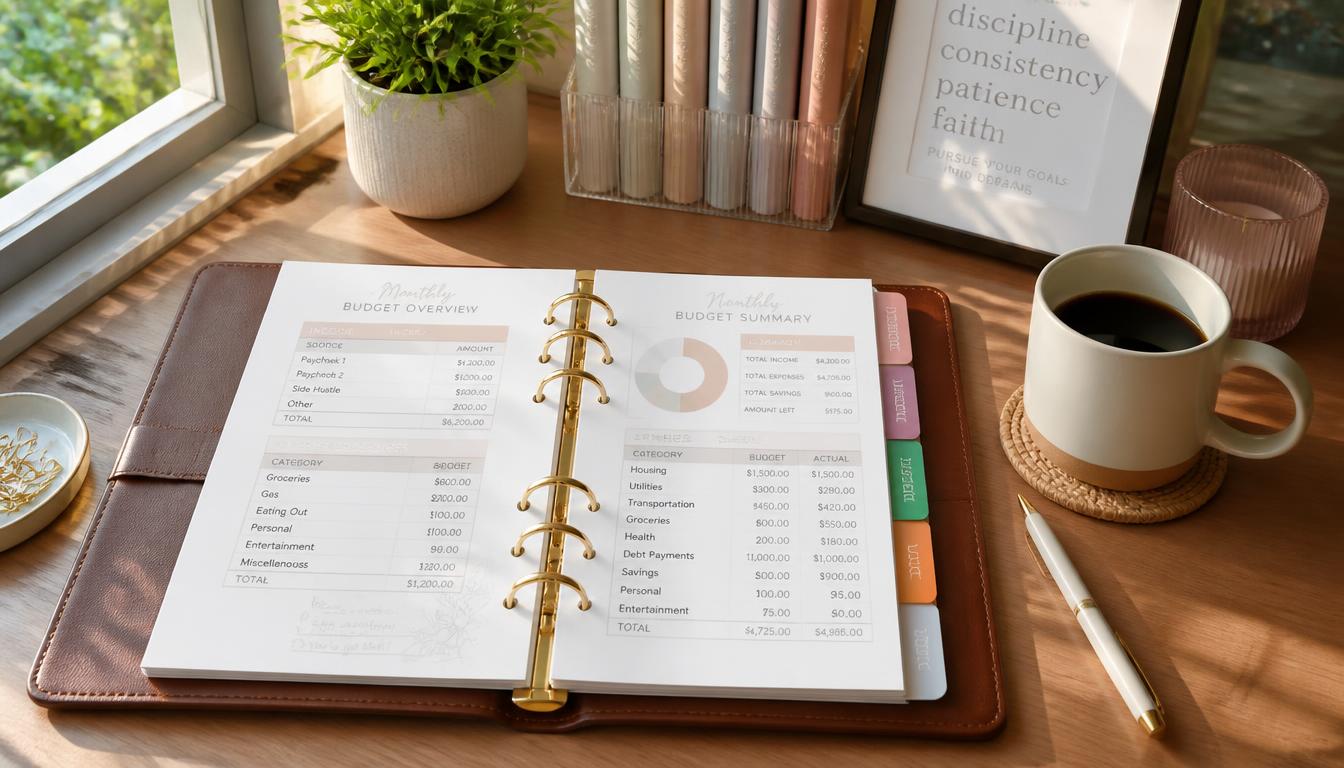
A traditional spreadsheet shows you the total math for the month (Total Income minus Total Expenses). It tells you if you are profitable for the month. A budgeting calendar shows you the timing of the math. It tells you if you have enough cash in your account on a specific Tuesday to cover a bill. Both are useful, but the calendar prevents cash-flow timing issues and overdrafts that spreadsheets often miss.
3. How do I handle variable expenses like groceries and gas on a calendar?
Since variable expenses don’t have a single due date, you should schedule them as recurring weekly or bi-weekly “events.” For example, create a recurring event every Saturday called “Allocate $150 for Groceries.” This forces you to mentally and financially prepare for the expense weekly, preventing you from spending your entire grocery budget in the first week of the month.
4. What should I do if my income fluctuates from month to month as a freelancer?
If your income is irregular, base your calendar on your “baseline” or lowest expected monthly income. Map out your fixed bills and minimum savings based on this conservative number. Any income earned above this baseline should be mapped on the calendar as “Surplus Income” and immediately directed toward variable spending, extra debt payoff, or boosting your savings buffer for the next lean month.
5. How often should I update my budgeting calendar?
You should do a micro-review daily (just a quick glance to see what is due) and a macro-review at the end of every month. The monthly review is crucial; this is when you compare your planned calendar to your actual spending, adjust your variable budgets, and set up the recurring events for the upcoming month. Consistency in this monthly review is what makes the system work long-term.