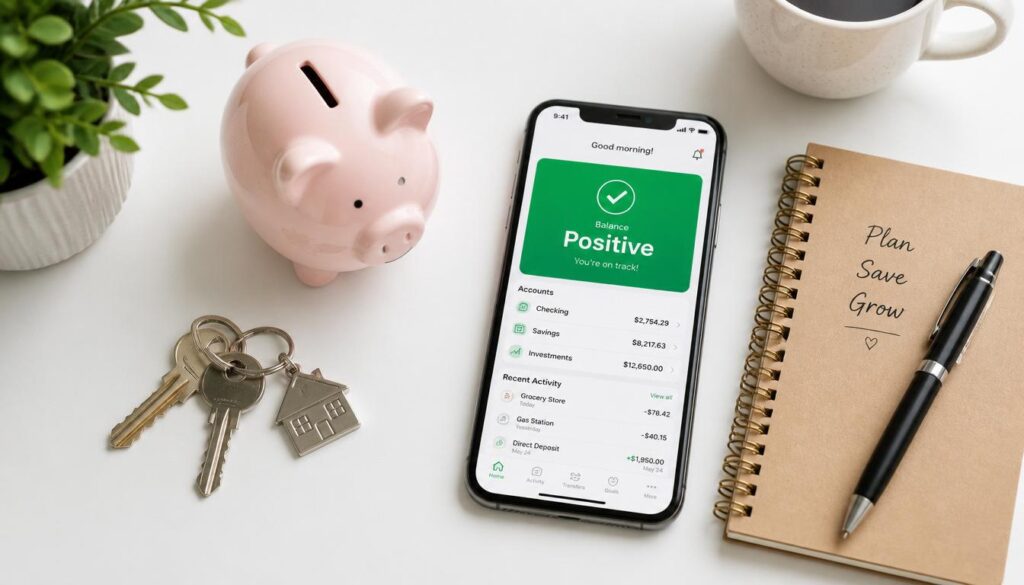
Overdraft fees are often described by financial experts as a hidden tax on the working class, quietly draining bank accounts and eroding financial stability. It is a frustrating reality of modern banking: a simple miscalculation in your checking account can result in a penalty that costs more than the transaction itself. The truth is, you do not have to pay these fees, and understanding the mechanics behind them is the first step toward reclaiming your financial power.
Banks have engineered a highly profitable system that relies on consumer inattention. By understanding why overdraft fees exist, how banks use them to trap you, and the simple steps you can take to opt out for good, you can protect your hard-earned money. This comprehensive guide will walk you through ten actionable, evergreen strategies to eliminate overdraft charges, optimize your daily banking habits, and keep your wealth exactly where it belongs—in your pocket.
1. Understand the Mechanics and Math of Overdraft Fees
To defeat the system, you must first understand how it operates. An overdraft fee occurs when your account balance is insufficient to cover a transaction, but the bank processes it anyway, plunging your account into the negative. The bank then charges a flat fee—typically around $30 to $35—for the “privilege” of covering that shortfall.
The math behind this is staggering. If you overdraw your account by $5 for a cup of coffee and are hit with a $35 fee, you have essentially paid a 700% “interest rate” on a five-dollar loan that lasted only a few days. When annualized, this percentage dwarfs even the highest credit card APRs. Furthermore, banks often charge multiple overdraft fees in a single day if multiple transactions clear while the account is negative. Some institutions cap these fees at four or five per day, meaning a single bad day could cost you over $150. Understanding that this is not a service, but a highly profitable penalty designed to extract wealth, is the psychological shift required to take your finances seriously. Knowledge is your first line of defense against these hidden traps.
2. Opt Out of Overdraft Protection Completely
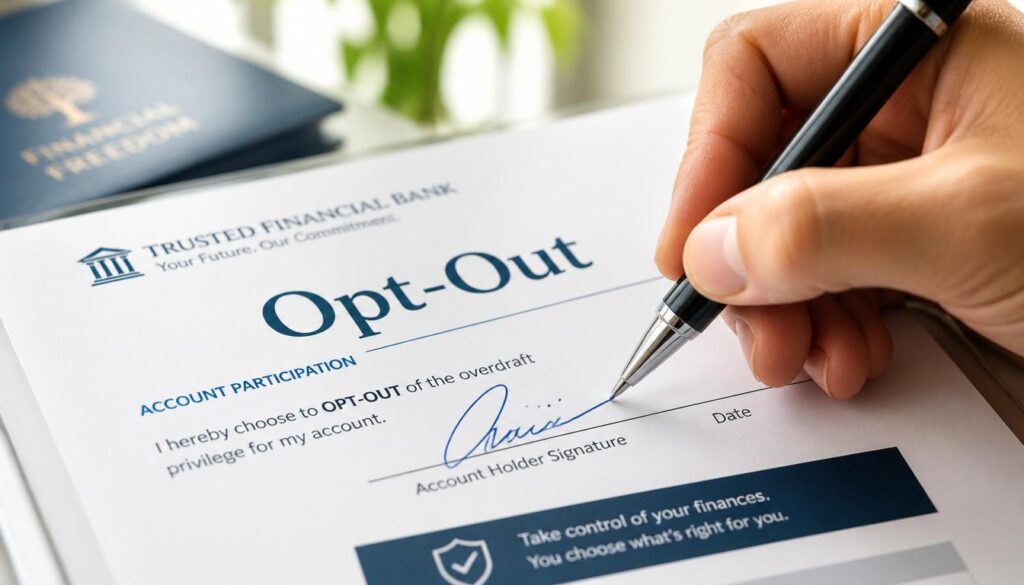
Many consumers mistakenly believe that “overdraft protection” is a safety net designed to help them. In reality, for standard debit card and ATM transactions, it is a revenue generator for the bank. When you “opt in” to overdraft coverage, you are giving the bank explicit permission to charge you a massive fee to cover a debit card purchase.
Opting out of this service is one of the most powerful financial moves you can make. When you opt out, if you attempt to make a purchase with your debit card and lack the funds, the transaction will simply be declined. While having a card declined at the register can feel momentarily embarrassing, it is infinitely better than paying a $35 fee for a $10 purchase. To execute this, contact your bank directly via phone or visit a local branch. Explicitly state that you want to “opt out of standard overdraft coverage for everyday debit card and ATM transactions.” Ensure you receive written confirmation of this change. Once opted out, your money stays safe, and the bank can no longer secretly authorize transactions that trigger penalty fees.
3. Track Your Account Balance Daily
In the era of digital banking, guessing your account balance is a dangerous habit. Many people mentally track their spending or rely on the “available balance” shown on an ATM receipt, which often fails to account for pending transactions or outstanding checks. This false sense of security frequently leads to accidental overdrafts.
To combat this, you must cultivate the habit of checking your account balance every single day. Modern banking mobile applications make this effortless. Make it a daily ritual to open your app every morning with your coffee, or every evening before bed. This daily check-in does more than just show you a number; it builds financial mindfulness. It forces you to confront your spending reality, helps you plan for upcoming automatic deductions, and prevents the shock of an unexpected negative balance. By knowing exactly what is in your account at all times, you eliminate the guesswork that banks rely on to trap you in the overdraft cycle.
4. Set Up Low Balance Alerts
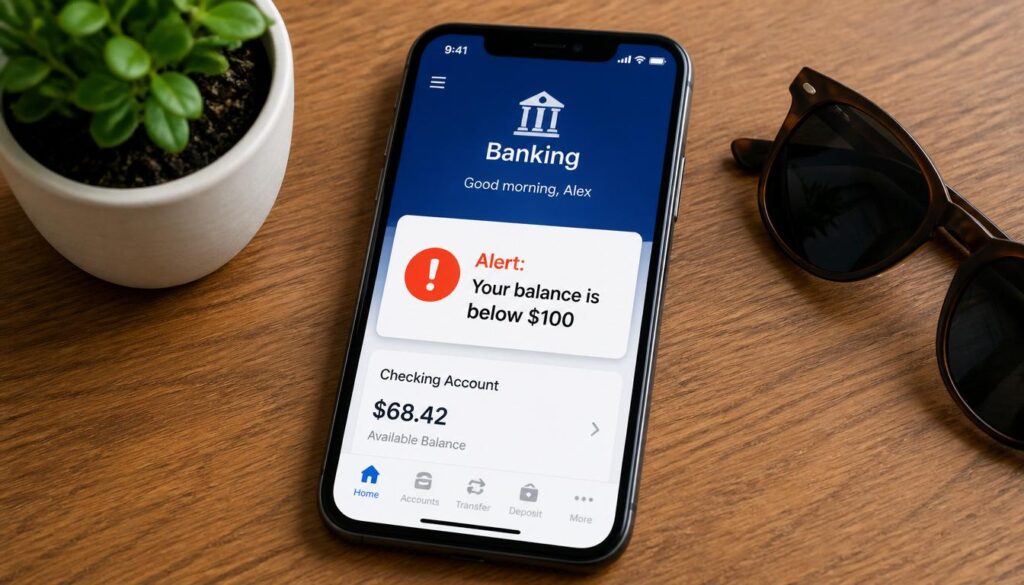
If checking your balance daily feels like too much manual effort, let technology do the heavy lifting by setting up low balance alerts. Almost all major financial institutions allow you to configure automated notifications that trigger when your account balance falls below a specific threshold.
Financial advisors recommend setting this alert threshold at a comfortable buffer level, such as $100 or $200. When your balance dips below this amount, the bank will instantly send you a push notification, text message, or email. This early warning system gives you a critical window of time to transfer funds from savings, delay a non-essential purchase, or deposit a pending paycheck before a transaction clears. These alerts work quietly in the background, acting as an automated financial guardian. They prevent minor oversights from snowballing into catastrophic fees, giving you peace of mind without requiring constant vigilance.
5. Maintain a Financial Buffer in Your Checking Account
One of the most effective strategies for avoiding overdrafts is to stop treating your checking account as a place to hold your exact spending money. Instead, maintain a “financial buffer”—a designated sum of money that sits in your checking account and is never meant to be spent.
Think of this buffer as a shock absorber for your financial life. Unexpected expenses, delayed direct deposits, or simple math errors happen to everyone. If your actual available balance is $500, but you keep a $200 buffer, your “fake” zero balance is actually $200. This gives you breathing room. If you accidentally spend $50 more than you thought, you are still at $150, safely in the positive. You can build this buffer gradually over time by transferring an extra $10 or $20 into checking whenever you have surplus cash. Over time, this safety net will grow, completely insulating you from the devastating impact of accidental overdrafts and reducing your daily financial anxiety.
6. Use Cash or Debit Alternatives for Small Purchases
The digital nature of modern spending makes it incredibly easy to lose track of small, incremental purchases. A $4 coffee here, a $6 lunch there—these micro-transactions rarely trigger a second thought when swiped on a card, but they can quickly drain an account and trigger an overdraft if your balance is low.
To regain control, utilize the “envelope system” concept by using physical cash for small, daily discretionary purchases. When you withdraw a set amount of cash for the week to cover coffees, snacks, and minor incidentals, you physically cannot overdraft your bank account with those purchases. Furthermore, behavioral psychology shows that parting with physical cash creates a higher “pain of paying” than swiping a card, naturally curbing your impulse spending. For those strictly trying to avoid hidden banking charges and break the cycle of debt, returning to cash for small, everyday items is an old-fashioned but highly effective tactic.

7. Monitor and Align Automatic Payments Closely
We live in a subscription-based economy. From streaming services and gym memberships to utility bills and loan payments, automatic deductions are constantly pulling money from our accounts. However, if these automatic payments are scheduled to clear a day or two before your paycheck actually deposits, you are setting yourself up for an overdraft.
Banks do not care if the overdraft was caused by an automatic bill; the fee is applied regardless of the amount. To fix this, you must take an active role in managing your payment calendar. Sit down and list every single automatic payment and its exact clearing date. Then, look at your income deposit dates. If there is a mismatch, contact your service providers and utility companies to change your billing due dates. Most companies are more than willing to shift your due date to align with your payday. By synchronizing your cash inflows with your cash outflows, you ensure your balance is always robust when bills are processed.
8. Link Your Checking Account to a Savings Account
If you prefer not to opt out of overdraft coverage entirely because you want transactions to clear even when you are short on funds, you should utilize an overdraft transfer link rather than standard overdraft protection. Most banks allow you to link your primary checking account to a secondary savings account or a money market account.
When a transaction exceeds your checking balance, the bank automatically transfers funds from your linked savings account to cover the difference. While the bank may still charge a transfer fee, it is typically much lower—often around $10 to $12—compared to the standard $35 overdraft fee. More importantly, this prevents the merchant from receiving a “returned item” fee, which can be an additional $20 to $30. However, this strategy requires discipline: you must actually maintain a sufficient balance in your savings account to act as a true backup. If the savings account is also empty, you will still face fees.

9. Choose a Bank with No Overdraft Fees
Perhaps the most radical and effective way to avoid overdraft fees is to simply stop banking at institutions that charge them. The traditional, big-box banking model relies heavily on overdraft and nonsufficient funds (NSF) fees to pad their profit margins. Fortunately, the financial landscape has evolved, and consumer-friendly alternatives are more accessible than ever.
Many online-only banks, fintech companies, and local credit unions have completely abolished overdraft fees. Instead of charging you a penalty, these institutions will simply decline the transaction if you lack the funds, or they may offer a small, fee-free courtesy overdraft (e.g., covering up to $50 negative without charging a fee). Switching your primary banking relationship to one of these no-fee institutions can save you hundreds of dollars a year. When researching new banks, look specifically for their “Overdraft Policy” in the fee schedule. Choosing the right bank is a foundational financial decision that directly impacts your stress levels and your ability to build wealth.
10. Review Your Bank Statements Regularly
Finally, you cannot manage what you do not measure. Reviewing your bank statements at the end of every month is a critical habit for long-term financial health. While checking your daily balance prevents immediate overdrafts, reviewing the monthly statement reveals the macro-level patterns in your spending.
By analyzing your statement, you can identify the exact behaviors that lead to low balances. You might notice that you consistently overspend on weekends, or that a forgotten $15 monthly subscription is slowly draining your account. Furthermore, regular reviews allow you to spot banking errors, unauthorized charges, or double-billings that you can dispute to recover lost funds. Treat your monthly statement review like a financial health check-up. It builds deep awareness, helps you adjust your budget for the upcoming month, and ensures you are never caught off guard by the slow leak of small expenses pushing your account into the red.

Conclusion: Taking Back Control of Your Financial Future
Overdraft fees are not an unavoidable fact of life; they are a symptom of a banking system designed to profit from your financial missteps. By understanding the mechanics of these fees and implementing the ten strategies outlined in this guide, you can completely insulate yourself from these unnecessary charges.
From opting out of predatory protection programs and maintaining a healthy buffer, to switching to a consumer-friendly bank and utilizing daily balance tracking, every step you take reclaims your money. Remember, every dollar saved from an avoided bank fee is a dollar that can be redirected toward your financial goals—whether that is building an emergency fund, paying down high-interest debt, or investing for your future. Stop letting banks dictate your financial stability. Take action today, implement these evergreen strategies, and enjoy the profound peace of mind that comes from being in total control of your money.
Frequently Asked Questions (FAQ)
1. What exactly happens if I opt out of overdraft protection and try to make a purchase?
If you opt out of standard overdraft coverage for everyday debit card and ATM transactions, the bank will simply decline the transaction at the point of sale if you do not have sufficient funds in your account. The purchase will not go through, and more importantly, you will not be charged an overdraft fee. It is highly recommended to always carry a backup payment method, such as a credit card or a small amount of cash, in case your card is declined.
2. Can I get an overdraft fee refunded if I am charged one by mistake?
Yes, in many cases, you can get an overdraft fee refunded, especially if it is your first time overdrawing or if you have a long-standing, good relationship with the bank. The best approach is to call your bank’s customer service immediately, politely explain the situation, and ask if they can issue a courtesy refund. Many banks have a “first-time forgiveness” policy. However, this should be a rare exception, not a regular strategy for managing your account.
3. Does going into overdraft or using overdraft protection affect my credit score?
Generally, no. Overdrafts and the associated fees are not reported to the major credit bureaus (Equifax, Experian, TransUnion) because an overdraft is technically a private agreement between you and your bank, not a formal line of credit. However, if you fail to pay back the negative balance and the bank closes your account, they may send the debt to a collections agency. Collections accounts are reported to credit bureaus and will severely damage your credit score. Additionally, some banks use specialized reporting agencies like ChexSystems; repeated overdrafts can flag you in ChexSystems, making it difficult to open bank accounts in the future.
4. Is an overdraft fee worse than a late fee on a credit card or utility bill?
They are both detrimental, but they impact your finances differently. An overdraft fee is typically a flat, immediate charge (e.g., $35) that extracts cash directly from your checking account, potentially causing a cascade of other declined payments. A late fee on a credit card or utility bill is also a flat charge, but it carries the additional risk of triggering a penalty APR (for credit cards) or being reported to credit bureaus if it remains unpaid for 30 days or more. While both should be avoided at all costs, an overdraft fee is often more immediately disruptive to your daily cash flow.
5. Are there any downsides to keeping a large financial buffer in my checking account?
The primary downside to keeping a large buffer in a standard checking account is the “opportunity cost.” Most traditional checking accounts pay little to no interest. If you keep $1,000 sitting in a checking account as a buffer, that money is not earning high-yield interest in a savings account or growing in an investment portfolio. However, for individuals who frequently struggle with overdrafts, the peace of mind and the avoidance of $35 penalty fees far outweigh the few dollars in lost interest. Once your spending habits are firmly under control, you can reduce the buffer size and move the excess cash into high-yield savings or investments.