You wake up every morning dreading the commute, the endless meetings, and the feeling that someone else controls your time. The thought of quitting your job crosses your mind constantly, but walking away without a plan feels reckless. What if you didn’t have to choose between security and freedom? What if you could build a structured, financially sound runway that lets you transition from employee to entrepreneur within twelve months—without burning bridges, draining your savings, or gambling your future?
This complete exit plan walks you through every phase of that transformation. From bulletproofing your finances to scaling a side business, mastering cash flow, and finally handing in your resignation with confidence, each step is designed to reduce risk while maximizing your chances of long-term success. Freedom isn’t about taking a leap into the dark. It’s about building the runway first.
Phase 1: Build Your Financial Foundation and Conduct a Brutal Self-Assessment (Months 1–2)
Before you even think about updating your LinkedIn headline or registering a business name, your personal finances must be bulletproof. Start by tracking every single expense for a full month. Rent or mortgage payments, utilities, groceries, insurance premiums, debt obligations, subscriptions, transportation costs—write everything down. Add a ten percent buffer for unexpected expenses. Multiply your total monthly figure by twelve. That number is your survival fund target.
If your monthly expenses total $3,500, you need $42,000 saved before making any major moves. This isn’t negotiable. This cushion removes desperation from your decision-making and gives you the breathing room to make strategic choices rather than panicked ones.
Simultaneously, conduct a thorough self-assessment. List every marketable skill you possess. What problems can you solve? What industries do you understand deeply? What professional connections have you built? Write down every certification, every project you’ve led, every niche you’ve studied. This inventory becomes your entrepreneurial toolkit, and it will guide every decision you make in the months ahead.
Review your current debt situation. High-interest credit card balances or personal loans will drain your energy and cash flow once you lose your steady paycheck. Create an aggressive payoff timeline or consolidation strategy during these first two months.

Phase 2: Market Research and Opportunity Identification (Months 3–4)
With your financial foundation in place and your skill inventory complete, it’s time to validate business ideas against real-world demand. This phase is not about building anything yet. It’s about listening, observing, and identifying gaps.
Take your strongest skills and match them against problems people actively complain about. Browse industry forums, social media groups, Reddit threads, and professional networking communities. Pay attention to recurring frustrations. The best business opportunities hide in plain sight—they’re the problems everyone mentions but nobody has solved effectively.
Talk directly to potential customers. Ask open-ended questions about their pain points, current solutions they use, and what they wish existed. Attend networking events, both virtual and in-person. Study your potential competitors thoroughly. Understand their pricing models, service delivery methods, and weaknesses.
Document everything. Create a simple spreadsheet tracking each opportunity, its estimated market size, competition level, and alignment with your skills. By the end of month four, you should have a shortlist of two or three validated ideas worth pursuing.
Phase 3: Build Your Side Business While Keeping Your Day Job (Months 5–6)
This is where execution begins. Choose your strongest validated idea and start building it during evenings and weekends. The goal here is not perfection. It is validation and early revenue.
If you’re launching a service-based business, create a simple website, set up a professional email, and begin reaching out to potential clients. If you’re developing a product, build a minimum viable version and get it in front of real users. If you’re building a digital offering, create a landing page and test demand before investing heavily in development.
Your current job is actually a strategic advantage during this phase. It provides steady income while you experiment, make mistakes, and learn without financial pressure. Treat those months as a paid incubator for your future business.
Set strict boundaries. Dedicate specific evening hours and weekend blocks to your side project. Protect your sleep and relationships. Burnout before you’ve even launched will sabotage everything.
Phase 4: Systematize and Scale (Months 7–8)
Once you’ve landed a handful of paying customers, resist the temptation to just keep grinding harder. Instead, build systems. Document every process you repeat. Create templates for proposals, invoices, client onboarding, and service delivery. Build checklists so quality stays consistent even on your busiest days.
Start delegating. Hire freelancers or virtual assistants for tasks that don’t require your specific expertise—administrative work, basic graphic design, social media scheduling, bookkeeping. Your limited evening and weekend hours should be spent exclusively on revenue-generating activities and high-level strategy.
Implement project management tools to keep everything organized. Automate what you can: email sequences, appointment scheduling, payment processing. Every hour you save through systems is an hour you can reinvest in growth.

Phase 5: Revenue Optimization and Risk Mitigation (Months 9–10)
By this stage, your side business should be generating consistent monthly revenue. If it isn’t, be honest with yourself. Pivot or choose a different path. Falling in love with an idea that doesn’t generate income is a costly mistake. Fall in love with solving problems profitably instead.
Focus on increasing monthly recurring revenue. Introduce retainer packages, subscription models, or ongoing service agreements. Reduce your client acquisition costs by implementing referral programs and asking satisfied customers for testimonials and introductions. A business that depends entirely on constantly finding new customers is exhausting and unsustainable.
Upsell existing clients. They already trust you, and expanding their engagement is far cheaper than acquiring someone new. Build a simple customer relationship management system to track interactions, follow-ups, and opportunities.
Stress-test your business model. What happens if your biggest client leaves? What if a key supplier raises prices? Identify your vulnerabilities now and build contingencies.
Phase 6: Strategic Transition Planning (Months 11–12)
Your side business should now be generating at least fifty to seventy percent of your current salary consistently. This is the threshold where a full transition becomes realistic.
Plan your resignation carefully. Provide adequate notice—at minimum two weeks, but consider four to six weeks if you hold a senior position. Leave gracefully. You never know when former colleagues become clients, referral sources, or collaborators. Burning bridges is never a sound business strategy.
Before your last day, ensure you have three to six months of personal expenses saved beyond your business income. Even thriving businesses experience cash flow fluctuations, especially in early stages. This additional cushion prevents desperate decisions and protects your mental health during the adjustment period.
Review your health insurance, retirement contributions, and any employer benefits you’ll lose. Research alternatives and have them activated before your last paycheck arrives.
Master Cash Flow Management
Understanding cash flow is arguably the most critical financial skill for any new entrepreneur. Unlike a predictable biweekly paycheck, business income fluctuates. Large payments arrive, followed by dry spells. Without preparation, this volatility creates anxiety and poor decision-making.
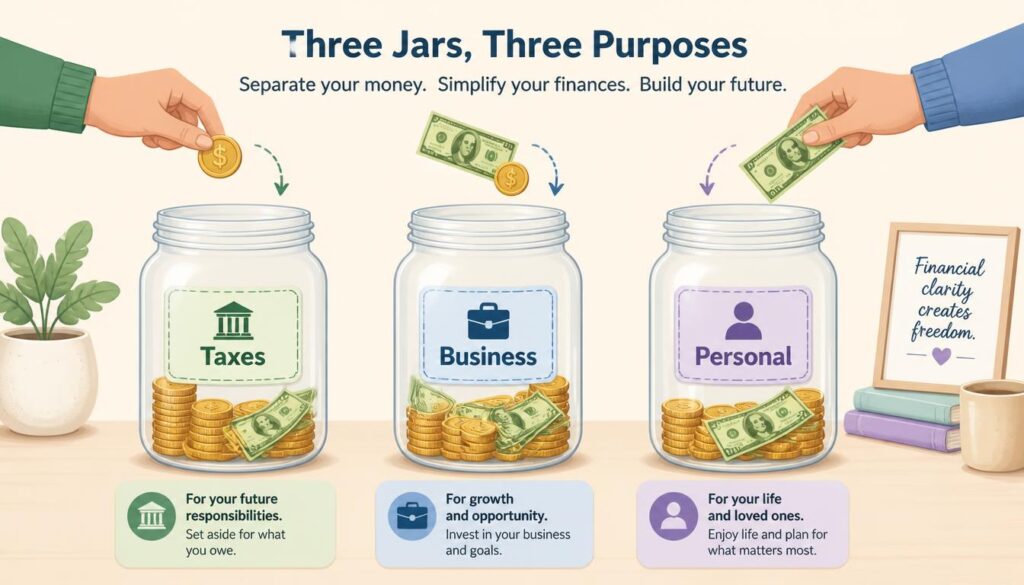
Forecast your cash flow at least three months ahead. Set up separate bank accounts for taxes, business expenses, and personal draws. Many new business owners struggle because they mix personal and business finances, making it impossible to understand their true profitability.
Establish a fixed pay schedule for yourself, even when business income varies. Pay yourself the same amount on the same day each month. This creates personal budget stability and forces you to manage business cash reserves discipline.
Build a tax savings habit immediately. Set aside twenty-five to thirty percent of every business payment into a dedicated tax account. Nothing derails a new entrepreneur faster than an unexpected tax bill.
Build Multiple Revenue Streams
Depending on a single income source—even from your own business—recreates the same vulnerability you experienced as an employee. Diversification is not optional. It’s protection.
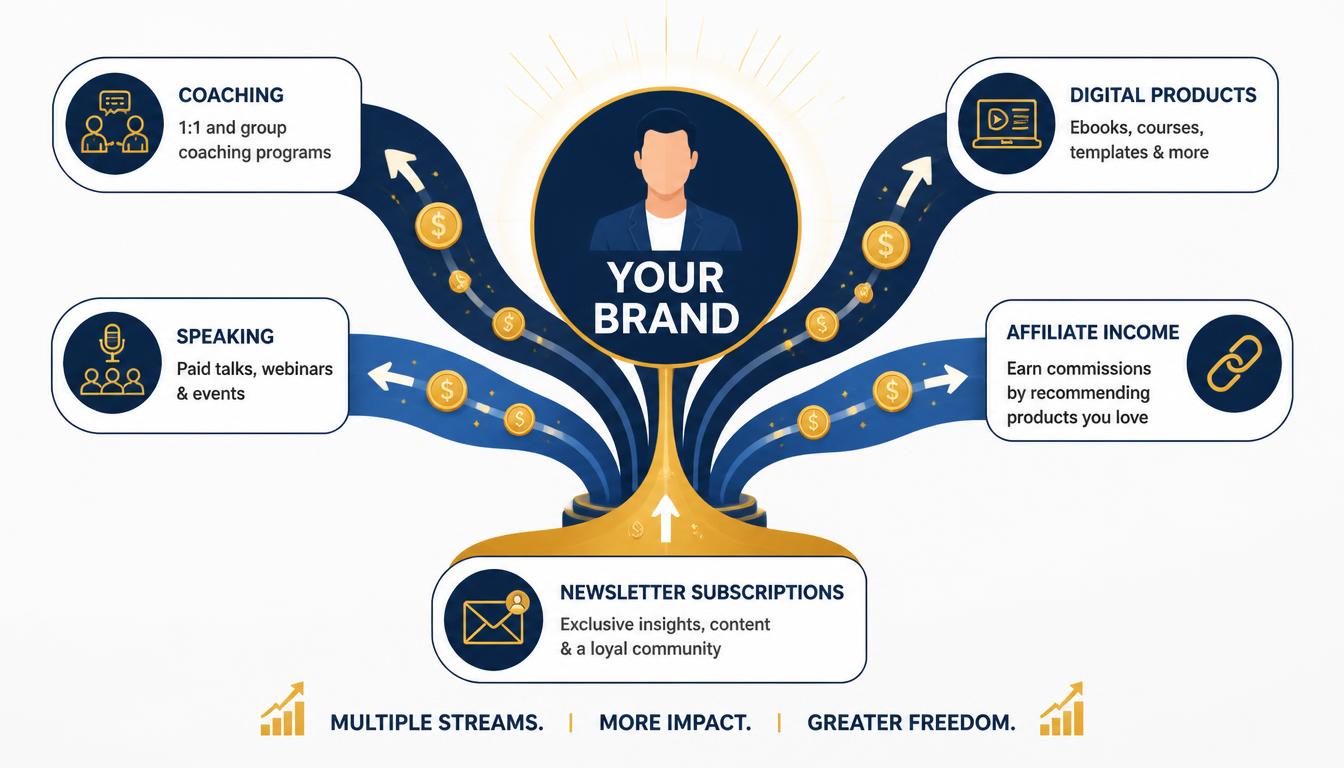
Explore complementary revenue streams. If you offer consulting services, consider packaging your knowledge into digital products: online courses, ebooks, templates, or software tools. These require upfront effort but generate ongoing income without proportional time investment. They also position you as an authority and attract new clients organically.
Consider passive income strategies alongside your active business. Affiliate partnerships, licensing your content, or creating subscription-based resources can all add layers of financial stability. The goal is to build a portfolio of income sources so that a disruption in one stream doesn’t threaten your entire livelihood.
Develop Anti-Fragile Business Systems
A resilient business doesn’t merely survive disruptions—it grows stronger from them. Build redundancy into every aspect of your operations. Maintain backup suppliers. Diversify your marketing channels so you’re not dependent on a single platform. Cultivate a varied client base across industries.
Create standard operating procedures for every recurring task. This documentation allows you to delegate effectively, maintain quality during vacations or illness, and potentially sell your business in the future. Systems also reveal inefficiencies you can eliminate, continuously improving your margins.
Review and update these systems quarterly. What worked six months ago may no longer be optimal. Treat your business operations as a living document, not a static manual.
Cultivate the Entrepreneurial Mindset
The most significant difference between successful entrepreneurs and employees isn’t talent, capital, or connections. It’s mindset. Employees are conditioned to avoid mistakes and follow established procedures. Entrepreneurs must embrace uncertainty, extract lessons from failures, and adapt constantly.
Develop comfort with calculated risk. Learn to make decisions with incomplete information, because perfect information rarely exists in business. Successful entrepreneurs make good decisions quickly rather than perfect decisions slowly. Trust your judgment, accept that some choices will be wrong, and build the resilience to course-correct without self-punishment.
Surround yourself with other entrepreneurs. Join mastermind groups, attend industry events, and find a mentor who’s walked the path you’re on. Isolation is one of the most underestimated challenges of self-employment, and community accelerates both learning and emotional resilience.

Post-Transition Success Strategies
Once you’ve made the leap, resist the urge to celebrate by inflating your lifestyle. Keep personal expenses low until your business income has been stable and growing for at least six consecutive months. Many new entrepreneurs fail not because their business model is flawed, but because they increased their burn rate prematurely.
Focus relentlessly on customer satisfaction and retention. Acquiring a new customer costs five to seven times more than retaining an existing one. Build systems for regular check-ins, feedback collection, and service improvement. Happy clients become your most powerful marketing channel through referrals and testimonials.
Continue investing in your skills and knowledge. The market evolves, and the entrepreneur who stops learning gets left behind. Allocate time and budget for professional development, industry conferences, and strategic reading.
Remember why you started. Quitting your job was never the ultimate goal. Building a life you don’t need to escape from—that’s the real prize. Protect that vision by making decisions aligned with long-term fulfillment, not short-term comfort.
Conclusion
Transitioning from employee to entrepreneur doesn’t require a reckless leap of faith. It requires a disciplined, phased approach that builds financial security, validates your business idea, generates early revenue, and creates systems for sustainable growth. Twelve months is enough time to construct a solid runway if you follow each phase deliberately and resist the temptation to skip steps.
Start with your numbers. Know your survival figure. Inventory your skills. Validate before you build. Systematize before you scale. Diversify before you depend. And protect your mindset throughout the entire journey.
The person who quits their job with a plan, a financial cushion, paying customers, and proven systems isn’t gambling. They’re executing a strategy. That’s the difference between a reckless jump and a confident launch. Your freedom date isn’t a fantasy. It’s a deadline you set, a plan you follow, and a life you build—one deliberate month at a time.
Frequently Asked Questions
1. How much money should I save before quitting my job to start a business?
At minimum, you should have twelve months of personal living expenses saved as a survival fund, plus an additional three to six months of expenses as a post-transition cushion. This means if your monthly costs are $4,000, you should aim for $48,000 to $72,000 in accessible savings before leaving your job. This buffer removes desperation from your decisions and allows you to make strategic choices even during slow business months.
2. Can I really build a business while working a full-time job?
Yes, and it’s actually the safest approach. Your salary funds your living expenses while you experiment, validate ideas, and acquire your first clients without financial pressure. Dedicate ten to fifteen hours per week during evenings and weekends. Focus on high-impact activities: client outreach, service delivery, and revenue generation. Many successful businesses started as side projects precisely because the constraints of limited time forced founders to prioritize ruthlessly.
3. What if my side business isn’t generating income by month eight or nine?
Be honest and objective. Analyze whether the problem is execution, positioning, pricing, or the idea itself. Sometimes a pivot in your target audience or service packaging unlocks revenue. Other times, the idea simply doesn’t have sufficient market demand. Don’t fall in love with a concept that isn’t profitable. Return to your market research, talk to potential customers again, and identify a more viable opportunity. Failing fast and adjusting is a strength, not a weakness.
4. How do I manage taxes and finances after leaving my job?
Separate your business and personal finances immediately with dedicated bank accounts and credit cards. Set aside twenty-five to thirty percent of every business payment for taxes. Hire a qualified accountant or tax professional who specializes in small businesses or self-employment. Track every deductible expense. Make quarterly estimated tax payments to avoid penalties. Establish a fixed monthly salary for yourself from the business to maintain personal budgeting stability regardless of income fluctuations.
5. How do I avoid burning out during the transition period?
Protect your sleep, relationships, and physical health as non-negotiable priorities. Set strict work boundaries—evenings and weekends for your side business, but also scheduled rest periods. Batch similar tasks to reduce mental switching costs. Delegate or automate anything that doesn’t require your direct expertise. Celebrate small milestones to maintain motivation. Join a community of fellow entrepreneurs so you’re not navigating the emotional challenges in isolation. Remember, a burned-out founder cannot build a sustainable business.