
If you have ever started a new job and heard the term “401(k)” thrown around during onboarding, you might have wondered what it actually is and why it matters so much. A 401(k) is an employer-sponsored retirement plan that allows you to save and invest for your future, often accompanied by the incredible benefit of free money through employer matches. However, simply having a retirement account is not enough. Understanding how it works, leveraging the tax advantages, and knowing exactly how much you should contribute can make the difference between merely having a retirement account and actually building generational, long-term wealth.
When it comes to retirement planning, few financial tools are as widely available and mathematically powerful as the 401(k). Yet, many people treat it as just another confusing line on their paycheck instead of a golden opportunity for financial independence. To break down why this account matters and how it works, we are going to explore the key reasons you should care about your 401(k) and how it can profoundly shape your financial future.
1. The Foundation: What is a 401(k) Retirement Plan?
At its simplest, a 401(k) is a retirement savings account offered by your employer. Instead of you having to set up a complicated, independent brokerage account and figure out the logistics of investing on your own, the company facilitates the entire process for you. All you need to do is decide what percentage of your paycheck you want to contribute.
The true beauty of this setup lies in automation. Every pay period, a portion of your salary is transferred directly into your 401(k) before the money even hits your primary checking account. You do not have to remember to transfer funds, you do not have to remind yourself to save, and you do not have to manually execute trades. It happens seamlessly in the background. Over the years, those small, automated contributions add up in ways that are easy to overlook in the short term, until you log in and see a massive, growing balance. This “set it and forget it” infrastructure is the bedrock of modern wealth building.
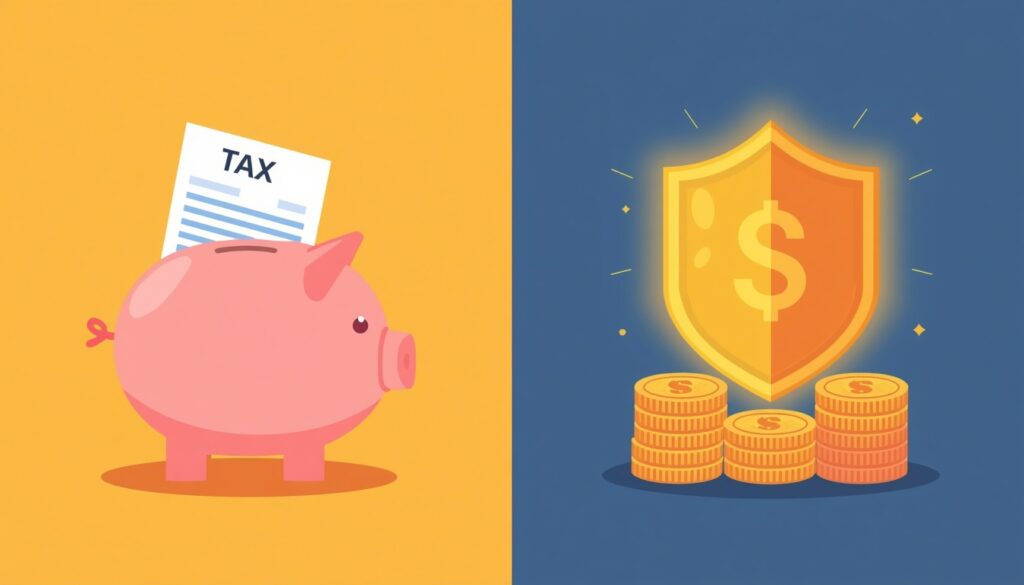
2. The Tax Advantages: Traditional vs. Roth 401(k)
One of the most immediate and powerful benefits of a 401(k) is the tax break. However, it is crucial to understand that not all 401(k)s are taxed the same way.
Traditional 401(k): Contributions to a traditional 401(k) are made with pre-tax dollars. This means the money is taken out of your paycheck before government taxes are applied. For example, if you earn $60,000 a year and decide to contribute $6,000 to your traditional 401(k), you will only be taxed on $54,000 of your income. This helps you in two distinct ways: you pay less in taxes today, and you allow more of your money to grow for tomorrow. While you will eventually pay ordinary income taxes when you withdraw the funds in retirement, the massive advantage of tax deferral is that your investments have decades to compound and grow before the government takes its share.
Roth 401(k): Not all plans offer this, but many employers now provide a Roth 401(k) option alongside the traditional one. The key difference is when you pay the taxes. With a Roth 401(k), contributions are made with after-tax dollars, meaning you do not get an immediate tax break on your current paycheck. However, when you retire, all your withdrawals—including all the decades of investment earnings—are completely tax-free. This can be a massive benefit if you expect to be in a higher tax bracket later in life, or if you simply want the peace of mind of knowing your retirement money will never be taxed again.
3. The Magic of the Employer Match: Free Money
This is where 401(k) plans transition from being a “good idea” to an absolute financial no-brainer. Many employers offer a matching contribution, which is essentially free money added to your account based on how much you contribute.
Usually, this match is capped at a certain percentage of your salary. For instance, if your company offers a 100% match up to 5% of your salary, and you contribute 5% of your paycheck, they will add the exact same amount. Think about the math: if you earn $70,000 and contribute 5% ($3,500), your employer adds another $3,500. That is an instant, guaranteed 100% return on your investment before the money is even placed in the stock market. You cannot find a 100% guaranteed return anywhere else in the financial world. Over decades, this free money can easily compound into hundreds of thousands of dollars. Failing to take advantage of an employer match is quite literally walking away from a significant portion of your total compensation package.

4. How Your Money Grows: Investments and Compound Interest
A common misconception among beginners is that a 401(k) is just a high-yield savings account. It is not. It is a robust investment account where your money is put to work in the stock market, bond market, or mutual funds. This is where the real magic of wealth creation happens: compound growth.
Compound growth means your money makes money, and then that newly generated money makes even more money. For example, if you invest $10,000 and it grows at an average annual rate of 7%, in ten years, you will have nearly $20,000, even if you never add another single dime to the account. Now, add consistent monthly contributions on top of that initial investment, and your 401(k) balance begins to snowball exponentially over time. By selecting a diversified mix of low-cost index funds or a target-date fund, you allow the broader economy to work for you, turning small monthly contributions into a massive financial safety net.

5. Time in the Market Beats Timing the Market
Many beginners make the critical mistake of trying to wait for the “perfect time” to invest. They watch the news, wait for the stock market to dip, or wait until they feel like they are “earning enough” to start saving. But with a 401(k), the strategy is beautifully simple: contribute consistently and let time do the heavy lifting.
The mathematical reality is that time in the market will always beat timing the market. Consider two workers. Alex starts saving $250 per month at age 25 and achieves a 7% annual growth rate. By age 65, Alex will have over $650,000. Now consider Sam, who waits until age 35 to start saving the exact same $250 per month. By age 65, Sam will only have about $300,000. Even though they contributed the exact same amount of money monthly, waiting just ten years cost Sam nearly $350,000 in lost growth. Starting early is not just a suggestion; it is a mathematical necessity for building significant wealth.

6. Crucial Rules, Limits, and Penalties You Must Know
While 401(k) plans are incredibly powerful, they are not without strict restrictions. The IRS sets annual limits on how much you can contribute to ensure these accounts are used primarily for retirement, not as short-term tax shelters. Furthermore, there are severe penalties for withdrawing funds early.
Typically, if you take money out of your traditional 401(k) before you reach the age of 59 ½, you will face a 10% early withdrawal penalty on top of your regular income taxes. If you are in a 22% tax bracket, withdrawing $10,000 early could cost you $3,200 in taxes and penalties, leaving you with only $6,800. This might sound incredibly strict, but the purpose of these rules is to protect your future self.
Because of these restrictions, it is absolutely crucial to maintain a separate, highly liquid emergency fund in a standard savings account. A 401(k) is designed to be your future safety net; it is not designed to cover unexpected expenses like car repairs, roof replacements, or medical bills. Locking your retirement money away is the only way to ensure it is there when you actually need it.

7. Watch Out for Hidden Fees and Fund Choices
Not all 401(k) plans are created equal, and the investment options inside them vary wildly. Some employers negotiate excellent plans that offer low-cost index funds, keeping fees minimal. Others may have expensive, actively managed funds that quietly eat into your returns year after year.
You must pay attention to the “Expense Ratio” of the funds you choose. Even a seemingly small fee difference can cost you a fortune over decades. For example, if you invested $200,000 and earned a 7% annual return with a low 0.5% fee, you would have about $1.1 million after 35 years. However, if you chose an actively managed fund with a 1.5% fee, you would only end up with around $850,000. That is a staggering $250,000 loss, purely due to higher fees. Always look for the lowest expense ratios in your plan, typically found in broad market index funds or target-date retirement funds.
8. Building Wealth Through Automated Discipline
One of the hardest parts of personal finance is maintaining consistency. People often set ambitious, aggressive savings goals in January, only to abandon them by March when life gets busy, vacations arise, or unexpected expenses pop up. Relying on willpower to save money is a flawed strategy.
A 401(k) eliminates this human error because the contributions are entirely automatic. Since the money is deducted directly from your paycheck before you even see it hit your bank account, you naturally learn to live on what is left. You adjust your lifestyle to your net pay, not your gross pay. Over time, you do not even notice the money is missing. This forced discipline is one of the primary psychological reasons why people with automated 401(k) contributions tend to retire with far more wealth than those who try to manually transfer money from their checking to their brokerage accounts every month.
9. The High Cost of Ignoring Your 401(k)
The single biggest reason you should care deeply about your 401(k) is the devastating cost of ignoring it. Between the power of employer matching, the massive tax breaks, and the exponential nature of compound growth, someone who contributes regularly and intelligently can easily retire with a seven-figure nest egg.
On the other hand, failing to participate, or simply delaying your start, could mean struggling financially in your golden years, outliving your savings, or being forced to depend on family members or government assistance. Imagine the two workers we mentioned earlier: the one who starts at 25 versus the one who starts at 35. That ten-year delay didn’t just cost them a few thousand dollars; it cost them nearly half of their total potential retirement wealth. The danger of ignoring your 401(k) is not just a missed opportunity; it is a direct threat to your future financial survival.
Step-by-Step: How to Optimize Your 401(k) Today
To ensure you are getting the absolute most out of your plan, follow this simple checklist:
- Get the Match: Log into your payroll portal and ensure you are contributing at least enough to get the maximum employer match.
- Choose the Right Tax Bucket: If you are young and in a lower tax bracket, lean toward the Roth 401(k). If you are in your peak earning years, the Traditional 401(k) might offer better immediate relief.
- Select Low-Cost Funds: Look for broad market index funds (like S&P 500 or Total Stock Market funds) or a Target Date Fund that aligns with your expected retirement year. Avoid funds with expense ratios over 0.5%.
- Increase Annually: Set a calendar reminder for every January or whenever you get a raise to increase your contribution rate by just 1%. You will never miss the money, but your future self will thank you.

Conclusion
Understanding your 401(k) is one of the most important financial steps you will ever take. It is far more than just a line item on your pay stub; it is a powerful, automated wealth-building machine. By contributing regularly, taking full advantage of your employer’s matching program, choosing low-cost investments, and letting the magic of compound interest work over time, you are setting yourself up for absolute financial freedom. Remember, the math is undeniable: the earlier you start, the more powerful the compounding becomes. Take control of your retirement plan today, and your future self will reap the rewards for decades to come.
Frequently Asked Questions (FAQ)
1. How much money can I contribute to my 401(k) each year?
The IRS sets annual contribution limits for 401(k) plans, and these limits are periodically adjusted for inflation. Generally, there is a base limit for standard contributions, and an additional “catch-up” contribution limit allowed for individuals who are age 50 or older. You should check the current year’s IRS guidelines for the exact dollar amounts.
2. What happens to my 401(k) if I leave my job or change careers?
You have several options when leaving an employer. You can leave the money in your former employer’s plan (if permitted), roll it over into your new employer’s 401(k), roll it over into an Individual Retirement Account (IRA) for more investment choices, or cash it out (which is highly discouraged due to taxes and penalties). A direct rollover to an IRA or new 401(k) is usually the most tax-efficient move.
3. Can I borrow money from my 401(k) in an emergency?
Many 401(k) plans allow you to take out a loan against your balance, typically up to 50% of your vested balance or a specific dollar maximum. However, financial advisors generally advise against this. If you leave your job before the loan is repaid, the remaining balance often becomes immediately due, and if you cannot pay it, it is treated as a taxable withdrawal with penalties.
4. How do I choose the right investments inside my 401(k)?
If you want a hands-off approach, look for a “Target Date Fund” that matches the year you plan to retire; it will automatically adjust its risk level as you age. If you prefer to build your own portfolio, look for low-cost, broadly diversified index funds, such as an S&P 500 fund, a Total Stock Market fund, and a Total Bond Market fund, adjusting the ratios based on your age and risk tolerance.
5. Should I choose a Traditional or a Roth 401(k)?
The choice depends on your current and expected future tax brackets. If you believe you will be in a higher tax bracket in retirement than you are today, a Roth 401(k) is usually better because you pay taxes now at a lower rate and withdraw tax-free later. If you are currently in your peak earning years and want to lower your current tax bill, a Traditional 401(k) is often the superior choice. Many experts recommend utilizing both if your plan allows it, to create tax diversification in retirement.