Life has a way of surprising you when you least expect it. A transmission fails on a Tuesday morning. A dentist discovers a root canal that can’t wait. A company downsizes, and suddenly your paycheck disappears. These moments don’t schedule themselves around your bank balance. They arrive unannounced, and without a financial cushion, they can spiral into weeks of stress, borrowed money, and sleepless nights.
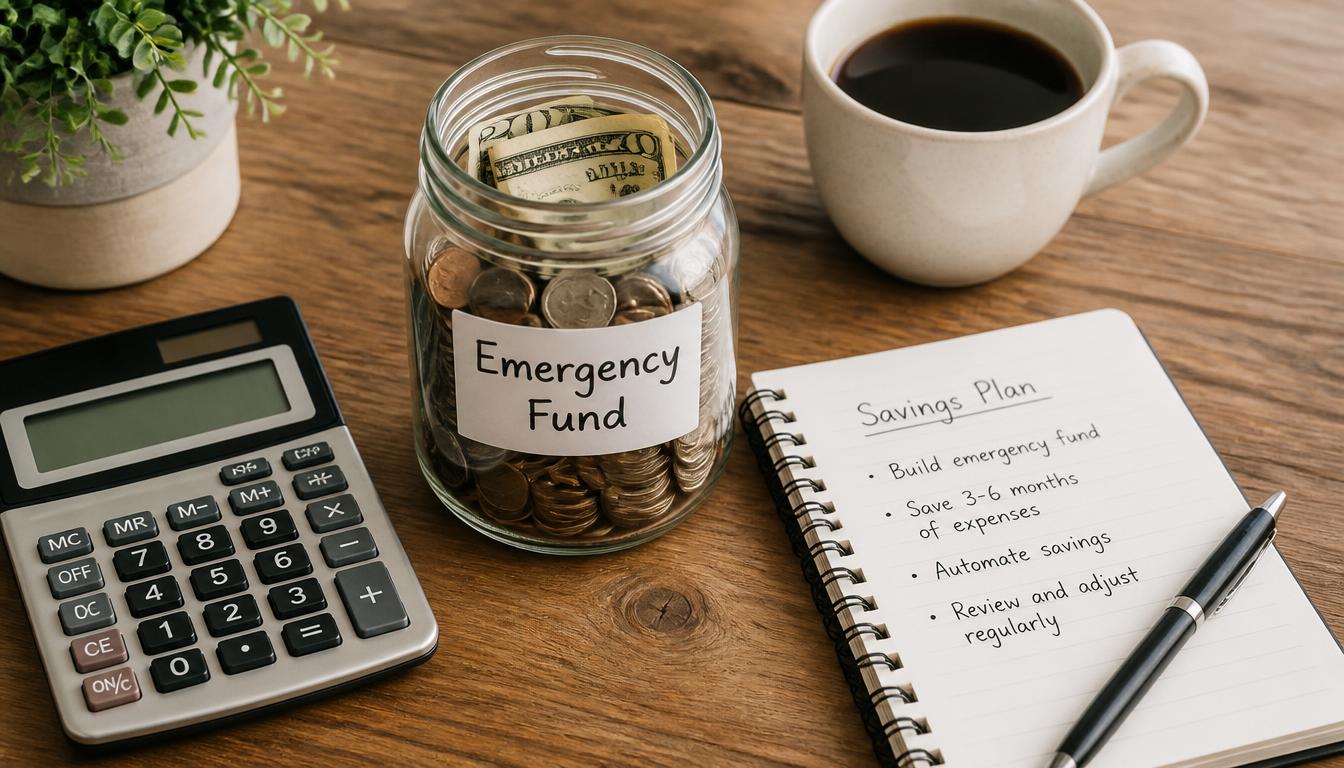
An emergency fund is your personal firewall against exactly that chaos. It transforms a financial crisis into a manageable inconvenience. The conventional wisdom says you should stash away three to six months of living expenses, and for good reason. What most people don’t realize is that reaching that milestone doesn’t have to take years of slow, painful saving. With a focused strategy, deliberate choices, and a bit of creativity, you can assemble a meaningful safety net in six months or less.
This guide walks you through every practical step you need, from calculating your exact target to keeping yourself motivated through the finish line. No vague advice. No fluff. Just a clear roadmap you can start following today.
Why an Emergency Fund Is Non-Negotiable
Before diving into the how, it helps to lock in the why. An emergency fund is not a vacation account, a down-payment stash, or a “just in case I feel like shopping” reserve. It is a dedicated pool of money that exists for one purpose: absorbing unexpected financial shocks so your regular life doesn’t derail.
Without one, a single $800 car repair can force you onto a credit card carrying 24 percent interest. A two-week gap between jobs can mean missed rent. The psychological toll of living without a buffer is real and well-documented. Knowing you have cash set aside reduces anxiety, improves decision-making, and gives you the freedom to say no to bad financial choices made out of desperation.
The target most experts recommend is three to six months of essential living expenses. If that number feels overwhelming right now, remember: even one month of coverage is infinitely better than zero. The goal is progress, not perfection.
Step 1: Calculate Your Exact Savings Target
You cannot hit a target you haven’t defined. Sit down and list every essential monthly expense: rent or mortgage, utilities, groceries, transportation costs, insurance premiums, and minimum debt payments. Leave out dining out, streaming subscriptions, gym memberships, and anything you could realistically pause in a crisis.
Add those numbers up. If your essentials total $2,800 per month, a three-month fund equals $8,400. A six-month fund equals $16,800. Write that number down. Make it visible. Tape it to your bathroom mirror if you have to. A concrete figure turns an abstract wish into a project with a deadline.
Divide the total by six (or fewer months if you want to move faster) to get your monthly savings requirement. That $8,400 three-month fund breaks down to $1,400 per month over six months. Suddenly the mountain looks like a staircase.
Step 2: Audit Your Income and Spending With Brutal Honesty
For at least thirty days, track every dollar that comes in and every dollar that goes out. Use a budgeting app, a spreadsheet, or a simple notebook. The method doesn’t matter. The honesty does.
This audit will reveal leaks you didn’t know existed: the streaming service you forgot to cancel, the daily coffee run that quietly eats $120 a month, the impulse online purchases that add up faster than you think. You are not judging yourself here. You are gathering data. Once you see where the money actually goes, you can decide where to redirect it.

Step 3: Build a Lean, Temporary Budget
Now take that audit and construct a strict but realistic budget. Separate expenses into two columns: needs and wants. For the next six months, cut the wants column aggressively. Cancel unused subscriptions. Cook at home instead of ordering delivery. Switch to a cheaper phone plan. Buy generic brands. Negotiate your internet or insurance rates.
This is not a permanent lifestyle change. It is a focused sprint. Remind yourself of that whenever the sacrifices feel tedious. You are trading six months of tighter spending for years of financial calm.
Assign a fixed dollar amount or percentage of your income to the emergency fund every single month. Treat it like rent. It gets paid first, before entertainment, before shopping, before anything optional.
Step 4: Boost Your Income Temporarily
Cutting expenses has a floor. You can only trim so much before you hit your essential costs. Income, however, has a much higher ceiling. If your savings target requires more than your current budget can free up, look for ways to earn extra money during this six-month window.
Freelance writing, graphic design, tutoring, bookkeeping, and virtual assistant work are all available on platforms that let you set your own hours. Gig work such as ride-sharing, grocery delivery, or pet sitting can fill evenings and weekends. Sell items you no longer need: old electronics, clothing, furniture, or collectibles gathering dust in a closet.
Even an extra $300 or $500 a month dramatically compresses your timeline. The key is sustainability. Choose side work that fits your energy levels so you don’t burn out before the fund is complete.
Step 5: Manage High-Interest Debt Strategically
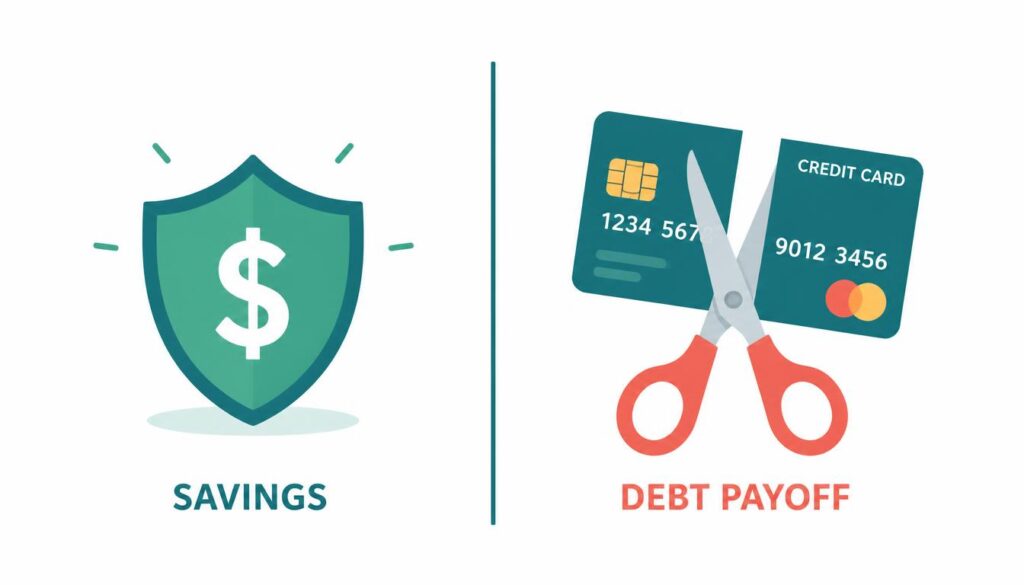
If you carry credit card balances or other high-interest debt, you face a legitimate dilemma: should you pour every spare dollar into the emergency fund or attack the debt first? The smartest approach is usually a hybrid one.
Start by saving a small starter fund of $1,000 to $2,000. This covers minor surprises like a vet bill or a broken appliance so you don’t reach for the credit card and dig the debt hole deeper. Once that mini-cushion is in place, shift extra payments toward the highest-interest debt while maintaining a modest monthly contribution to the emergency fund. When the debt shrinks, redirect those payments into savings.
This dual-track method protects you from new emergencies while steadily reducing the interest that silently erodes your wealth.
Step 6: Automate Everything
Willpower is a finite resource. Remove it from the equation entirely by automating your savings. Set up a recurring transfer from your checking account to a dedicated savings account on the same day you receive your paycheck. The money moves before you see it, before you can talk yourself out of it.
Park the fund in a high-yield savings account. These accounts typically offer interest rates far above traditional brick-and-mortar banks, and your money remains liquid, meaning you can access it quickly when a genuine emergency strikes. Some online banks also waive monthly fees and minimum balance requirements, which keeps more of your money working for you.
Automation turns saving from a monthly decision into a background process. You stop negotiating with yourself every payday, and consistency takes over.
Step 7: Guard the Fund Against Yourself
This step sounds obvious, yet it is where most people stumble. Define, in writing, what qualifies as an emergency. Job loss. Urgent medical or dental treatment. A critical car repair when you need the car to get to work. An emergency home repair like a burst pipe or a failing furnace in winter.
A concert ticket is not an emergency. A sale at your favorite store is not an emergency. A weekend getaway is not an emergency.
Keep the emergency fund in a separate account at a different bank from your everyday checking. Add friction. If you have to log in to a different website or app to access the money, you are far less likely to raid it on impulse.
Step 8: Funnel Windfalls Straight Into the Fund
Tax refunds, work bonuses, birthday cash, insurance payouts, or unexpected gifts are accelerants. Because this money was never part of your regular monthly budget, depositing it into the emergency fund doesn’t change your day-to-day lifestyle. It simply fast-forwards your timeline.
Commit in advance: any windfall over a small threshold, say $50, goes at least 75 percent into the fund. You can celebrate with a modest treat using the remainder, but the bulk should land in savings. A single $2,000 tax refund can knock nearly two months off a six-month plan.

Step 9: Track Progress and Celebrate Milestones
Saving over several months can feel monotonous, especially in the middle when the finish line still seems far away. Counter that fatigue by breaking the journey into visible milestones. Mark the 25 percent point. The 50 percent point. The 75 percent point.
Use a simple progress bar on your fridge, a chart in a budgeting app, or a jar you fill with marbles for every $100 saved. Celebrate each milestone with something free or inexpensive: a walk in a park, a favorite homemade meal, an evening with friends. Acknowledging progress rewires your brain to associate saving with reward rather than deprivation.
If life throws a curveball and you miss a month, adjust the timeline. Extend it by two or three weeks. Reduce the monthly amount temporarily. What matters is that you keep going. A slightly delayed emergency fund is still an emergency fund.
Step 10: Use Technology as Your Co-Pilot
Budgeting apps, expense trackers, and round-up tools have made personal finance dramatically easier. Apps that categorize your spending in real time show you exactly where your money leaks. Round-up features take each purchase, round it to the nearest dollar, and deposit the difference into savings automatically. Over a month, those tiny amounts add up surprisingly fast.
High-yield online savings platforms, automated transfer schedulers, and goal-tracking dashboards remove manual effort and keep you accountable. Pick one or two tools that fit your style and let them handle the busywork while you focus on the bigger decisions.

Conclusion
Building an emergency fund in six months or less is not about earning a six-figure salary or inheriting a windfall. It is about clarity, intention, and a handful of smart habits stacked on top of each other. You calculate a concrete target. You audit your spending without judgment. You tighten your budget temporarily. You look for extra income. You automate transfers. You protect the fund from casual withdrawals. You use windfalls as turbochargers. You track progress and forgive yourself for small setbacks.
The result is more than a number in a savings account. It is the quiet confidence of knowing that when life throws its next surprise, you will handle it without panic, without debt, and without losing sleep. That peace of mind is worth every skipped takeout order and every weekend spent freelancing. Start today. Pick your target number. Set up that first automatic transfer. Six months from now, you will be grateful you did.
Frequently Asked Questions
1. How much should my emergency fund cover, and how do I decide between three and six months?
The general guideline is three to six months of essential living expenses. If your income is stable, you are in a two-income household, or your industry has low layoff risk, three months may be sufficient. If you are self-employed, work in a volatile industry, have dependents, or carry a mortgage, aim closer to six months. Start with whichever target feels achievable and adjust upward as your financial situation evolves.
2. Where is the best place to keep my emergency fund so it grows but stays accessible?
A high-yield savings account is the most popular choice because it offers a competitive interest rate while keeping your money liquid and FDIC-insured. A money market account is another solid option. Avoid locking the fund into certificates of deposit with early-withdrawal penalties or investing it in the stock market, where a downturn could reduce the balance right when you need it. The priority is safety and quick access, not maximum returns.
3. Should I pause retirement contributions while building my emergency fund?
If your employer offers a 401(k) match, try to contribute at least enough to capture that match, since it is essentially free money. Beyond the match, it is reasonable to temporarily reduce retirement contributions for a focused six-month period while you build the fund. Once the safety net is in place, restore your retirement contributions to their previous level or higher. The short-term trade-off is small compared to the protection the fund provides.
4. What if I have to dip into my emergency fund before reaching my goal?
Use the money for the genuine emergency it was designed for, and do not feel guilty. That is the fund doing its job. Once the immediate crisis passes, restart your savings plan. You may need to extend your timeline slightly, but the habit and the structure are already in place, so rebuilding is much faster than starting from scratch. Review your budget for any additional savings opportunities to close the gap sooner.
5. Can I build an emergency fund if I am living paycheck to paycheck?
Yes, though it requires starting smaller. Begin with a micro-goal of $500 or even $250. Track every expense for two weeks to find small leaks, even $5 or $10 a week. Use cash-back rewards, sell unused items, or pick up a single gig shift per month. Automate even a tiny transfer of $20 per paycheck. The momentum of seeing the balance grow, even slowly, builds confidence and often reveals additional savings you didn’t think possible. The key is to start, no matter how modest the first deposit is.