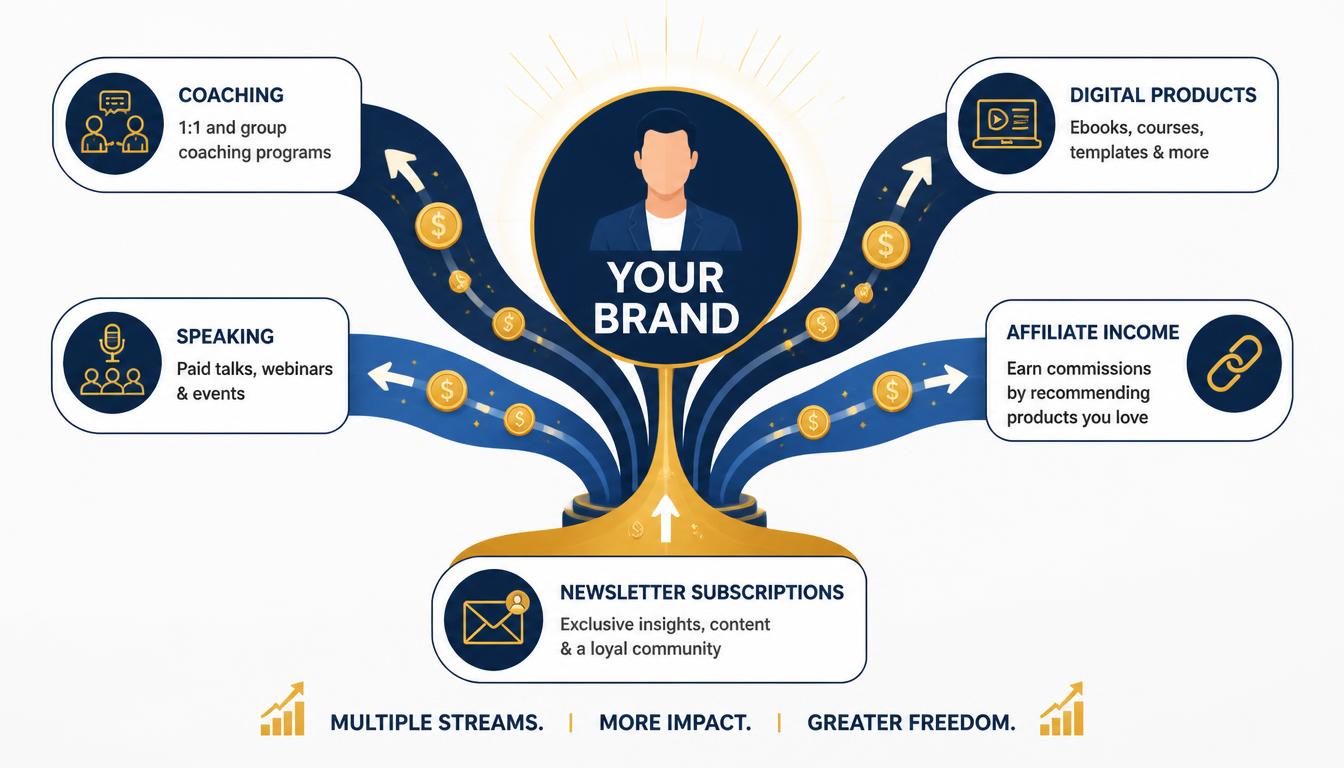
What if your money could earn more money even while you sleep? This is not a fantasy; it is the fundamental power of passive income. The core philosophy of wealth building is setting up systems where your money, assets, and intellectual property work for you, rather than you constantly working for your money. From dividend-paying stocks and rental properties to building scalable online businesses, there are multiple proven ways to create income streams that keep growing in the background.
However, achieving true financial freedom requires more than just a desire for easy money. It requires a strategic approach, patience, and the discipline to build systems that generate revenue long after the initial effort has been expended. In this comprehensive guide, we will break down the most effective passive income ideas, explain the mechanics behind how they work, and show you how to start making your money work harder without trading more hours for dollars. Whether you are a beginner looking to open your first high-yield savings account or an experienced investor seeking to diversify your portfolio, these strategies will help you build lasting wealth.
10. Build a Rock-Solid Financial Foundation First
Before you even think about deploying capital into passive income vehicles, you must get your financial basics in order. Imagine trying to build a luxurious mansion on a foundation of shifting sand; it simply will not last. Similarly, you cannot expect your wealth to grow exponentially if you are drowning in high-interest consumer debt or constantly scrambling to cover unexpected emergencies.
The first step in any wealth-building journey is paying off expensive, toxic debt, particularly high-interest credit card balances. The interest you pay on a credit card—often exceeding 20% annually—will completely obliterate any passive returns you might earn elsewhere. Once the toxic debt is cleared, focus on creating a realistic, zero-based budget that tracks every dollar of your income and expenses.
Crucially, you must establish an emergency fund. Financial experts universally recommend setting aside three to six months’ worth of living expenses in a highly liquid, easily accessible account. This fund acts as a financial shock absorber. When your car breaks down or a medical emergency arises, you can cover the cost without derailing your investment strategy or going back into debt. Once this foundation is secure, every single dollar you invest will work significantly harder because it will no longer be eaten away by compounding debt or forced liquidations during emergencies.

9. High-Yield Savings Accounts and Certificates of Deposit (CDs)
While they may not sound as glamorous as real estate or tech stocks, High-Yield Savings Accounts (HYSAs) and Certificates of Deposit (CDs) are among the easiest, most stress-free ways to make money in your sleep. Traditional brick-and-mortar banks often pay interest rates close to zero on standard savings accounts. In contrast, online banks and credit unions frequently offer significantly higher rates, often ranging between 3% and 5% depending on the broader economic environment.
To put this into perspective, if you keep $10,000 in a traditional savings account earning 0.01%, you will earn a mere $1 over the course of a year. However, if you move that same $10,000 into a high-yield account earning 4%, you will generate $400 annually with absolutely zero effort or risk. Because these accounts are typically FDIC-insured, your principal is protected up to the legal limit.
Certificates of Deposit (CDs) operate on a similar principle but require you to lock your money in for a fixed term, such as six months, one year, or five years. In exchange for this reduced liquidity, banks often offer even higher interest rates. A popular strategy is “CD laddering,” where you divide your cash into multiple CDs with staggered maturity dates. This provides a balance of higher yields and regular access to your funds. While HYSAs and CDs are not aggressive wealth-building tools, they are the perfect safe harbor for your emergency fund and short-term savings goals.
8. Dividend-Paying Stocks for Consistent Cash Flow
If you want your capital to truly generate a reliable, ongoing income, dividend-paying stocks are one of the most time-tested and reliable methods available. When you purchase shares of a dividend-paying company, you are buying a fractional ownership stake in a business that shares a portion of its profits directly with its shareholders. These cash payments, known as dividends, are typically distributed on a quarterly basis.
Imagine owning 1,000 shares of a stable, blue-chip company that pays a $2 annual dividend per share. That equates to $2,000 per year deposited directly into your brokerage account, whether the stock market is up or down, and whether you are awake or asleep. The true magic of dividend investing, however, lies in compounding. By enrolling in a Dividend Reinvestment Plan (DRIP), your quarterly payouts are automatically used to purchase additional shares of the stock. Over a 20 to 30-year horizon, reinvested dividends can account for the majority of your total returns, often doubling or tripling the wealth generated by stock price appreciation alone.
When selecting dividend stocks, look for “Dividend Aristocrats” or “Dividend Kings”—companies that have not only paid but consistently increased their dividends for 25 to 50 consecutive years. Established giants in consumer staples, healthcare, and utilities are popular choices because their products are in constant demand, providing the stable cash flow necessary to sustain and grow dividend payouts through all economic cycles.

7. Rental Income from Physical Real Estate
Real estate has long been celebrated as one of the most powerful vehicles for generating passive income and building generational wealth. When you purchase a rental property, your tenants effectively pay down your mortgage every month, creating a steady stream of positive cash flow. Simultaneously, the underlying property has the potential to appreciate in value over time, building your net worth through equity.
For instance, if you acquire a modest multi-family home or a single-family residence and charge $1,500 in monthly rent, that generates $18,000 in gross annual income. After subtracting operating expenses—such as the mortgage payment, property taxes, insurance, maintenance reserves, and vacancy allowances—you could still pocket several thousand dollars in pure profit annually.
However, it is important to acknowledge that physical real estate is not always 100% passive. Dealing with tenant complaints, late payments, and broken appliances can feel like a part-time job. To make this income stream truly passive, the secret is to hire a professional property management company. While they typically charge a percentage of the monthly rent (usually 8% to 10%), they handle all the day-to-day headaches, from marketing the unit and screening tenants to coordinating repairs and handling evictions. This turns a potentially active side hustle into a genuinely hands-off wealth-building machine.
6. Real Estate Investment Trusts (REITs)
Not everyone has the capital to buy a physical property, and many investors have absolutely no desire to deal with the realities of being a landlord. This is where Real Estate Investment Trusts, commonly known as REITs, become an invaluable tool in your passive income arsenal.
A REIT is a specialized company that owns, operates, or finances income-producing real estate across a variety of sectors, including apartment complexes, shopping centers, office buildings, warehouses, and even data centers or hospitals. By law, REITs are required to distribute at least 90% of their taxable income to shareholders as dividends. This unique legal structure allows them to avoid corporate income taxes, passing the tax burden directly to the investor while ensuring high dividend yields.
Investing in REITs allows you to tap into the lucrative real estate market without ever fixing a leaky faucet or chasing down a rent check. Furthermore, publicly traded REITs offer incredible liquidity. Unlike physical real estate, which can take months to sell, you can buy and sell REIT shares instantly on major stock exchanges, just like any other equity. If you invest $10,000 in a diversified REIT portfolio yielding 5%, you generate $500 in annual passive income with total liquidity and zero physical management responsibilities.

5. Peer-to-Peer Lending
Peer-to-peer (P2P) lending is a relatively modern financial innovation that has democratized the banking industry. Traditionally, banks take your deposits and lend them out at a high interest rate, keeping the spread as profit. P2P lending platforms cut out the traditional bank, allowing you to act as the lender directly. You lend your money to individuals or small businesses in exchange for regular interest payments.
The returns on P2P lending can be quite attractive, often ranging from 5% to 12% or more, depending on the credit risk profile of the borrower. For example, if you invest $5,000 across a portfolio of loans at an average interest rate of 8%, you could earn around $400 in interest over a year.
However, because these loans are generally unsecured (meaning they are not backed by collateral like a house), there is a risk of borrower default. The golden rule of P2P lending is rigorous diversification. Instead of lending $100 to five people, you should spread your $5,000 across hundreds of different loans in increments of $25. By micro-lending to a massive pool of borrowers, the impact of any single default is minimized, allowing you to capture the high average yield while mitigating the risk of catastrophic loss.
4. Creating and Selling Digital Products
If you are looking to generate passive income without requiring significant upfront capital, the digital economy offers incredible opportunities. Unlike physical products, which require inventory management, manufacturing, shipping, and handling returns, digital products have virtually zero marginal cost of reproduction. You create the product once, and it can be sold an infinite number of times with almost no additional effort.
Examples of highly profitable digital products include e-books, comprehensive online courses, software plugins, stock photography, graphic design templates, and mobile applications. Consider a professional graphic designer who creates a premium pack of social media templates. Once the templates are designed and uploaded to a platform like Gumroad or Etsy, they can be purchased and downloaded by customers globally, 24/7.
Similarly, an expert in personal finance could record a series of video lessons on budgeting and sell it as an online course. The initial creation requires a significant investment of time and expertise, but once the sales funnel and automated delivery systems are set up, the income generated is truly passive. The key to success in this arena is identifying a specific problem that a target audience is willing to pay to solve, and then marketing your digital solution effectively.

3. Building an Automated Online Business
Beyond standalone digital products, entire online businesses can be structured to run with minimal day-to-day oversight once they achieve momentum. The digital age has made it possible to build global enterprises from a laptop, leveraging automation to handle the heavy lifting.
Blogs, niche affiliate marketing websites, YouTube channels, and automated e-commerce stores can all generate revenue around the clock. Take a YouTube creator who produces evergreen educational content. A video explaining “How to Change a Tire” or “Beginner’s Guide to Index Funds” might take a few hours to research and record. However, once published, that single video can continue to earn advertising revenue and drive affiliate sales for many years, acting as a digital employee that never sleeps.
Similarly, an e-commerce store utilizing dropshipping or third-party fulfillment centers (like Amazon FBA) can process sales, pack orders, and handle shipping automatically. When a customer places an order at 2:00 AM, the automated system routes the order to the fulfillment center, and the product is shipped without the business owner ever touching the inventory. The hardest part of an online business is the initial phase of building an audience, optimizing search engine rankings, and establishing trust. But once the systems are running smoothly, online businesses represent one of the most scalable and powerful forms of passive income available today.
2. Investing in Broad-Market Index Funds
While index funds do not necessarily pay you a monthly cash distribution like a rental property or a high-yield bond, they are arguably the most reliable method for quietly building massive wealth in the background through the power of compounding. An index fund is a type of mutual fund or exchange-traded fund (ETF) designed to track the performance of a specific market index, such as the S&P 500 or the Total Stock Market Index.
Instead of trying to beat the market by picking individual winning stocks—a strategy that even professional fund managers fail at consistently—index funds allow you to own a tiny slice of hundreds or thousands of companies all at once. Historically, the broader stock market has returned an average of 7% to 10% annually over the long term, after adjusting for inflation.
The magic of index fund investing is best illustrated through consistent, long-term contributions. Imagine investing just $500 per month into a low-cost S&P 500 index fund starting at age 25. Assuming an average annual return of 8%, by the time you reach age 65, your portfolio would be worth well over $1.7 million, even though you only contributed $240,000 of your own money. The remaining $1.4 million is generated entirely by compound growth. Your money is literally multiplying while you sleep, requiring nothing more than patience and a strict buy-and-hold mentality.

1. Automating Your Wealth-Building Systems
You could have access to every single passive income stream listed above, but if you lack the discipline to consistently fund them, your wealth will never grow. The most powerful step in the entire passive income journey is automation. Human willpower is a finite resource; we get tired, distracted, and emotional. Relying on willpower to manually transfer money into your investment accounts every month is a recipe for failure.
Automation ensures absolute consistency by removing human emotion and decision fatigue from the equation. Set up automatic, recurring transfers from your primary checking account to your investment accounts on the exact day your paycheck clears. Enroll in automatic dividend reinvestment plans (DRIPs) so that every cent of passive income is immediately put back to work. If you own rental property, set up automated online rent collection and automatic bill pay for the mortgage and taxes.
When your financial life runs on autopilot, you eliminate the temptation to spend the money elsewhere. Your wealth grows steadily, silently, and effectively in the background, completely independent of your daily mood or motivation. Whether you are working hard at your day job, relaxing on vacation, or sound asleep, your automated systems are tirelessly executing your wealth-building strategy.
Conclusion
Making your money work harder while you sleep is not about finding a get-rich-quick scheme or discovering a secret loophole in the financial system. It is about a fundamental shift in mindset. It requires transitioning from a paradigm where you trade your limited time for dollars, to a paradigm where you build and acquire assets that generate value independently of your physical presence.
Whether you choose to start small with a high-yield savings account, build a diversified portfolio of dividend stocks and index funds, invest in real estate through REITs, or leverage the internet to sell digital products, the underlying principle remains the same. Passive income requires front-loaded effort, capital, or both. But once these systems are established, they provide the ultimate luxury: financial freedom and the reclaiming of your most valuable asset—your time. Start building your foundation today, automate your progress, and let the power of compounding work its magic for your future.
Frequently Asked Questions (FAQ)
1. What is the fastest way to start earning passive income?
The fastest way to start earning truly passive income with zero upfront capital is by monetizing existing skills through digital products, such as creating an e-book, selling templates, or recording an online course. If you have starting capital, the fastest method is opening a High-Yield Savings Account (HYSA) or purchasing dividend-paying stocks, which can begin generating cash flow within the first month.
2. How much money do I need to start investing in passive income?
You can start with as little as $5 to $10 by opening an account with a modern brokerage that offers fractional shares, allowing you to invest in broad-market index funds or dividend stocks. For real estate, you can start investing in Real Estate Investment Trusts (REITs) with the cost of a single share. The key is consistency; starting small and contributing regularly is more important than the initial amount.
3. Is passive income completely tax-free?
No, passive income is generally subject to taxation, but the type of tax depends on the income source. Interest from HYSAs and CDs is taxed as ordinary income. Qualified dividends and long-term capital gains from stocks are taxed at lower, preferential rates. Rental income is taxed as ordinary income, but real estate investors can use deductions like depreciation to significantly offset their tax liability. Always consult a certified tax professional for your specific situation.
4. What is the safest passive income investment?
The safest passive income investments are those backed by the government or insured by federal agencies. High-Yield Savings Accounts (HYSAs), Certificates of Deposit (CDs), and U.S. Treasury Bonds are considered virtually risk-free regarding the loss of your principal, as they are FDIC-insured or backed by the full faith and credit of the government. However, “safe” usually means lower returns, which may barely outpace inflation.
5. Can I have multiple passive income streams at the same time?
Absolutely, and in fact, diversifying your income streams is a hallmark of wealthy individuals. Having multiple streams—such as dividend income from stocks, cash flow from a rental property, and royalties from a digital product—protects you against market downturns. If one stream underperforms, the others can sustain your financial goals. It is best to master one stream before adding another to avoid spreading yourself too thin.