
Stepping into the world of investing can feel overwhelmingly complex. Between analyzing individual company balance sheets, timing market entries, and constantly monitoring stock prices, the traditional approach to stock picking often leads to stress and burnout. Fortunately, there is a simpler, highly effective way to grow your wealth without the need for a Wall Street pedigree: Exchange-Traded Funds, commonly known as ETFs.
ETFs have revolutionized personal finance, democratizing access to the stock market and providing a straightforward path to financial independence. Whether you are saving for retirement, a down payment on a house, or simply looking to outpace inflation, ETFs offer a powerful toolkit. This comprehensive guide will walk you through everything you need to know to start your ETF investing journey with confidence.
What is an ETF and How Does It Work?
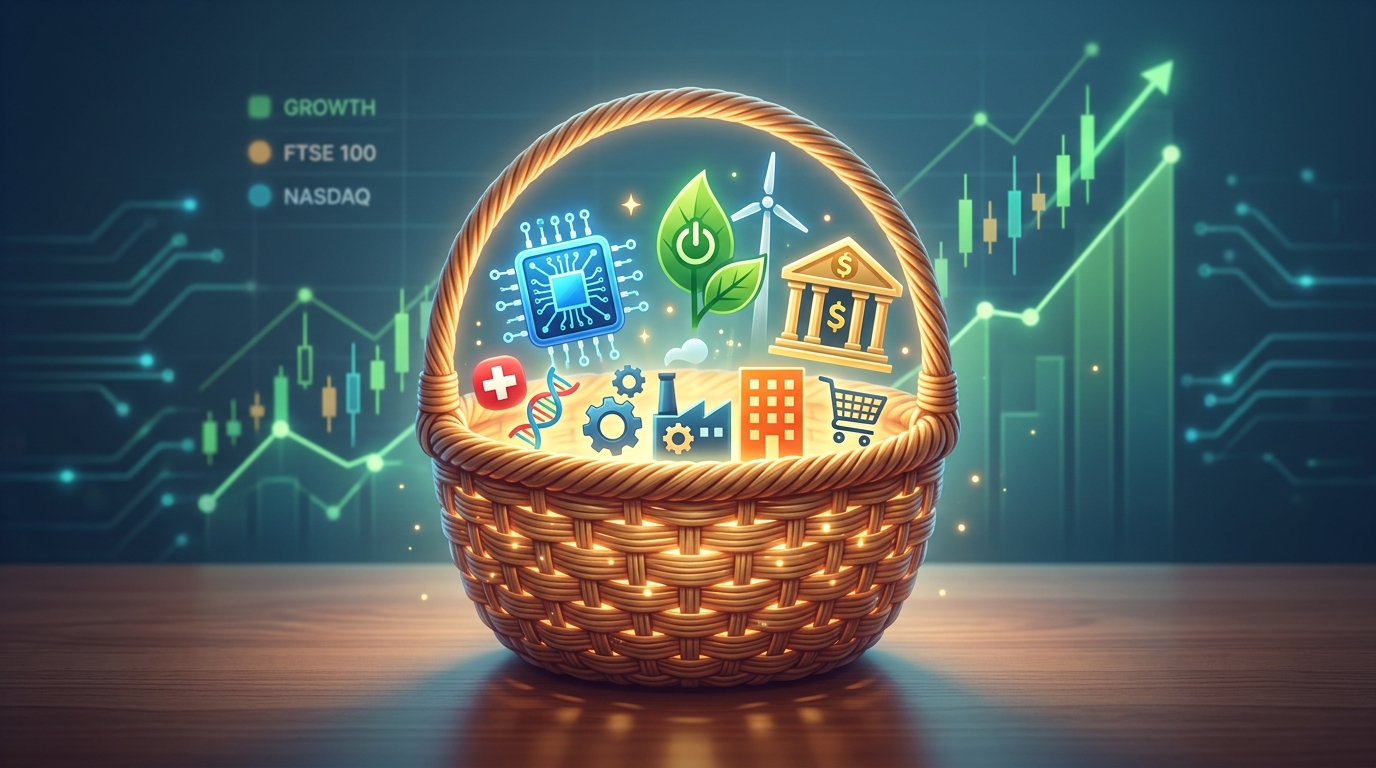
An Exchange-Traded Fund (ETF) is a type of pooled investment security that holds a collection of assets, such as stocks, bonds, or commodities. Think of an ETF like a beautifully curated fruit basket. Instead of buying a single apple, orange, or banana (which represents buying an individual stock), you buy a share of the basket, instantly giving you a small piece of every fruit inside.
The Mechanics of ETF Trading
Unlike traditional mutual funds, which are only priced and traded once at the end of the trading day, ETFs trade on major stock exchanges exactly like individual shares. This means you can buy and sell ETF shares throughout the entire trading day at fluctuating market prices. This intraday liquidity provides a level of flexibility that mutual funds simply cannot match.
Most ETFs are designed to be “passive” investments. This means they are structured to track a specific underlying index, such as the S&P 500 or the NASDAQ-100. When you buy a share of an S&P 500 ETF, you are essentially buying a tiny fraction of the 500 largest publicly traded companies in the United States all at once.
Behind the scenes, large financial institutions (known as providers, like Vanguard, iShares, or SPDR) create these funds. They utilize “market makers” and authorized participants to ensure that the ETF’s market price stays closely aligned with its Net Asset Value (NAV)—the actual value of the underlying assets it holds. This seamless mechanism ensures that ETFs remain highly liquid and accurately priced.
The Many Faces of ETFs: Types You Need to Know
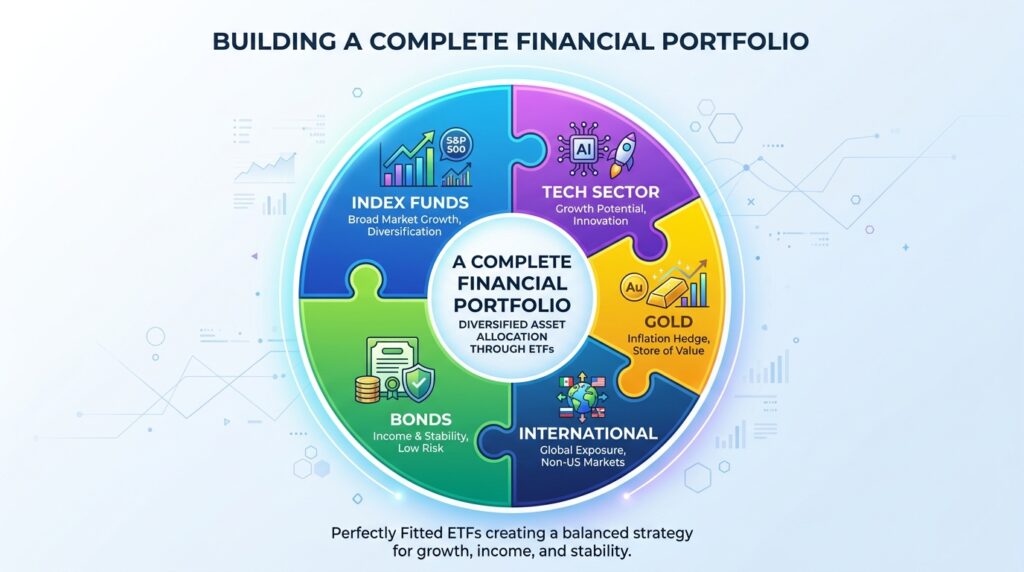
One of the most attractive features of ETFs is their sheer variety. No matter what your financial goals or risk tolerance, there is likely an ETF designed to meet your needs. Understanding the different types is crucial for building a well-rounded portfolio.
Broad Market and Index ETFs
These are the bread and butter of most investment portfolios. They track major market indices like the S&P 500 or the Total Stock Market Index. They offer instant, wide-ranging diversification and are generally considered the safest starting point for beginners.
Sector and Industry ETFs
If you believe a specific industry is poised for massive growth, sector ETFs allow you to capitalize on that trend without picking individual winners. You can invest in technology, healthcare, renewable energy, or financial services. While they offer high growth potential, they also carry higher volatility since they are concentrated in one area.
Bond ETFs
Not all ETFs are invested in stocks. Bond ETFs provide access to government treasuries, corporate bonds, and municipal debt. They are excellent for investors seeking regular income and looking to stabilize their portfolios against stock market volatility.
Commodity and International ETFs
Want to invest in gold, silver, or oil without storing physical barrels in your garage? Commodity ETFs make this possible. Similarly, international ETFs allow you to invest in emerging markets or developed economies outside of your home country, providing crucial global diversification.
Dividend ETFs
These funds specifically target companies with a strong history of paying and growing their dividends. They are highly popular among income-focused investors and those nearing retirement who rely on their portfolios for cash flow.
Advanced ETFs: Leveraged and Inverse
Beginners should approach these with extreme caution. Leveraged ETFs use financial derivatives to amplify the daily returns of an index (e.g., aiming for 2x or 3x the daily performance). Inverse ETFs are designed to go up when the market goes down. Because of the way they reset daily, these are strictly short-term trading tools and are entirely unsuitable for long-term buy-and-hold investing.

Why Investors Love ETFs: The Core Benefits
ETFs have experienced explosive growth in popularity, and for good reason. They offer a unique combination of advantages that cater to both novice and veteran investors.
Instant Diversification
The golden rule of investing is “don’t put all your eggs in one basket.” ETFs enforce this rule automatically. By purchasing a single share of a broad-market ETF, you instantly spread your risk across hundreds or even thousands of companies. If one company in the fund goes bankrupt, the impact on your overall investment is negligible.
Exceptionally Low Costs
Actively managed mutual funds often charge expense ratios (annual fees) of 1% to 2%, which can severely eat into your compound interest over time. Because most ETFs are passively managed and simply track an index, their expense ratios are incredibly low—often between 0.03% and 0.20%. Over a 30-year investing horizon, saving 1% in fees annually can result in tens of thousands of dollars in additional wealth.
Unmatched Liquidity and Flexibility
Because they trade on exchanges like stocks, you can execute trades the second the market opens. You can utilize advanced order types like limit orders (to buy only at a specific price) or stop-loss orders (to automatically sell if the price drops to a certain level).
Superior Tax Efficiency
This is a hidden superpower of ETFs. Traditional mutual funds must sell underlying stocks to meet investor redemptions, which triggers capital gains taxes that are passed on to all shareholders, even those who didn’t sell. ETFs use a unique “in-kind” creation and redemption process that largely bypasses these taxable events, allowing you to keep more of your money working for you.

Navigating the Pitfalls: Understanding ETF Risks
While ETFs are generally considered safer than individual stocks, they are not entirely risk-free. A smart investor always understands the potential downsides before committing their capital.
Market Risk
This is the most fundamental risk. If the overall stock market or the specific sector your ETF tracks experiences a downturn, the value of your ETF will drop. Diversification protects you from a single company failing, but it does not protect you from a broad economic recession.
Tracking Error
Ideally, an ETF’s performance should perfectly mirror its underlying index. However, due to management fees, cash drag, or the fund provider’s operational inefficiencies, an ETF might slightly underperform its benchmark. While usually minimal in high-quality funds, it is a factor to monitor.
Liquidity Risk in Niche Funds
While broad-market ETFs like the SPY (S&P 500) trade millions of shares a second, highly specialized or niche ETFs might have low trading volumes. Low volume can lead to a wide “bid-ask spread” (the difference between what buyers want to pay and what sellers want to accept), making it more expensive to buy or sell the fund quickly.
The Danger of Complexity
As mentioned earlier, leveraged, inverse, and ETFs that utilize complex derivatives carry magnified risks. They are designed for sophisticated day traders, not long-term wealth builders. Beginners should strictly avoid these products until they have years of market experience.
A Step-by-Step Guide to Choosing and Buying Your First ETF
Ready to take the plunge? Here is a practical, step-by-step framework for selecting and purchasing your first ETF.
Step 1: Define Your Investment Goals
Are you looking for aggressive growth, steady income, or capital preservation? Your goals will dictate the type of ETF you choose. A 25-year-old might lean heavily into broad-market stock ETFs, while a 60-year-old might allocate more toward bond and dividend ETFs.
Step 2: Analyze the Expense Ratio
Always check the fund’s annual fee. In the modern market, there is rarely a reason to pay more than 0.20% for a standard index ETF. Compare similar funds from different providers (e.g., Vanguard vs. iShares vs. Schwab) and choose the one with the lowest cost.
Step 3: Check Liquidity and Assets Under Management (AUM)
Look at the fund’s average daily trading volume and its total AUM. A fund with billions in AUM and high daily volume will be highly liquid, ensuring you get a fair price when you trade. Avoid funds with less than $50 million in AUM, as they carry a higher risk of being liquidated by the provider.
Step 4: Open and Fund a Brokerage Account
To buy an ETF, you need a brokerage account. Platforms like Fidelity, Charles Schwab, Vanguard, or Robinhood are excellent choices. Many of these brokers now offer commission-free trading on thousands of ETFs, meaning you pay zero fees to execute the trade itself.
Step 5: Execute Your Trade Using Dollar-Cost Averaging
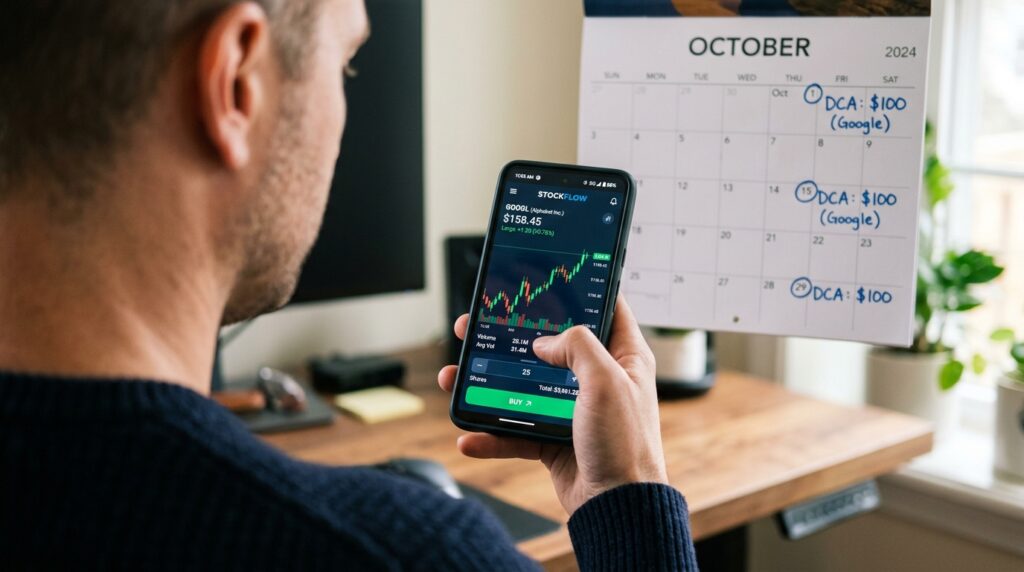
Once your account is funded, search for the ETF’s ticker symbol (e.g., VOO for the Vanguard S&P 500 ETF). Instead of trying to time the market, utilize a strategy called Dollar-Cost Averaging (DCA). This involves investing a fixed amount of money at regular intervals—say, $500 on the first of every month—regardless of the share price.
- When the market is high, your $500 buys fewer shares.
- When the market is low, your $500 buys more shares. Over time, this lowers your average cost per share and removes the emotional stress of trying to “buy the dip.”
Step 6: Automate and Reinvest
Turn on the Dividend Reinvestment Plan (DRIP) feature in your brokerage account. This automatically uses any cash dividends paid by the ETF to buy more fractional shares of the fund, supercharging your compound interest over the decades.
Proven ETF Strategies for Long-Term Wealth
Once you have purchased your first ETF, how should you manage it? Here are the most proven strategies used by successful investors.
The Buy-and-Hold Strategy: This is the undisputed champion for beginners. You purchase a diversified mix of broad-market ETFs and simply hold them for decades, ignoring the daily news cycle and market fluctuations. Historically, the stock market has always recovered from downturns, rewarding patient investors.
The Core-Satellite Strategy: This involves building the “core” of your portfolio (80% to 90%) with safe, broad-market index ETFs. You then use the remaining “satellite” portion (10% to 20%) to take calculated risks on specialized sector ETFs, such as artificial intelligence or clean energy, to try and boost your overall returns.
Dividend Growth Investing: Instead of just chasing high yields, this strategy focuses on ETFs that hold companies with a long history of increasing their dividend payouts every single year. This provides a growing stream of passive income that naturally outpaces inflation.
Conclusion
ETFs have fundamentally changed the investing landscape, transforming what was once a complex, high-fee endeavor into an accessible, low-cost pathway to financial freedom. By offering instant diversification, exceptional tax efficiency, and the flexibility of stock trading, ETFs are the perfect vehicle for both beginners and seasoned pros.
Remember, the secret to successful ETF investing isn’t about finding a magical stock or timing the market perfectly. It is about consistency, keeping your fees low, and giving your investments time to compound. Start with a simple, broad-market index ETF, set up an automated monthly contribution, and let the power of the global economy work for you. Your future self will thank you.
Frequently Asked Questions (FAQ)
1. What is the minimum amount of money I need to start investing in ETFs?
Historically, ETFs required you to buy at least one full share, which could cost anywhere from $50 to $500. Today, however, many modern brokerages offer fractional shares. This means you can start investing in high-quality ETFs with as little as $1 to $5, making it incredibly accessible for beginners.
2. How do ETFs differ from mutual funds?
While both pool money to buy a basket of assets, the primary differences lie in trading and costs. Mutual funds are priced and traded only once a day after the market closes, whereas ETFs trade continuously throughout the day like stocks. Additionally, ETFs are generally passively managed, resulting in significantly lower expense ratios compared to actively managed mutual funds.
3. Can I lose money investing in ETFs?
Yes. ETFs are investment vehicles tied to the financial markets, and all investments carry some level of risk. If the overall market or the specific sector your ETF tracks declines in value, your investment will temporarily lose value. However, by holding a broadly diversified ETF over a long time horizon, historical data shows that the market has consistently recovered and grown.
4. How often should I check my ETF portfolio?
One of the greatest psychological benefits of ETF investing is that it requires very little maintenance. Checking your portfolio daily can lead to emotional, reactionary decisions based on short-term market noise. It is highly recommended to check your portfolio no more than once a month or once a quarter, focusing strictly on long-term progress rather than daily price movements.
5. Are ETFs a good choice for retirement accounts?
Absolutely. ETFs are arguably the best investment vehicle for retirement accounts like IRAs and 401(k)s. Their low expense ratios ensure that more of your money stays invested to compound over the decades. Furthermore, holding ETFs inside a tax-advantaged retirement account maximizes your tax efficiency, allowing your wealth to grow completely tax-deferred or tax-free.

