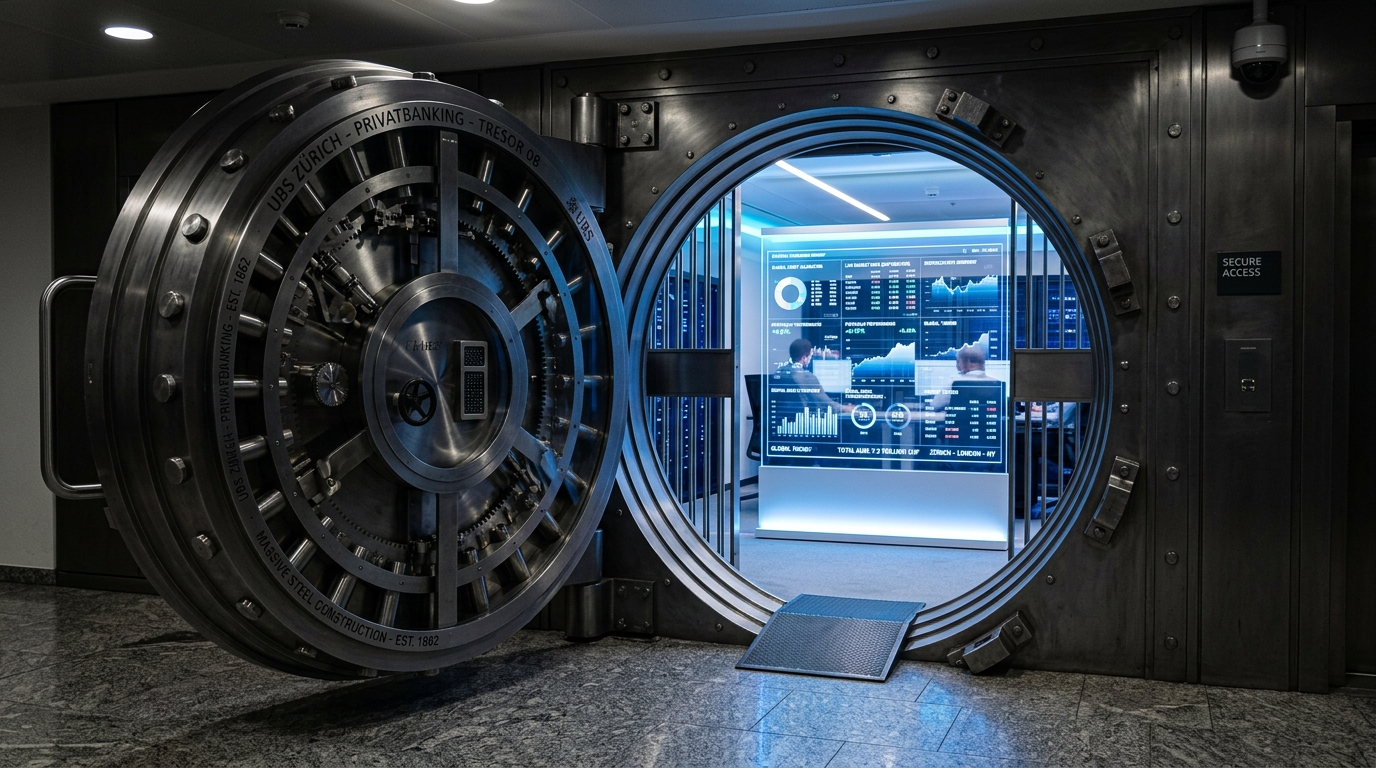
When you hear the phrase “Swiss bank account,” your mind likely drifts to cinematic tropes: shadowy billionaires, secret alpine vaults, and James Bond villains hiding illicit fortunes. For decades, Hollywood has successfully branded Swiss banking as the ultimate sanctuary for secret wealth. But here is the unvarnished truth: regular people can open them, and the reality of modern Swiss banking is far more regulated, transparent, and strategic than the fiction.
If you are considering international diversification for your personal finance portfolio, it is time to separate the silver-screen myths from the financial reality. In this comprehensive guide, we will break down exactly who can open a Swiss bank account, the surprising legal rules you must follow, the hidden costs involved, and whether this traditional wealth management tool actually makes sense for your financial strategy.
The Hollywood Myth Versus the Modern Swiss Reality
Swiss bank accounts have been wrapped in an aura of mystery thanks to decades of pop culture influence. In the movies, they are portrayed as impenetrable hidden vaults for criminals, spies, and oligarchs looking to hide shady money from the government.
The truth today is vastly different. Modern Swiss banking is a highly regulated, transparent, and strictly compliant industry. The era of absolute bank secrecy effectively ended when Switzerland actively participated in global financial cooperation. By adopting the Common Reporting Standard (CRS) and automatically sharing account information with tax authorities in over 100 countries, Switzerland reshaped its banking sector. Today, Swiss banks are reputable, law-abiding institutions that prioritize compliance over confidentiality. The allure of Swiss banking is no longer about hiding money; it is about preserving it.
Who Can Actually Open a Swiss Bank Account?
A pervasive assumption is that Swiss bank accounts are exclusively reserved for the ultra-wealthy, royalty, or celebrities. In reality, most adults with proper documentation and a legitimate financial background can open one, regardless of their fame or social status.
However, the process is not as casual as downloading an app and opening an everyday checking account in your home country. To get started, you must meet strict baseline requirements:
- You must be at least 18 years old.
- You need a valid, government-issued passport.
- You must provide verifiable proof of address.
- You need comprehensive documentation proving the legal source of your funds.
Swiss banks conduct exhaustive background checks. They run prospective clients’ names through international watchlists and require detailed, verifiable information about how your money was earned. If you are a business owner, you will need to provide corporate registries and audited financial statements. If you are an employee, you will need tax returns and payslips. The barrier to entry is not necessarily a massive minimum deposit (though premium private banking tiers do require high net worth), but rather the rigorous compliance and due diligence process.

The Legal Side: Tax Rules and Reporting Requirements
Owning a Swiss bank account is entirely legal for citizens of most countries, but it comes with heavy responsibilities, particularly regarding taxation. You cannot simply open a Swiss account and assume your financial activity remains private from your home government.
International agreements have made it nearly impossible to hide assets abroad. If you are a United States citizen, for example, and your total foreign financial account balances exceed $10,000 at any point during the calendar year, you are legally required to report them to the Financial Crimes Enforcement Network (FinCEN) by filing a Report of Foreign Bank and Financial Accounts (FBAR). Furthermore, you must disclose any income generated from these accounts when filing your annual tax return.
Other nations have similarly strict regulations. Under the CRS, Swiss banks will automatically report your account balance, interest income, and dividend payouts directly to your home country’s tax authority. Failing to report your offshore accounts can result in severe civil and criminal penalties. Swiss banking is a tool for wealth preservation, not tax evasion.
The Real Advantages of Swiss Banking
Even with the end of absolute secrecy and the introduction of strict regulatory frameworks, Swiss banks continue to offer compelling benefits that attract global clients. Why do people still go through the hassle?
1. Political and Economic Stability Switzerland is globally renowned for its political neutrality, robust democratic institutions, and strong economy. It has not been involved in an international conflict since 1815. This makes it a premier haven for individuals looking to preserve wealth during times of global uncertainty.
2. Currency Strength The Swiss Franc (CHF) is traditionally considered one of the most stable and resilient currencies in the world. During periods of global inflation, currency devaluation, or geopolitical turmoil, investors flock to the Franc as a “safe-haven” asset. Holding a Swiss bank account allows you to hedge your portfolio against the volatility of your domestic currency.
3. Sophisticated Wealth Management Swiss banks have centuries of experience in asset management. They offer access to exclusive investment vehicles, sophisticated estate planning, and highly personalized financial advisory services that are difficult to find in standard retail banking.

The Disadvantages and Hidden Costs
Swiss banking certainly has its perks, but it is not a utopian financial solution. For the average person, the downsides often outweigh the benefits.
1. High Costs Swiss banking is notoriously expensive. Most accounts require ongoing maintenance and custody fees, which can range from a few hundred to several thousand Swiss Francs annually. On top of baseline fees, you will face high transaction charges, expensive international wire transfer fees, and unfavorable currency exchange spreads.
2. Inconvenience Managing your account can be logistically frustrating. While online banking portals exist, certain complex transactions or compliance updates might require you to call during strict Swiss business hours. In some cases, banks may even require an in-person visit to a branch in Switzerland to verify your identity or sign documents. Language barriers and time zone differences add further friction if you do not live in Europe.
3. Intense Scrutiny Your money is under a microscope. Any unusual transaction, large deposit, or change in your financial profile will trigger an immediate compliance review. If you cannot instantly justify the movement of funds, your account could be frozen or closed.
Debunking Common Misconceptions
It is time to set the record straight on the lingering myths surrounding offshore banking.
Myth 1: Swiss accounts are hidden from tax authorities. As previously mentioned, this has not been true for years. Automatic information-sharing agreements mean your home government likely already knows you have a Swiss account.
Myth 2: Swiss banks accept money from anyone, no questions asked. In reality, Swiss banks enforce some of the most rigorous anti-money laundering (AML) standards in the world. They are heavily fined by international regulators if they fail to comply. If you cannot flawlessly prove the legal, tax-compliant origin of your funds, your application will be flatly rejected.
Modern Alternatives to Traditional Swiss Banking
While Swiss accounts have their appeal, they are not always the most practical choice for modern investors. Depending on your specific financial needs, you might be better served by looking elsewhere.
1. Other International Financial Hubs Countries like Singapore, Luxembourg, and Hong Kong offer similarly robust, stable, and highly regulated banking services. Often, these jurisdictions have lower entry barriers, more favorable fee structures, and better digital infrastructure for international clients.
2. Domestic Private Banking If you reside in the United States or another major economy, many domestic private banking services offer the exact same level of sophisticated wealth management, estate planning, and investment access as Swiss banks. By keeping your money local, you avoid the complexity of international paperwork, cross-border tax reporting, and time zone issues.
3. Digital Banks and Fintech Platforms For everyday international needs, the fintech revolution has changed the game. Digital banks and multi-currency platforms now offer global transfers, foreign currency holding, and international investment tools that previously required offshore banking. These solutions are significantly faster, cheaper, and more flexible than traditional Swiss accounts, making them ideal for digital nomads, freelancers, and frequent travelers.

Who Should Actually Consider a Swiss Account?
Swiss banking is not for everyone. For the vast majority of people, the hassle, high fees, and regulatory burden simply outweigh the benefits. However, there are specific scenarios where having a Swiss bank account makes perfect strategic sense:
- Complex International Assets: If you have significant, diversified international assets that require sophisticated, cross-border management, Swiss banks offer unparalleled tools and expertise.
- European Business Operations: If you conduct frequent business in Europe, invoice in Euros or Swiss Francs, or plan to relocate to Switzerland, a local account eliminates massive currency conversion fees and simplifies cash flow.
- Geographic Diversification: High-net-worth individuals often use Swiss accounts to diversify their geographic risk. If you are deeply concerned about political instability, extreme inflation, or banking system failures in your home country, moving a portion of your liquid wealth to a Swiss Franc account acts as a financial insurance policy.
If your financial situation is complex, international in nature, and you are fully prepared to meet all legal and financial reporting obligations, a Swiss account might be a worthwhile addition to your broader financial strategy.
What to Know Before You Open One
Before you initiate the application process, thorough preparation is mandatory.
First, gather all necessary paperwork. This includes years of tax returns, proof of income, business registries, and detailed declarations of the source of your wealth. Second, speak with a qualified tax adviser or financial planner who specializes in cross-border regulations. They will ensure you understand the reporting requirements in your home country and help you structure your account tax-efficiently.
Next, compare different banks. Switzerland has cantonal banks, large international banks (like UBS), and specialized private banks. Some offer more flexible terms, better digital interfaces, and lower fees than others. Do not assume all Swiss banks offer the same experience.
Finally, do not underestimate the time and patience required. It may take several weeks just to open the account, and even longer to fully activate all services. Every document must be verified, professionally translated if necessary, and approved by multiple compliance teams.

Making the Final Decision
Opening a Swiss bank account is no longer about secrecy; it is purely about strategy. While the allure of Swiss banking still exists due to its historical stability, strong currency, and global reputation, it is only a smart move if your specific financial situation truly justifies the costs and complexities.
If you have specific goals like protecting wealth during economic uncertainty, accessing advanced institutional investment services, or managing complex international financial interests, then Swiss banking can offer immense value. But if you are looking for absolute privacy, simple account management, or high-yield returns without effort, you will be deeply disappointed. Swiss bank accounts are not just for the ultra-rich, but they are certainly not the secret tax loophole that pop culture imagines. Approach the decision with a clear, strategic mindset, and always prioritize legal compliance.
Conclusion
The mystique of the Swiss bank account has captivated the public imagination for a century, but the reality of modern offshore banking is grounded in strict regulation, transparency, and strategic wealth preservation. While the Hollywood myths of secret vaults and anonymous billionaires have been彻底 dismantled by international tax agreements, the core benefits of Swiss banking—political neutrality, economic stability, and the enduring strength of the Swiss Franc—remain highly relevant.
For the average consumer, the high fees and logistical hurdles make traditional Swiss banking an impractical choice, especially with the rise of superior fintech alternatives. However, for international business owners, expatriates, and high-net-worth individuals seeking geographic diversification, a Swiss bank account remains a powerful tool in a comprehensive financial strategy. By understanding the legal requirements, embracing the transparency of the modern financial system, and aligning your banking choices with your long-term goals, you can make informed decisions that protect and grow your wealth for generations to come. Stay informed, stay strategic, and keep your money working for you.
Frequently Asked Questions (FAQ)
1. How much money do you need to open a Swiss bank account?
The minimum deposit varies wildly depending on the type of bank and the level of service you want. For standard, non-resident accounts at smaller or digital-focused Swiss banks, you might only need a few thousand Swiss Francs. However, if you are looking to access premium private banking services, personalized wealth management, and dedicated relationship managers, the minimum deposit typically ranges from $500,000 to several million dollars.
2. Is it illegal for US citizens to have a Swiss bank account?
No, it is entirely legal for US citizens to open and hold a Swiss bank account. However, it is strictly illegal to fail to report it. US citizens must report foreign accounts exceeding $10,000 in aggregate value by filing an FBAR (Report of Foreign Bank and Financial Accounts) annually. You must also report any interest or income generated by the account on your standard tax return. Failure to comply can result in massive fines and criminal charges.
3. Are Swiss bank accounts still completely secret and anonymous?
No. The era of numbered, anonymous Swiss bank accounts is over. Under the Common Reporting Standard (CRS) and the Foreign Account Tax Compliance Act (FATCA), Swiss banks are legally required to identify the true beneficial owners of all accounts and automatically share that financial data with the tax authorities of the account holder’s home country. Your home government will know about your account.
4. What are the best alternatives to a traditional Swiss bank account?
For everyday multi-currency needs and international transfers, modern fintech platforms and digital banks (like Wise or Revolut) are vastly cheaper and more convenient. For high-net-worth individuals seeking wealth management, domestic private banking in your home country often provides the same institutional investment access without the cross-border tax headaches. If you specifically want an offshore jurisdiction for geographic diversification, Singapore and Luxembourg are highly regulated, stable alternatives that often feature better digital banking infrastructure.
5. Can I open a Swiss bank account entirely online without visiting Switzerland?
It depends on the bank and your country of residence. Some Swiss banks and fintech institutions allow non-residents to complete the entire onboarding process remotely using digital identity verification and video calls. However, many traditional private banks still require an in-person visit to a Swiss branch at least once to verify your identity, sign the initial compliance documents, and establish a relationship with your banker. Always check the specific onboarding requirements of the institution you are applying to.