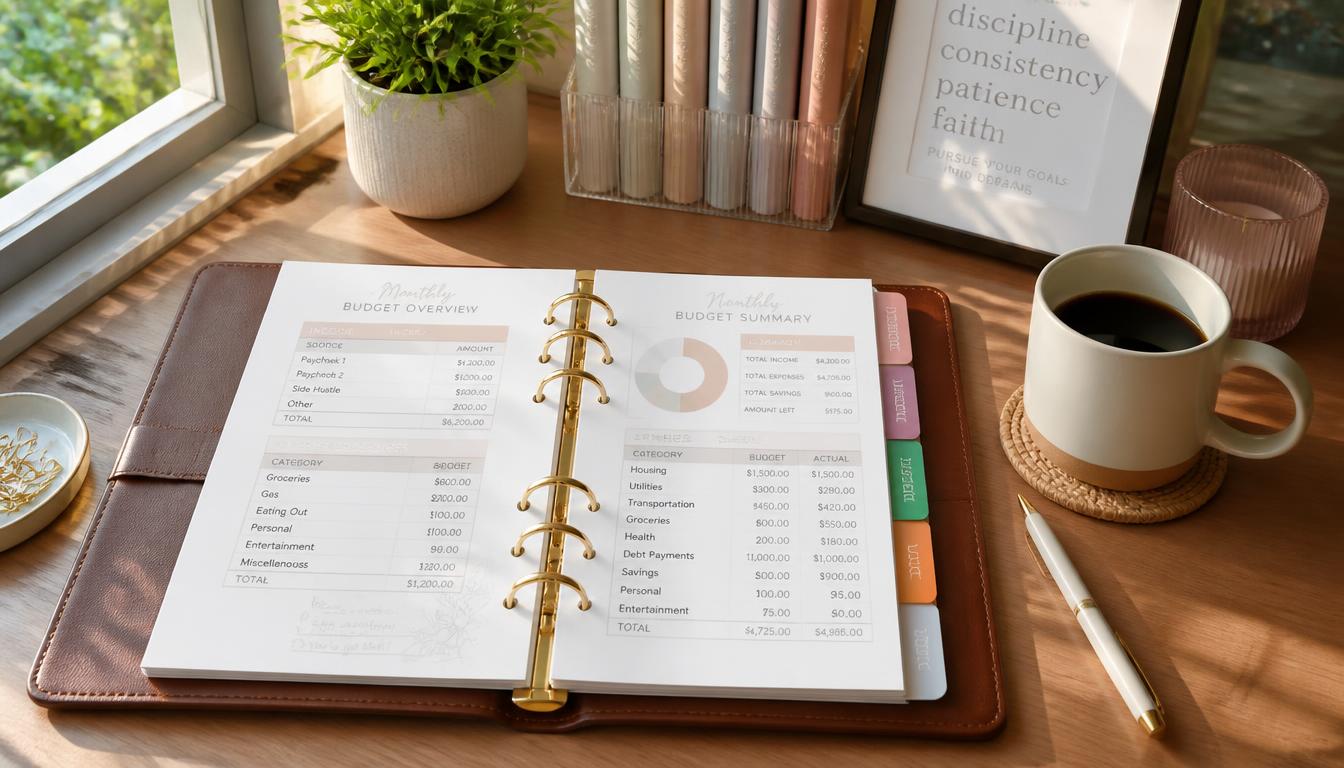
Let’s be completely honest: budgeting is not easy, and it certainly does not come naturally to most people. If you have ever tried to stick to a strict financial plan only to fail, or if the mere thought of tracking every single dollar leaves you feeling overwhelmed and anxious, you are far from alone. Many individuals avoid budgeting altogether because they believe they are inherently “bad with money,” assuming that there is no point in trying if they are destined to fail.
However, the truth is that nobody is born with an innate understanding of personal finance. Budgeting is not a genetic trait; it is a learned skill. Just like learning to cook a new recipe or riding a bicycle, it requires practice, patience, and the right tools. The most effective secret to financial success is that your approach does not need to be complicated to be highly effective. In fact, the simpler your strategy, the more likely you are to stick with it long-term. By implementing ultra-simple budgeting methods designed specifically for those who struggle with money management, you can start small, build consistency, and finally see tangible results.
1. Start with Awareness, Not Perfection
The most common mistake people make when attempting to budget is setting impossibly high standards right out of the gate. They download a complex spreadsheet or a highly detailed application, attempt to track every single penny to the exact cent, and inevitably burn out within a few weeks. If you are new to budgeting or have a history of failing at it, you must start with awareness rather than perfection.
Your first step should be to spend one month simply observing your financial habits without judgment. Write down your total income and track the main categories of your expenses: housing, food, transportation, debt payments, and fun money. Do not worry about being mathematically exact at first, and do not try to restrict your spending during this observation period. The sole goal is to see where your money is actually going.
Awareness is the foundational step toward financial control. It is much easier to make adjustments once you have a clear picture of your baseline than it is to overhaul your entire financial life in one aggressive shot. By removing the pressure of perfection, you remove the friction that usually causes people to quit.
2. Simplify with a Cash-Only Envelope System
If you consistently struggle with overspending, particularly on variable expenses, transitioning to a cash-only system for those specific categories is one of the most effective ways to get back on track. The concept is beautifully simple: you withdraw physical cash for categories like groceries, dining out, and entertainment. You place the cash into labeled envelopes, and once a specific envelope is empty, you are completely done spending in that category for the month.
Unlike swiping a credit or debit card, cash is highly tangible. You can physically see and feel it leaving your hands. This physical limitation introduces the “pain of paying,” a psychological concept that makes it significantly harder to overspend and forces you to live strictly within your means. When you swipe a card, the transaction feels abstract; when you hand over a twenty-dollar bill, the loss of resources is immediate and real.
You do not need to apply this system to every single category in your budget. Large, fixed bills like rent, mortgage, utilities, and insurance are much easier and safer to pay online. However, for daily, variable expenses, the cash envelope system acts like built-in training wheels for your finances. Over time, it teaches you vital spending discipline without requiring complex calculations or constant willpower.

3. Use Budgeting Apps with “Training Wheels”
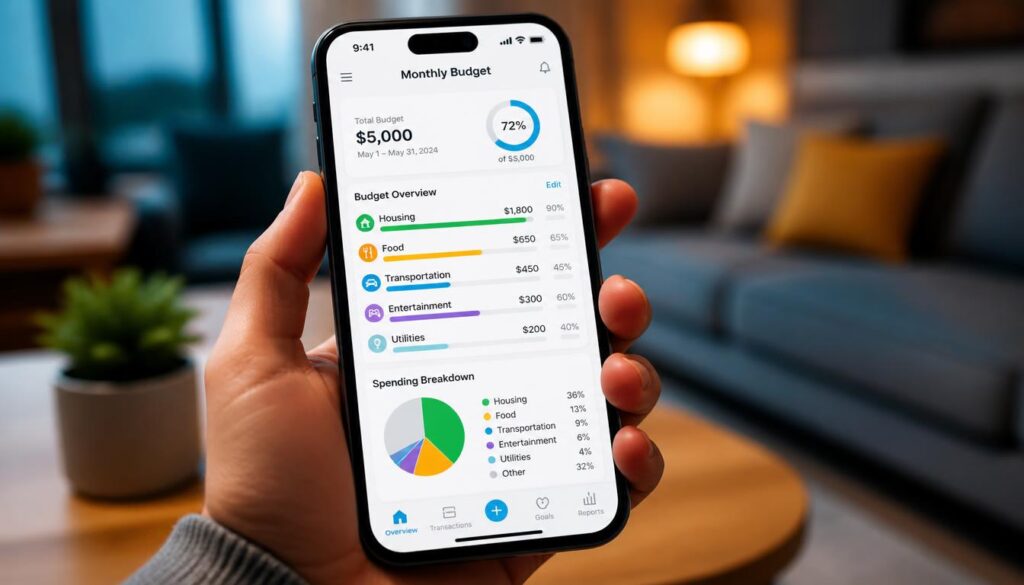
If you strongly prefer digital tools over physical cash, modern budgeting applications are a fantastic alternative. Many apps are specifically designed to do the heavy lifting for you, making them perfect for individuals who dislike math or traditional bookkeeping. The key is to choose an app that offers “training wheels”—features that guide you without overwhelming you with data.
Applications like Mint, YNAB (You Need A Budget), or EveryDollar sync securely with your bank accounts and automatically categorize your expenses. Some are built for high-level tracking, while others utilize zero-based budgeting to show you exactly how much you have allocated and how much is left in each category.
The trick to using these apps successfully is to treat them like a supportive coach, not a punishing judge. Let the app guide your decisions, but do not stress if your initial categories are not perfectly optimized. Start small. Perhaps you only track your big three categories (housing, food, and transportation) for the first few weeks. Once you build confidence and the habit becomes second nature, you can gradually add more detail and granularity to your digital tracking.
4. Focus on the “Big Three” Expenses
One of the most overwhelming aspects of traditional budgeting is the obsession with tracking every minor expense, such as a daily coffee or a random snack at a gas station. While cutting small expenses can help, the truth is that minor purchases rarely sink a budget; major expenses do. If you feel terrible with money, shift your focus entirely to the “Big Three” categories that make up the vast majority of most people’s spending: housing, transportation, and food.
If you can get these three areas under control, you will already be winning your financial battles. For housing, look into ways to reduce your footprint, refinance your mortgage if rates are favorable, or even consider house-hacking by renting out a room. For transportation, evaluate if you can carpool, utilize public transit, refinance an auto loan, or downsize to a more fuel-efficient vehicle. For food, the savings are often massive; commit to meal prepping at home, buying groceries in bulk, and drastically reducing takeout and restaurant dining.
Making even small percentage improvements in these three massive categories will free up significantly more cash flow than stressing over a five-dollar latte. By focusing your energy where it yields the highest return, you simplify the budgeting process and achieve faster results.

5. Automate Everything You Can
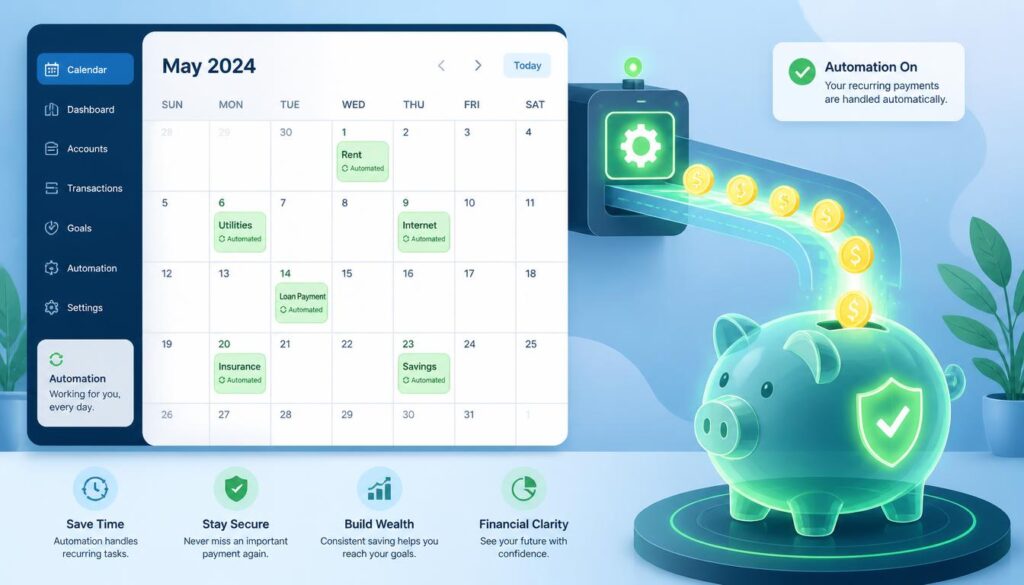
Decision fatigue is a very real psychological phenomenon. The more choices you have to make about your money on a daily basis, the more likely you are to make mistakes, experience stress, or give up entirely. This is why automation is such a powerful, transformative tool in personal finance.
Take the time to set up automatic bill payments for all your recurring, fixed expenses, such as rent, utilities, internet, and subscriptions. More importantly, arrange automatic transfers to your savings accounts or debt repayment accounts to occur on payday, before you even have a chance to spend the money elsewhere. This is known as “paying yourself first.”
Automation turns budgeting from an active, stressful chore that you have to remember into a passive process that happens quietly in the background. It is essentially putting your financial progress on autopilot. Even if you are not actively paying attention or feeling motivated on a given day, your financial foundation is still growing and your bills are being paid on time.
6. Build a Guilt-Free “Fun Money” Category
One of the primary reasons people fail at budgeting is that they make their plans far too strict and restrictive. If your budget does not leave room for enjoyment, you will eventually feel deprived. This deprivation leads to “budget rebellion,” where you inevitably blow up your entire plan and overspend.
To prevent this, it is absolutely crucial to include a guilt-free “fun money” category in your budget. This is money explicitly set aside for things you genuinely enjoy, whether that is specialty coffee, going to the movies, funding a hobby, or buying new clothes. It does not have to be a massive amount, but giving yourself explicit permission to spend this money without guilt makes the overall budget sustainable.
Think of fun money as a pressure release valve. Instead of feeling trapped and restricted by your budget, you will feel supported by it because it intentionally makes room for joy alongside responsibility. When you enjoy your budget, you are far more likely to maintain it for a lifetime.
7. Start Small, Scale Up, and Reframe Your Mindset
If you have historically felt terrible with money, do not expect to master budgeting overnight. Financial transformation is a marathon, not a sprint. Start with just one or two simple steps and build from there. Maybe your goal for month one is simply tracking your expenses for 30 days. In month two, you set up automation for your utility bills. In month three, you try the cash envelope system for your grocery budget. Over time, these small, manageable wins stack up into a comprehensive system that works perfectly for your unique lifestyle.
Budgeting is not about being perfect; it is about being consistent. The people who achieve financial success are not the ones who never make mistakes; they are the ones who keep showing up, forgive themselves for slip-ups, and adjust their plans as they go.
Finally, the most critical step is to reframe your mindset. Stop labeling yourself as “terrible with money.” That negative belief keeps you stuck in a scarcity mindset and makes budgeting feel like an impossible chore. Instead, remind yourself daily that you are simply learning a new, valuable skill. Every small step you take is concrete proof that you are improving. When you stop viewing budgeting as a punishment and start seeing it as a powerful tool for freedom, the entire process becomes infinitely easier. A budget is not about restricting what you cannot do; it is about ensuring you have the resources for the things you actually want to do.
Conclusion
Budgeting does not have to be a complicated, stressful, or intimidating experience, even if you have always felt terrible with money. By starting with simple awareness, utilizing tangible tools like cash envelopes, leveraging beginner-friendly apps, focusing on your major expenses, automating your finances, and intentionally including fun money, you can build a financial plan that actually works for your life.
Remember that the ultimate goal is not perfection; it is consistent progress. The more you practice these simple methods, the more confident you will become. Eventually, you will look back and realize that you are no longer bad with money. You will be someone who knows exactly where their finances stand and feels entirely in control of their future. Take it one day at a time, celebrate your small wins, and watch your financial confidence grow.
Frequently Asked Questions (FAQ)
1. How long does it take to get used to a new budget?
It typically takes about three months to build a solid habit and feel comfortable with a new budget. The first month is for awareness and tracking, the second month is for adjusting your categories, and by the third month, the process should start feeling like a natural part of your routine. Be patient with yourself during this adjustment period.
2. What should I do if my income fluctuates every month?
If you have a variable income, base your budget on your lowest expected monthly income rather than your average. This creates a built-in safety net. During months where you earn more than that baseline, allocate the extra funds directly toward your savings goals, emergency fund, or debt payoff.
3. Should I use cash envelopes or a budgeting app if I am a complete beginner?
It depends on your personal psychology. If you struggle with swiping cards and overspending on variable categories like dining out and groceries, the cash envelope system is highly recommended because it introduces the physical “pain of paying.” If you prefer convenience and want to track all your accounts in one place, a beginner-friendly app is the better choice. You can also use a hybrid approach: use an app for fixed bills and cash for variable spending.
4. How much of my income should go to my “fun money” category?
There is no strict rule, but a common guideline is to allocate 5% to 10% of your take-home pay to guilt-free fun money. The exact amount should be whatever feels sustainable for you without derailing your debt payoff or savings goals. The most important factor is that the amount is predetermined so you can spend it without feeling guilty.
5. What is the very first step I should take today to start budgeting?
Your very first step should be a “financial awareness audit.” Take 30 minutes today to log into your bank and credit card accounts. Look at the last 30 days of transactions and simply categorize them into broad buckets (housing, food, transport, fun). Do not judge the spending or try to change it yet; just observe where your money is currently going. This baseline awareness is the crucial first step toward taking control.